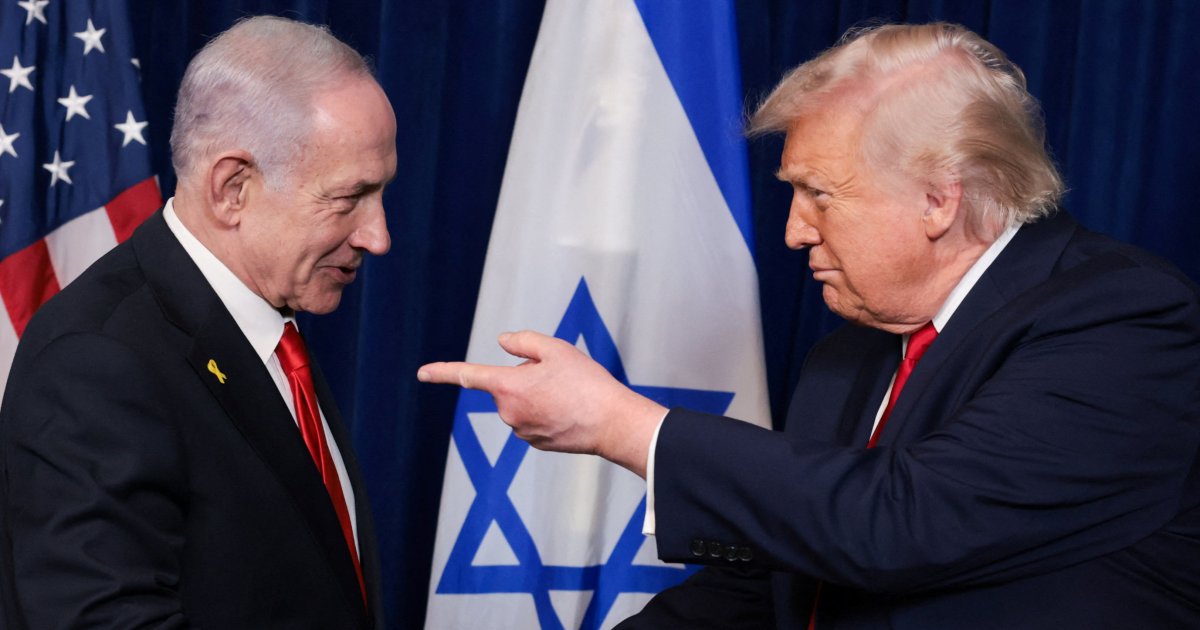

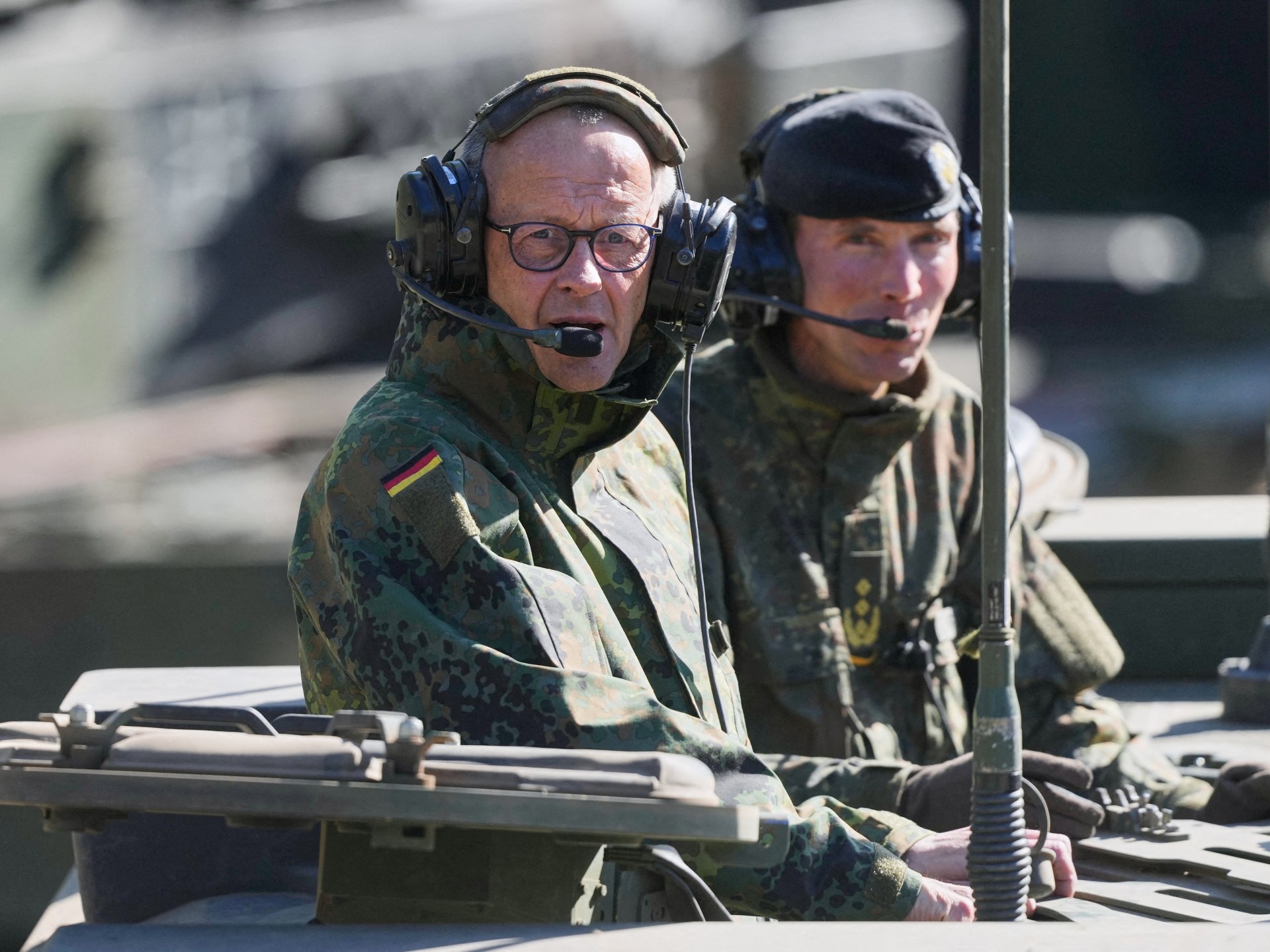

President Donald Trump has renewed his attacks on German Chancellor Friedrich Merz as the rift between the United States and one of its closest European allies widens over Berlin’s criticism of the war on Iran.
The US president suggested on Thursday that Merz should focus on German and European affairs rather than comment on the conflict in the Middle East.
- list 1 of 3Iran war: What’s happening on day 61 as UAE exits OPEC?
- list 2 of 3What’s in Iran’s latest proposal – and how has the US responded?
- list 3 of 3Trump scolds Germany’s Merz for criticism of Iran war
end of list
“The Chancellor of Germany should spend more time on ending the war with Russia/Ukraine (Where he has been totally ineffective!), and fixing his broken Country, especially Immigration and Energy, and less time on interfering with those that are getting rid of the Iran Nuclear threat,” Trump wrote in a social media post.
He added that the war on Iran, which has sent energy prices soaring across the globe, is “making the World, including Germany, a safer place”.
The episode underscores the fraying effects of the Iran war on the US-Europe alliance, which Trump launched jointly with Israel without consulting Washington’s NATO partners.
On Wednesday, Trump said his administration is considering scaling back the number of US troops in Germany, where Washington’s military presence is seen as the centre of its security umbrella over Europe.
Berlin has said it is ready for the possibility of fewer US soldiers on its soil while emphasising NATO cooperation.
“We are prepared for that,” Foreign Minister Johann Wadephul said, according to the AFP news agency.
“We are discussing it closely and in a spirit of trust in all NATO bodies, and we are expecting decisions from the Americans about this.”
Advertisement
The feud started when Merz, who had previously been closely aligned with the US and Israel in their hawkish approach to Iran, questioned Washington’s strategy in the conflict.
“The problem with conflicts like this is always you don’t just have to get in – you have to get out again. We saw that very painfully in Afghanistan for 20 years. We saw it in Iraq,” he said.
He also suggested that the Trump administration is being “humiliated” by Tehran’s negotiating tactics and its refusal to engage in direct talks before its conditions – namely lifting the naval blockade on Iranian ports – are met.
Trump scolded Merz over the remarks earlier this week, saying that the German leader “doesn’t know what he’s talking about”.
Berlin has tried to walk back Merz’s comments. Wadephul, the foreign minister, told public broadcaster DW on Wednesday that the chancellor was referring to Iran’s “bad behaviour” in the talks, echoing Trump’s assessment that Tehran is “overplaying” its hand.
“What we currently see is that Iran is playing for time and not really negotiating in a way which is necessary,” Wadephul said.
Germany is one of the top military suppliers to Israel. Berlin has also been cracking down on Palestinian rights activism at home with what activists describe as campaigns of arrests, censorship and profiling.
When the Israeli military started bombing Iran without provocation last year, the Merz said Israel “is doing the dirty work for all of us”.
Despite Trump’s disparaging comments this week, Merz has stressed commitment to NATO and the US-European alliance.
“We are following a clear compass, especially during this turbulent phase, this compass remains focused on a strong NATO and a reliable transatlantic partnership,” he said on Thursday.
“As you know, this transatlantic partnership is particularly close to our hearts – and to mine personally.”
Trump, however, has been voicing increased scepticism of NATO over the bloc’s refusal to directly participate in the war against Iran or help to forcibly reopen the Strait of Hormuz.
The US president has been portraying the war as necessary to prevent Iran from obtaining a nuclear weapon.
But Washington’s own intelligence chief, Tulsi Gabbard, said last year that Tehran is not building one.
In the months before Israel and the US started bombing Iran again on February 28, Trump had repeatedly said that the June 2025 US strikes on Iranian facilities “obliterated” Tehran’s nuclear programme.
Related News
Australian ex-soldier Roberts-Smith granted bail in Afghan war crimes case
US issues more Iran sanctions on eve of possible talks in Pakistan
Iran war live: Trump says Tehran wants end to blockade; Israel kills medics