
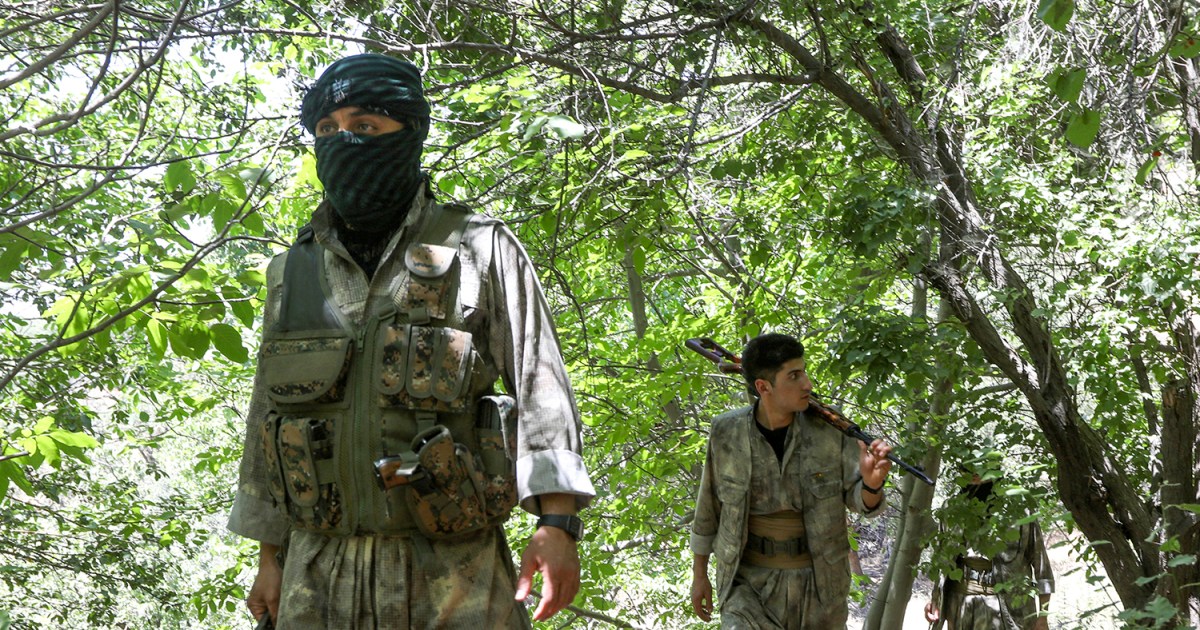

The United States is in talks with opposition Kurdish forces in a bid to arm them and foment an uprising in Iran, according to multiple media reports, as the US-Israel war on Iran enters its fifth day.
President Donald Trump’s administration is actively discussing with opposition Kurdish groups the possibility of arming them, according to CNN, citing Kurdish and US officials. As of Wednesday, it was unclear whether any deals had been struck.
- list 1 of 4How long can Israel sustain a military conflict with Iran?
- list 2 of 4Trump says Iran leader alternatives mostly killed
- list 3 of 4IRGC says Iran in ‘complete control’ of Strait of Hormuz amid Trump threats
- list 4 of 4What we know on day five of US-Israeli attacks on Iran
end of list
Kurdish rebels have for years opposed Tehran and carried out numerous attacks in Iran’s Kurdistan province as well as other western provinces. They operate along the Iraq-Iran border, with Iran and Iraq’s Kurdish minorities sharing close ties.
The US spy agency CIA has a history of working with Kurdish groups in neighbouring Iraq, which the US invaded in 2003. Washington also funded, armed and trained Kurdish fighters in Syria against former President Bashar al-Assad. The CIA has funded rebels and armed groups in numerous countries over the past several decades to destabilise governments critical of US foreign policy.
Amid the ongoing war, and as Iran hits US assets and personnel hosted in neighbouring Gulf countries, the Iranian Revolutionary Guard Corps (IRGC) has also targeted Kurdish positions in the west.
“Instinctively, it feels like a bad move,” analyst Neil Quillian of the United Kingdom-based think tank Chatham House told Al Jazeera of the plan, warning that it might cause more internal conflict in Iran.
“It is an afterthought and has not featured in any major planning to support any broader endgame. It reveals that the US-Iran war against Iran has been poorly thought out,” he said.
Advertisement
Here’s what we know so far:

What is happening?
CNN reported on Wednesday that the CIA is negotiating with multiple Kurdish groups to aid them in an uprising.
US officials told CNN the aim would be to use the Kurds to stretch Iranian forces and allow popular protests, or help them seize and control northern Iran, and thus create a buffer for Israel.
Trump spoke with Mustafa Hijri, head of the Democratic Party of Iranian Kurdistan (KDPI), on Tuesday, CNN reported, quoting a Kurdish official. In the coming days, Kurdish groups in Iran are set to participate in ground operations in western Iran, the official told CNN.
Earlier on Tuesday, US publication Axios also reported that on Sunday, a day after the US-Israeli bombing campaign on Iran began, Trump spoke to the leaders of two Kurdish groups in Iraq: Masoud Barzani, who leads the Kurdistan Democratic Party, and Bafel Talabani, leader of the Patriotic Union of Kurdistan (PUK).
Axios cited sources with knowledge of the exchanges. The publication also reported that Israeli Prime Minister Benjamin Netanyahu had lobbied for the US-Kurds connection for months. Israel has established intelligence networks among Kurdish groups in Iran, Iraq and Syria.
At least one Kurdish leader, Bafel Talabani, has confirmed the call with Trump.
In a statement on Tuesday, the PUK said Trump “offered an opportunity to better understand US objectives and to discuss joint support for building a strong partnership between the United States and Iraq”.
No further details were given.
Analyst Quilliam said the plan could fuel domestic conflict inside Iran by pitching opposition groups against each other, rather than helping them team up to challenge “the remnants of the regime”.
“There can be little trust or faith amongst Iran’s Kurdish groups that US support will be honoured,” he said.
“Trump’s approach to regime change is very much a DIY approach, and although supporting Iran’s Kurdish groups might advance that goal, it would be doing so without any responsibility for what happens: the US can simply walk away and leave the mess behind.”
What is the US’s history of arming Kurdish groups?
Kurds are an ethnic minority spread across the Middle East, but without a state of their own and with a history of marginalisation across countries. They share a common culture and language. Several Kurdish groups have for decades sought self-governance in Turkiye, Syria and Iran.
Advertisement
Washington has been a historical ally, particularly of Iraqi Kurds. The US provided tactical support in the form of no-fly zones that protected Kurdish groups during the 1991 uprising, although Washington was criticised for prompting the revolt and then abandoning people as Iraqi forces under Saddam Hussein responded violently.
The no-fly zone allowed the creation of a de facto Kurdish-controlled region, the Kurdish Regional Government, which was officially recognised in 2005.
Since 2014, the US has also partnered militarily with the Kurdish Peshmerga forces to fight ISIL (ISIS) in Iraq.
Similarly, the US, under Trump’s first administration in 2017, trained and armed the People’s Protection Units (YPG) – a Syrian Kurdish militia that Turkiye lists as a “terror” group due to links with the proscribed Turkiye-based Kurdistan Workers’ Party (PKK) – in its successful resistance to ISIL.
The group, which now forms the main component of the Syrian Democratic Forces (SDF), controlled Raqqa and other ISIL strongholds until very recently. However, Washington turned away from the group and backed the new government of President Ahmed al-Sharaa, which took power in December 2024. The SDF signed a deal with the Syrian government to integrate into the government forces. In return, the Syrian government recognised Kurdish rights.
The main Turkish Kurdish group has decided to lay down arms and engage with the Turkish state after four decades of bloody armed rebellion.
Washington’s alliance with Iranian Kurds is therefore not strategic, analyst Quilliam noted. The US has demonstrated its ability to step back from alliances, he said, and from the viewpoint of important regional partners, Washington could cause anger.
“It would be a major concern for Washington’s partners in the region, most notably Turkiye and Syria, and it would be a major headache for Iraq too,” he said.

A brief history of the CIA’s arming and funding of rebel groups
The US spy agency has funded, trained and supplied weapons to rebels and armed groups across numerous countries over the past five to six decades.
Afghanistan: Starting in the late 1970s, the CIA funded and trained Afghan mujahideen to fight the Soviet occupation.
Libya: The US spy agency provided intelligence and other support to rebels fighting the longtime leader Muammar Gaddafi in 2011.
Iran: The CIA, in a joint operation with the British spy agency MI6, helped groups, including military officers, to overthrow the country’s first democratically elected prime minister, Mohammad Mossadegh, in 1953.
Nicaragua: In the 1980s, the CIA provided weapons and funds to the Contras against the socialist Sandinista government of Daniel Ortega. The CIA also backed armed groups in Guatemala (1954) and Cuba (1960-61) and El Salvador to destabilise the governments critical of US policy in Latin America.
Vietnam: Starting in the 1950s, the CIA began arming rebels in Vietnam. Later, it sent its army, making it one of the bloodiest US interventions of all time.
Advertisement
Indonesia: In the late 1960s, the US spy agency armed rebels against President Sukarno.
Related News
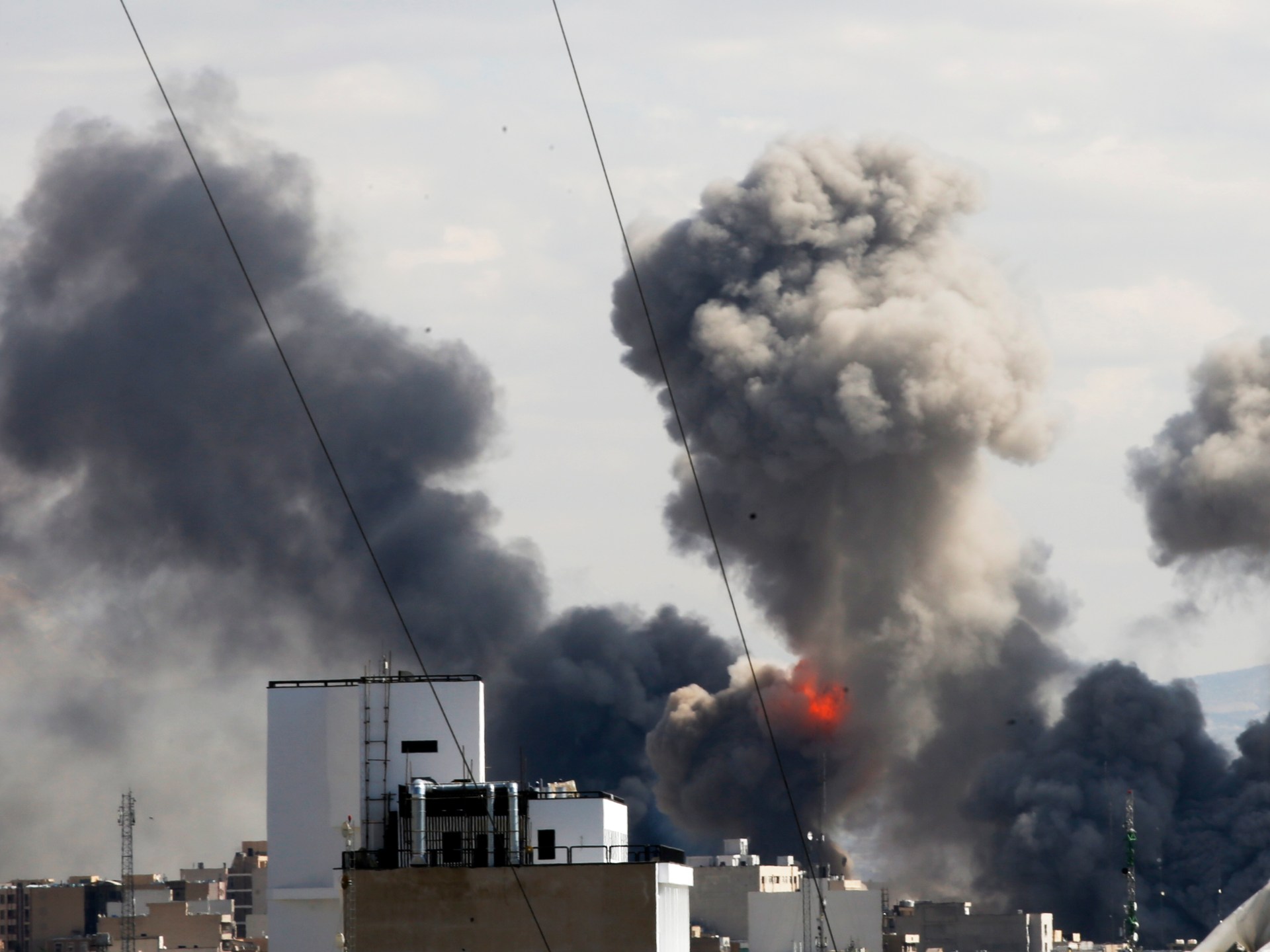
Missile strikes continue as Iranian leaders project defiance after Khamenei
Bulgaria to hold snap parliamentary election on April 19 after protests
France arrests nine over far-right activist’s killing