

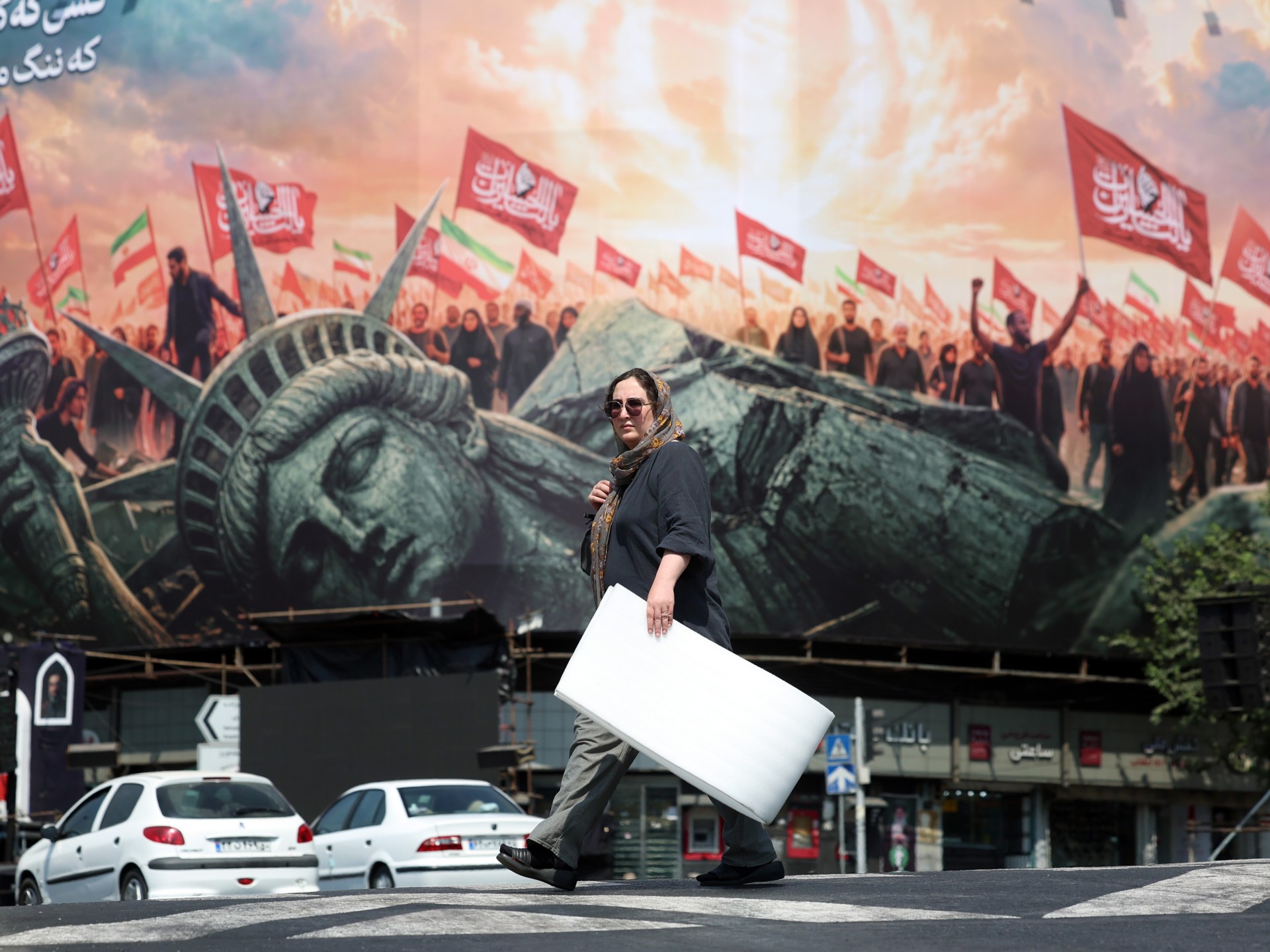

The Memorandum of Understanding aimed at ending fighting between the US and Iran is set to expire on Monday, with little sign that either side is willing to extend the agreement, which both sides have accused the other of violating for weeks.
“We have not yet made a decision to restart negotiations with the United States,” Iranian Foreign Minister Abbas Araghchi said in a post on Telegram on Saturday.
Meanwhile, mediators from Qatar and Pakistan continued to exchange messages with Iran. Araghchi added that Iran was working on a separate agreement with Oman to hash out new shipping routes for the Strait of Hormuz, but emphasised that this was only possible if a political solution was reached.
On the US side, President Donald Trump told supporters in New York on Friday that the US would soon claim the critically important waterway for itself.
Here’s what you need to know as the MoU expires.
What is the MoU?
The agreement, signed on June 17 by Trump and Iranian President Masoud Pezeshkian, followed rare high-level talks hosted by Pakistan. It was meant to bring an end to more than three months of war that had killed thousands and crippled commercial movement in the Gulf, especially of oil and gas exports relied on globally.
Leaving complex issues such as Iran’s nuclear programme to be dealt with later, the agreement sought not only to find an immediate diplomatic solution to halt the war with Tehran, but also to find an end to conflict in Lebanon.
Iran and the US, the agreement said, “declare the immediate and permanent termination of military operations” and that a “final deal” would “confirm the permanent termination of the war on all fronts.” The agreement said this “final deal” would be endorsed by the UN Security Council and would be reached in a maximum of 60 days, which could be extended by mutual consent.
Advertisement
The US was to end its naval blockade within 30 days, remove its forces from near Iran after the “final deal” was reached and begin work on a reconstruction and development package for Iran of at least $300bn. Washington also agreed to terminate sanctions against Iran, issue waivers for Iranian oil exports and allow Tehran to access frozen funds. Iran, for its part, was to clear mines from the Strait of Hormuz and allow ships to pass “with no charge” for 60 days.
Tehran also reaffirmed it would not seek nuclear weapons and would negotiate on issues such as enrichment, the details of which would be laid out in a “final deal” to be backed by the UN.
Was the MoU successful?
Although the US and Iranian versions of the agreement differed slightly, much of the dispute since its signing has centred on more basic issues, such as whether it was a ceasefire or a more permanent agreement and what each side was supposed to do.
Whether the entire agreement was still in effect soon became disputed, and by June 27 , Trump was calling Iranian strikes in the region “a foolish violation” of the deal. Iran said US strikes “violate Article 1 of the Memorandum of Understanding”.
On July 7 , Trump said the agreement was “over,” and the US continued launching attacks on Iran, including on what Tehran called civilian infrastructure, killing at least 50 people. Iranian officials said the US had “violated and suspended” all its commitments and Tehran had “likewise suspended all our own commitments”.
Since then, the US has not fully lifted sanctions on Iran and Trump has scoffed at the idea of paying Iran for reconstruction, suggesting instead that Tehran pay compensation to families of protesters it had killed “over the last 50 years” as well as “all the people they have killed and gravely wounded with their roadside bombs and many conflicts”.
Reopening Hormuz has not materialised either, with Iranian and US officials continuing to insist their side controls the strait. Earlier this week, the Pentagon said it had fired on a Panama-flagged cargo vessel in the strait because it “violated the US blockade against Iran.”
“The ceasefire stopped and was rendered obsolete after the US didn’t comply with the terms of the agreement, or the MoU,” Mostafa Khoshcheshm, professor at the University of Applied Sciences in Tehran, told Al Jazeera.
In particular, he added, Tehran views the US as having failed on its promises of releasing Iranian assets, lifting sanctions, removing its naval blockade and having Israel withdraw from southern Lebanon. “Now, formally, on paper, it is said the deadline has ended,” Khoshcheshm said.
Advertisement
What happens next?
Although the MoU is set to expire on Monday, what that means exactly depends on which side you ask.
Iran’s Araghchi said on Friday that what was in the Islamabad MoU was “the end of the war, not a ceasefire”, according to the Iranian Students’ News Agency (ISNA). He added that since the US violated the MoU and continued attacks, “there was no 60-day ceasefire that needed to be extended”.
The recent reshuffle in Iran’s national security apparatus suggests a tougher stance in future talks and less willingness to back down, particularly on control of Hormuz. Earlier this month, for instance, the former head of the IRGC, Mohsen Rezaee, was named as the new head of Iran’s Supreme National Security Council, its top security body. The move is meant to better synchronise military and civilian operations, analysts have told Al Jazeera.
Rezaee’s appointment, along with other recent leadership changes, “shows Iran believes it has the upper hand,” Khoshcheshm said. Any new talks would likely see Iran coming to the table with more demands, he said, from ending the war in Gaza, to lifting sanctions and a blockade of Yemen, even calling for the denuclearisation of Israel.
Few cards left to play for the US
As for the US, Trump and his administration have escalated rhetoric regarding the strait and economic warfare.
Trump on Friday announced plans to formally claim the waterway for the US.
“After we finish defeating Iran, which is being very badly defeated, pretty soon I’ll be declaring the Hormuz Strait a territory of the United States,” he said.
Treasury Secretary Scott Bessent also said on Friday that the US will apply measures that have “never been seen” on Iran.
But there are not many levers left for Trump to pull if he wants to exert more pressure on Tehran, Barbara Slavin, Distinguished Fellow at the Washington, DC-based Stimson Centre, told Al Jazeera.
US stocks of interceptor missiles have been depleted, its strategic oil reserves drained and key military hardware, including aircraft carriers, have been kept at sea months longer than planned, meaning the US has few military options left to try. As for economic pressure, Tehran has shown it can inflict economic damage of its own by disrupting traffic transiting Hormuz, Slavin said.
“Iran is playing hardball here, clearly furious at the Trump administration for in its view not fulfilling the MoU signed back in June,” Slavin said. “They’re making the international economy and they’re making Donald Trump sweat.”
One way or another, Iran would likely be reimbursed for the war and gain a great deal of control over the Strait of Hormuz, Slavin said. This conflict, she said, “resolves through a deal, probably after our midterm elections, when there will be less of an impact on the vote”.
Iranian Parliament Speaker Mohammad Galibaf told reporters in Tehran on Saturday that the concessions Iran won in the MoU were “a source of pride and victory”.
“I can say with complete conviction that we truly emerged victorious in this war, both militarily and politically,” he said.
Advertisement
Related News

DRC’s Ebola outbreak began months before it was officially declared, says WHO

US House passes funding bill to avert government shutdown ahead of midterms
Niger mutiny puts Russia’s expanding role in the Sahel to the test