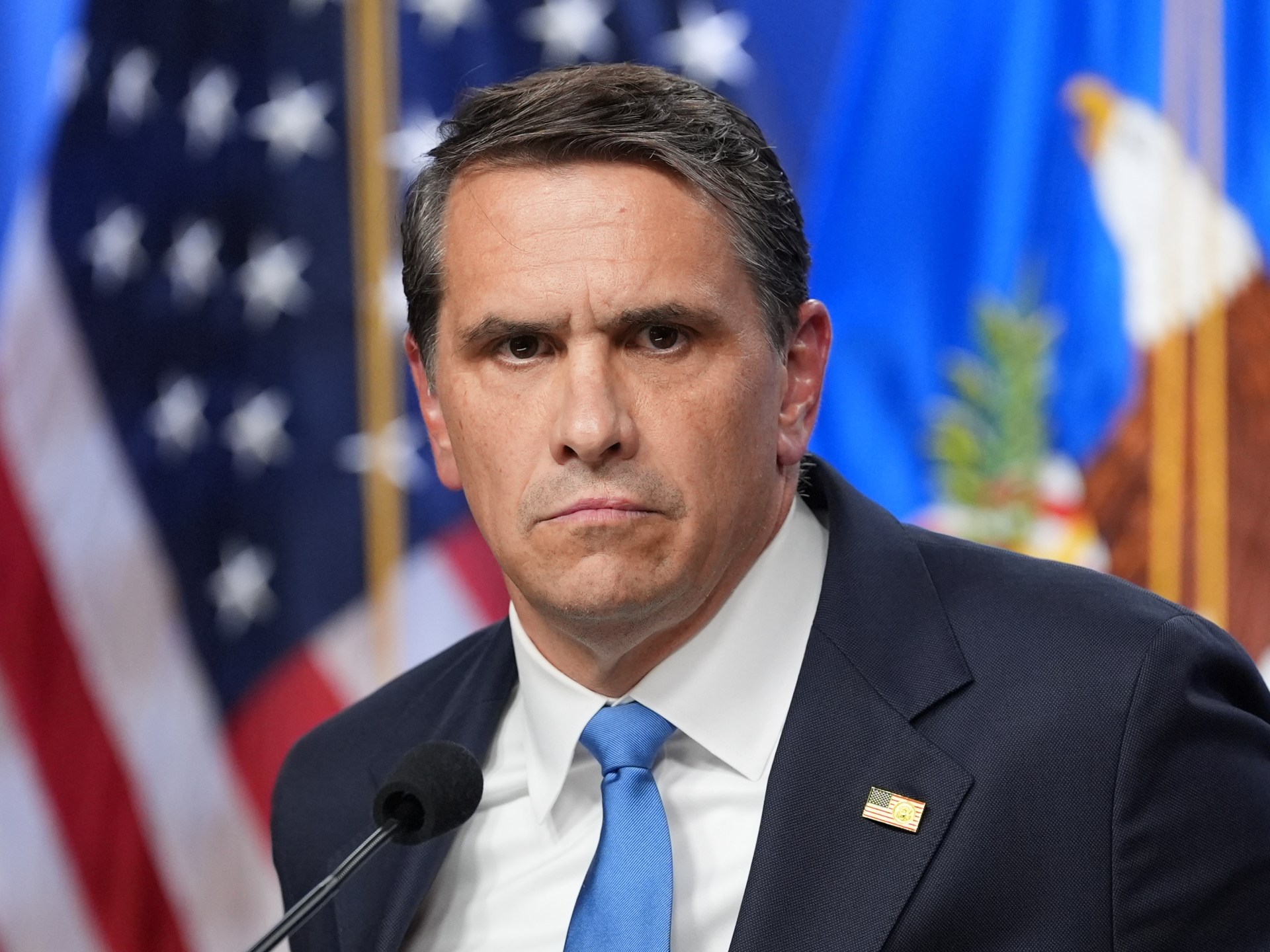

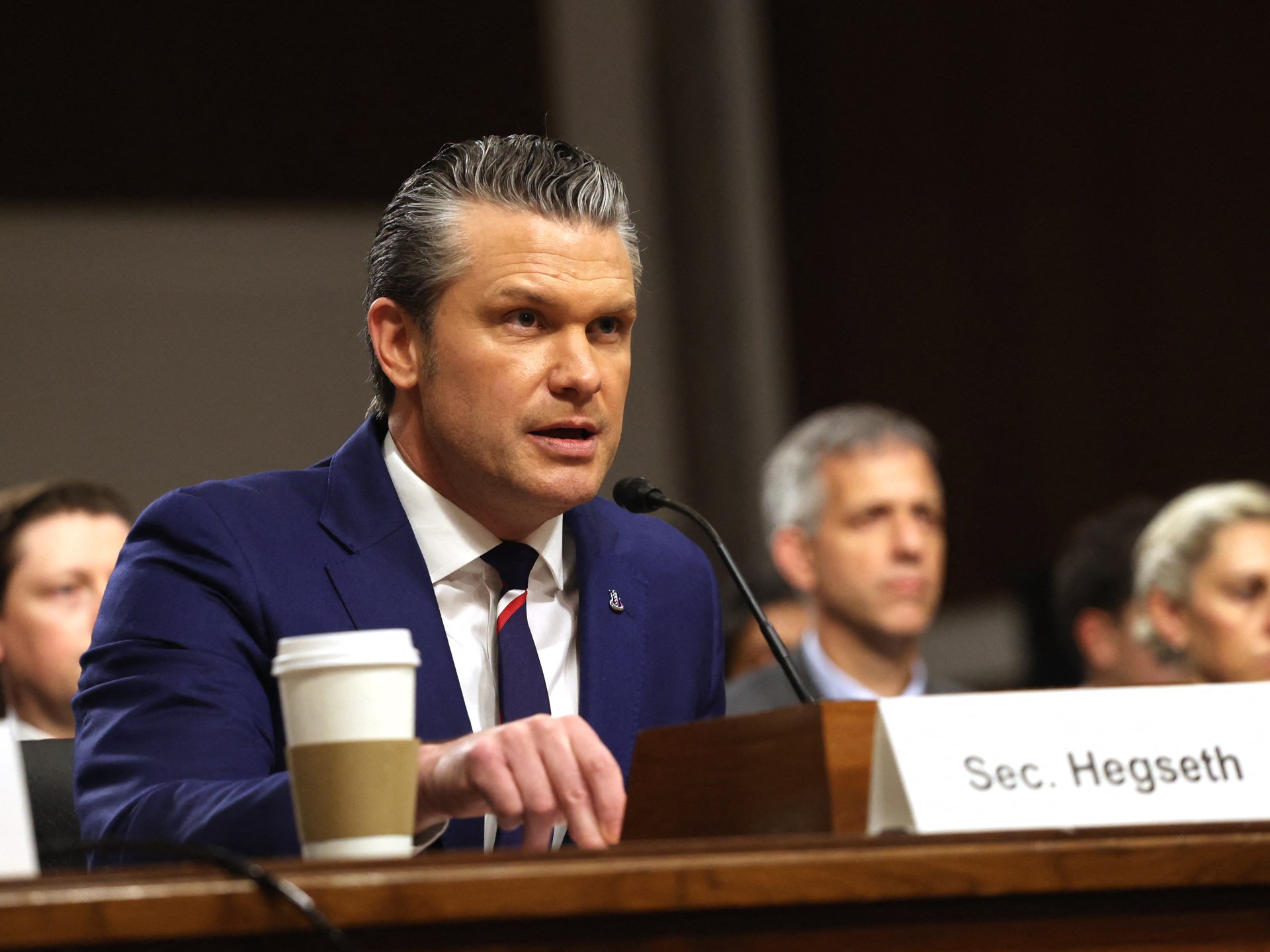

United States Secretary of Defense Pete Hegseth and Chairman of the Joint Chiefs of Staff Dan Cain have faced public questioning for the second day, this time in front of the Senate Armed Forces Committee.
The hearing on Thursday came a day after Hegseth and Caine appeared before a House committee, the first time the pair had faced public questioning from lawmakers since the US and Israel launched attacks on Iran on February 28.
- list 1 of 3Will the Iran war reshape the global energy order?
- list 2 of 3Trump slams Germany’s Merz again as rift over Iran war widens
- list 3 of 3US military equipment worth billions of dollars destroyed in Iran war
end of list
In at times bellicose language, Hegseth repeatedly decried critics of the war, including lawmakers, accusing them of “fecklessly” aiding US enemies.
On Thursday, he again delivered a defence of the war, which Pentagon officials revealed yesterday had so far cost the US at least $25bn, while giving little clarity on next steps amid a tentative pause in fighting and stalled talks with Iran.
Here were the key moments.
Hegseth says US stockpiles ‘in good shape’
Batting away a key criticism of the war, Hegseth maintained that the US munitions stockpile remained “in good shape”.
That comes amid a series of reports that indicate it may not be the case. Some lawmakers have charged that depleted munitions have potentially left the US vulnerable in other theatres.
The New York Times last week reported that the number of expensive long-range stealth and Patriot interceptor missiles the US has so far used in the war has forced the military to surge weapons and hardware from other regions.
Yesterday, Pentagon officials told lawmakers that the US had spent $25bn since the war began, but were unclear on whether that included damage to US assets in the Middle East.
Advertisement
Caine says Russia has assisted Iran in the war
The top US general made a glancing admission that Russia had assisted Iran in the current war, but gave few details.
“There’s definitely some action there,” he said, suggesting he could not reveal more information in the public setting.
Russia and Iran have long traded weapons, and Moscow has offered political support to Tehran during the war. However, there have been few details of more concrete support throughout the conflict.
Earlier this week, Russian President Vladimir Putin again voiced support for Iran during a meeting in St Petersburg with Iranian Foreign Minister Abbas Aragchi.
Hegseth claims War Powers deadline ‘pause’
Friday marks 60 days since Trump officially notified Congress of US attacks on Iran. Under the 1973 War Powers Act, the president is legally required to halt the operation or receive congressional approval to continue.
But on Thursday, Hegseth offered a novel interpretation of law, saying the “60-day clock pauses, or stops” during a pause in fighting. The US and Iran have mostly paused attacks since April 8 ahead of ceasefire talks, which have since stalled.
The US has since continued its naval blockade of the Strait of Hormuz, with Trump repeatedly threatening to renew attacks.
The language of the War Powers Act does not explicitly point to the 60-day timeline changing due to a pause in fighting.
Responding to Hegseth’s statement, Senator Tim Kaine, a Democrat, was wary.
“I don’t believe the statute would support that,” he said.
Rollbacks to civilian oversight questioned
Prior to launching the US-Israel war with Iran, the Pentagon had already reportedly moved to roll back some offices involved with oversight of civilian harm in conflict.
That included staffing drains at the Civilian Protection Center of Excellence, which was meant to assess and glean lessons from the high civilian death toll during the US “global war on terror”.
Questions have further been raised over reported civilian deaths in Iran, including a US strike on a girls’ school in Minab.
On Thursday, Senator Kirsten Gillibrand asked Hegseth, “What is your response to targeting that has resulted in the destruction of schools, hospitals, civilian places? Why did you cut by 90 percent the division that’s supposed to help you not target civilians?”
Republican Mike Rounds also followed the line of questioning, asking if the Pentagon still has the resources to protect civilians.
Hegseth maintained the department still has “every resource necessary” to do so.
Advertisement
Democrat asks if Hegseth telling Trump ‘what he wants to hear’
Some of the harshest questioning came from Senator Jack Reed, the top Democrat on the committee.
Hegseth has reportedly been one of the staunchest supporters of the war behind the scenes, which Reed said raised questions over the counsel he was giving the president.
“I am concerned that you have been telling the president what he wants to hear, instead of what he needs to hear,” Reed said at one point.
In another instance, Reed said he believed Hegseth was “causing lasting harm to the military”.
Hegseth, meanwhile, again took aim at lawmakers, particularly Democrats, who have questioned the war and its aims.
“As I said yesterday, and I’ll say it again today, the biggest adversary we face at this point are the reckless naysayers and defeatist words of congressional Democrats and some Republicans,” Hegseth said in his opening statement.
Related News
Celebrations in Lebanon as 10-day ceasefire with Israel begins
King Charles US visit: What to know about the itinerary, Congress address
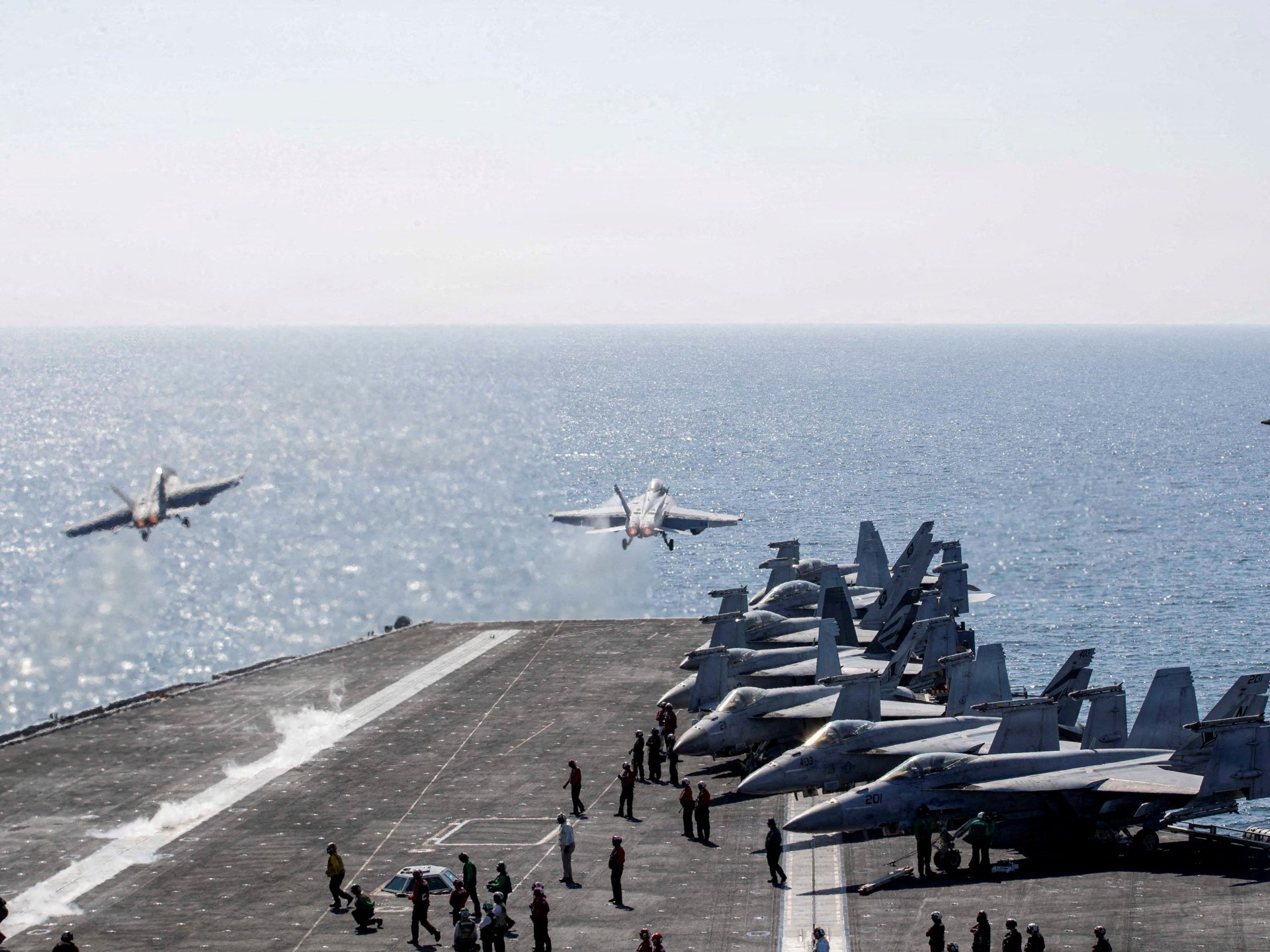
US has three aircraft carriers in the Middle East for first time since 2003