A US Marshal Rode Along For The Arrest Of The Presumptive Guyana Opposition Leader
 30 September 2026
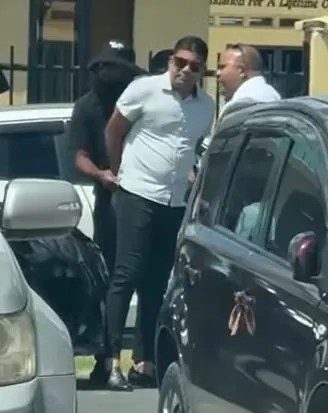


News Americas, GEORGETOWN, Guyana, Weds. Sept. 30, 2206: New testimony in the extradition case against Guyana Opposition Leader Azruddin Mohamed and his father, businessman Nazar Mohamed, has confirmed something the public hadn’t heard in detail before: a United States Marshal wasn’t just monitoring the October 31, 2025 arrests from a distance – he was personally picked up by Guyana’s Special Branch chief and brought along for the operation.
Testifying Tuesday before the Georgetown Magistrates’ Court, Assistant Commissioner Prem Narine described getting a phone call from U.S. Marshal Sandy Rao just after leaving the Attorney General’s chambers that morning. Rao identified himself as the marshal assigned to the extradition matter. Narine picked him up at the Kingston Marriott Hotel and brought him along for the operational movement to court – having previously met and vetted him through the U.S. Embassy’s Regional Security Officer. Narine rejected any suggestion that the arrest of Guyana’s presumptive opposition leader was shaped by bias or political motive, telling the court instead: “Azruddin Mohamed is a threat to the people of this country.”
That single admission – a foreign law enforcement officer riding along for the arrest of a sitting opposition figure – is the detail likely to resonate most with a diaspora already watching how far U.S. involvement extends into Caribbean domestic affairs, from deportation negotiations to extradition enforcement.

The rest of Tuesday’s hearing exposed real gaps in the paper trail behind the arrest. Defence Counsel Siand Dhurjon pressed Narine on Police Standing Order 28(4)(f), which requires officers to keep contemporaneous notes during an arrest, and put it to him directly that Azruddin Mohamed had asked not to be placed in the open tray of a police pickup and later complained his handcuffs were cutting into his skin. Narine said he couldn’t recall those exchanges, insisting he was physically unable to write in a moving vehicle. Dhurjon went further, alleging Narine’s memory gaps traced back to deliberately destroyed records: “I am putting to you that the reason you cannot remember what was said and not said is because you shredded and burnt the pocket book in which you are obligated to record the statements of Azruddin Mohamed.” Narine denied it: “That is not true.”
Under cross-examination from Roysdale Forde, SC, Narine also acknowledged that no Director of Public Prosecutions (DPP) fiat was tendered into evidence to confirm the required statutory authorization was in place before the warrants were executed – and that despite 26 years on the force, he couldn’t recall specific past instances of drafting arrest warrants at the Attorney General’s chambers. He confirmed the Special Branch had the Mohameds under surveillance before the arrests took place.
Defence also argued that the high-speed interception of Azruddin Mohamed’s vehicle on Smythe Street was reckless, and that his handcuffs were applied with excessive force. Chief Magistrate Judy Latchman ruled the traffic-related arguments irrelevant to the extradition matter itself, sustaining the prosecution’s objection.
Cross-examination by Dhurjon wrapped up Tuesday, Sept. 29th. The case returns to the Georgetown Magistrates’ Court on October 21st, where the question of just how involved U.S. authorities were in executing this arrest is likely to come up again.
Related News
Guyana Police Spy Chief Says He’s Unaware Of Derogatory Government Statements Against Mo...
A Broken Headlight, A Revived ICE Deal: How Local Politics Could Get A Haitian Born Pastor...
Can Guyana Turn A UN Crisis Into A Diplomatic Opportunity?