
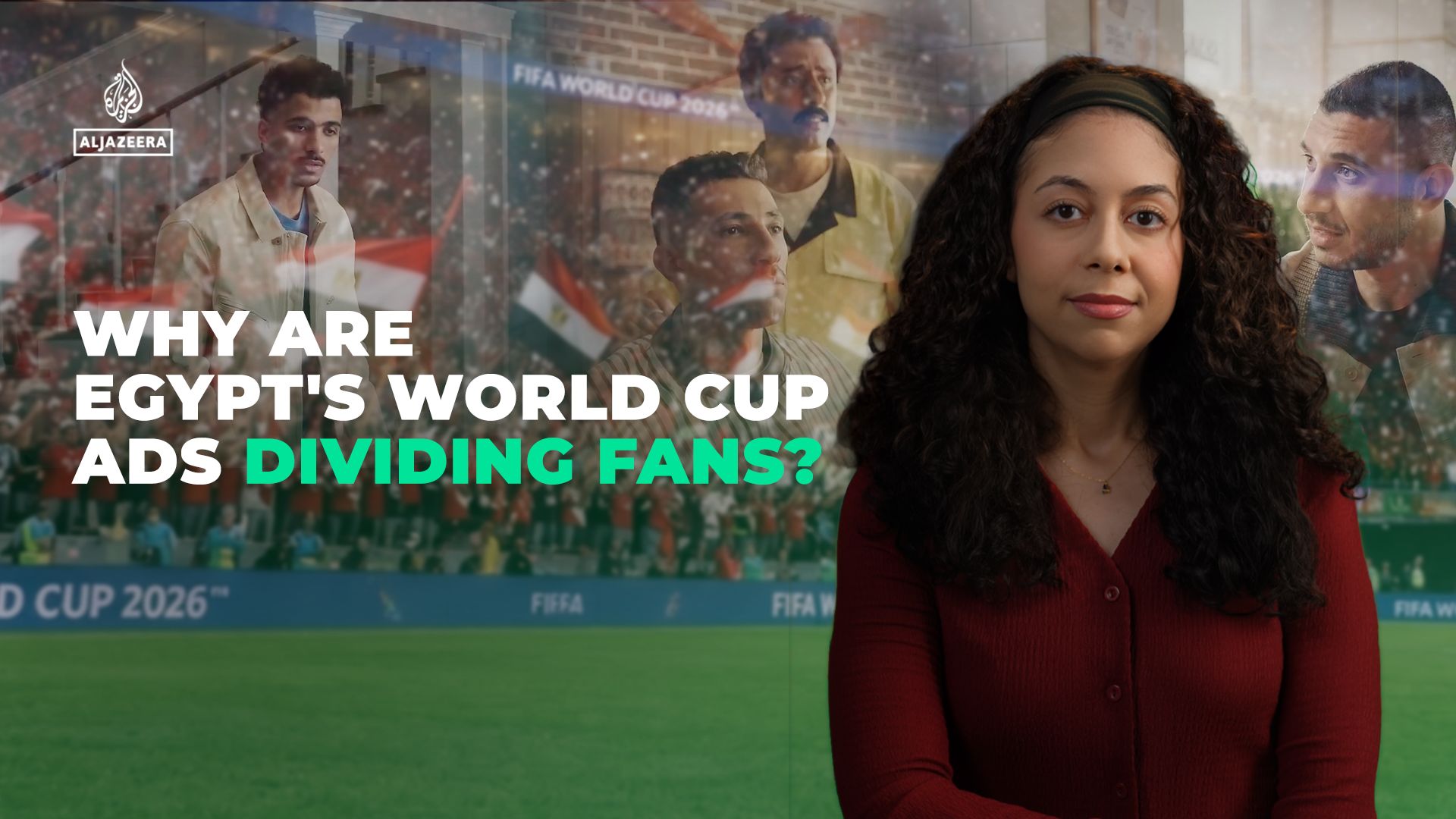

The advertisements all start the same way. It could be a barber, an aunt or a family member in discussion with others about the FIFA World Cup, but in each case, they assume Egypt will be heading home after the group stage.
Then an Egyptian footballer pushes back: “To all the doubters, this time we’re staying longer.”
It’s a line that’s resonating like never before in the nation of 120 million people, as Egyptian football fans wait with bated breath for the final round of group stage matches that could send The Pharaohs, as the national team are known, into uncharted territory: the knockout stages.
Here’s why these commercials have captured the zeitgeist in Egypt:
Egypt was the first African and Arab nation ever to play in a World Cup, back in 1934. It has won the Africa Cup of Nations a record seven times. Football in Egypt isn’t just a sport, it’s a national identity, and The Pharaohs have long been a source of genuine pride and belief.
But the World Cup has always told a different story. Before this tournament, Egypt had qualified just three times — in 1934, 1990 and 2018.
It had never won a single match. Fans still carry the painful memories of a penalty shootout loss to Senegal that kept Egypt out of the Qatar World Cup 2022 entirely.

Everything — at least, so it seems.
After two games at the World Cup, Egypt sits at the top of Group G, above Iran, Belgium and New Zealand.
Advertisement
The 26th ranked Egypt drew 1-1 with Belgium — ranked 10 in the world — in its first match. Then, it beat lower-ranked New Zealand 3-1.
Its four points are the most Egypt has ever earned at a World Cup. Its four goals are the most Egypt has ever scored at a World Cup.
Now, on Friday night in Seattle — early Saturday morning in Egypt — the team faces Iran in their final group game. A win or a draw would guarantee that Egypt’s national team goes into the knockout stages for the first time.
If Egypt loses to Iran, they might still make it to the round of 32, but their fate will depend on what happens in the Belgium-New Zealand match that will be held at the same time, and potentially, on the outcomes of matches in other groups. Eight of the 12 teams places third in their groups will also move into the next round.
So in a nutshell, Egypt is on the cusp of going where it never has before — and only a rare set of permutations can deny it that chance.

But it isn’t just the performances. Part of what makes this year feel different, to many fans, is the identity of the main man standing outside the pitch, next to the Egyptian dugout.
Hossam Hassan is Egypt’s all-time top scorer and one of the most iconic figures in the country’s football history. In 1990, he scored the goal that ended a 56-year wait and sent Egypt to the World Cup in Italy. Now, more than three decades later, he is the national team’s coach, making him the first Egyptian ever to reach the World Cup as both player and manager.
For older fans, his presence carries the memory of a time when Egypt genuinely believed it could make its mark on the world stage.

They aren’t really making fun of the team. They’re making fun of the deeply ingrained expectation that Egypt won’t go very far. And that expectation, many argue, goes beyond football. Years of economic hardship and political uncertainty have made expecting the worst feel like common sense for many Egyptians. They protect themselves from disappointment. They assume it won’t work out before it doesn’t.
That’s what has also made the campaigns somewhat divisive. For some viewers, the humour felt honest — a reflection of a habit fans know they have. It prompted real questions about why low expectations have become so normal. Others argued the advertisements risked making those same low expectations feel permanent, even acceptable.
Advertisement
Either way, they underscore how the 2026 World Cup has reignited faith among Egyptian fans, as they wait for the Iran match. An advertisement campaign challenging doubters has come to reflect the broader hopes, doubts and debates surrounding The Pharaohs.
Related News
Mona Khalil, Lebanon’s turtle advocate, dies after Israeli attack
Norway seeks to ban trade with illegal Israeli settlements in Palestine
Older runners defy age in Kenya’s central highlands