Yemen gov’t accuses IRGC, Hezbollah of sending 21 experts to back Houthis
 03 November 2026
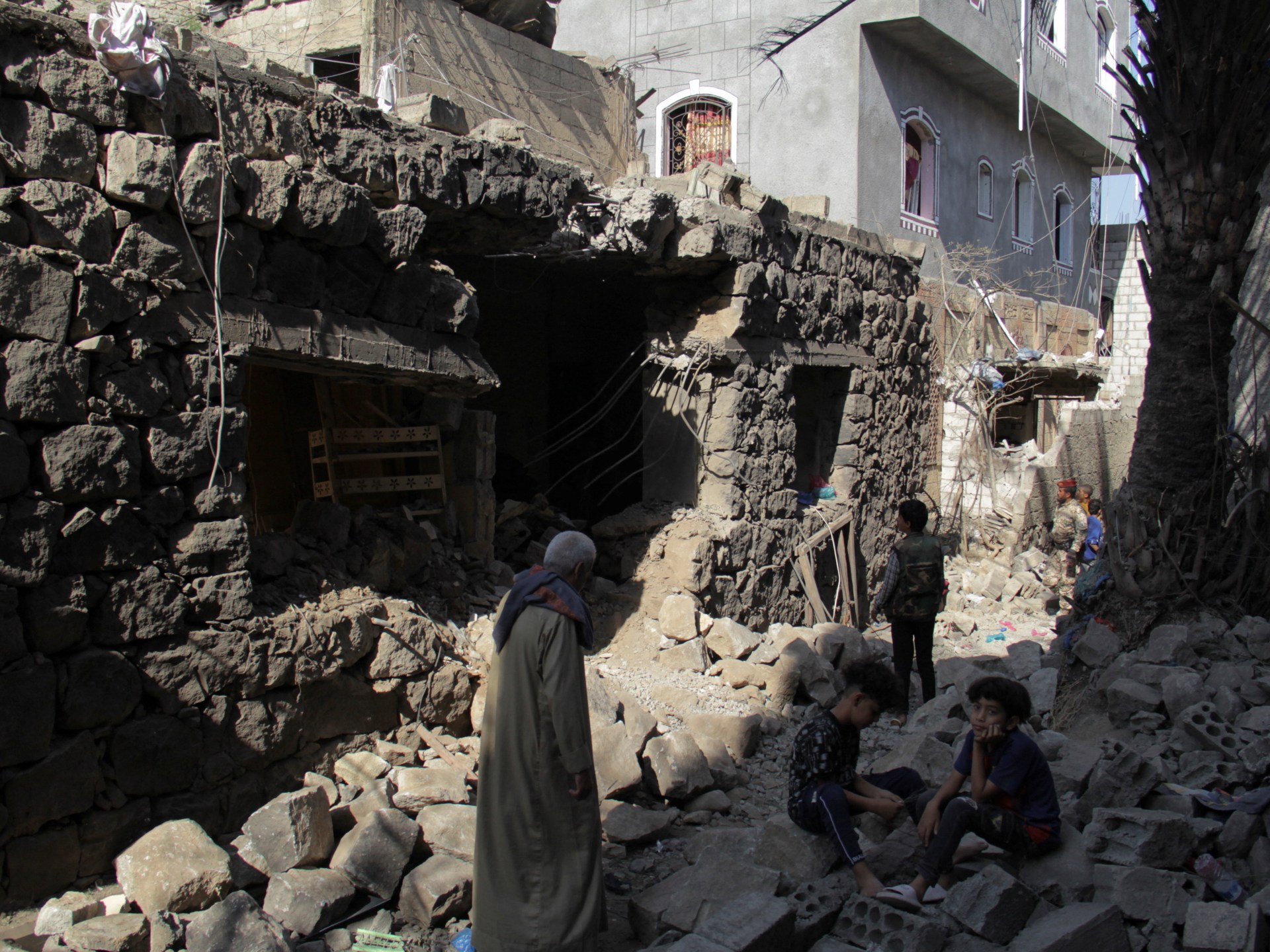

Yemen’s internationally recognised government has accused Iran’s Islamic Revolutionary Guard Corps (IRGC), as well as Lebanon’s Hezbollah, of deploying 21 experts to help the Houthis plan and direct military operations in the country.
Interior Minister Major-General Ibrahim Haidan said in a statement on Tuesday that 14 members of the group are from the IRGC and seven from Hezbollah.
- list 1 of 3‘Need a Plan B’: Yemenis in Aden prepare for another war as missiles fall
- list 2 of 3Are Houthis using Russian satellites as Saudi Arabia fends off strikes?
- list 3 of 3A Gulf non-aggression pact could be the path forward
end of list
The experts’ roles show that foreign involvement has moved from financing, arming and training to “direct supervision and participation in planning and managing operations and building military capabilities”, said Haidan.
The statement added that eight of the experts are in Hodeidah, four in Sanaa, four in Saada, two in Hajjah, two in Amran and one in the coastal city of Khokha.
It listed their specialities as including command and control, ballistic missiles and drones, electronic warfare, smuggling military components, coordinating naval operations and choosing commercial ships as targets, developing explosive-laden boats and autonomous submarines, and training fighters in mine-laying and siege tactics.
Haidan warned that the activities “threaten shipping in the Bab al-Mandeb strait and the Red Sea” and could transfer military expertise to other armed groups.
He called on the international community to designate the Houthis a “terrorist” organisation, dismantle their financing and arms networks, and enforce the arms embargo under United Nations Security Council resolutions 2216 and 2624.
The statement comes as Yemeni armed forces and fighters loyal to the government battle the Houthis in five provinces, after the group seized the western Red Sea coast and the Bab al-Mandeb area in September.
Advertisement
The resumption of fighting has shattered a relative quiet brought by a 2022 ceasefire that followed a lengthy civil war which first erupted in 2014, when the Houthis seized the capital, Sanaa.
In 2015, Saudi Arabia entered the war at the head of an international coalition aimed at restoring Yemen’s internationally recognised government.
The government has long claimed the IRGC is supporting the Houthis, while Tehran insists the Houthis act independently. The Houthis acknowledge their alliance with Iran but have long denied being an Iranian proxy, while Hezbollah has previously rejected having a role in Yemen’s war.
Saudi Arabia, whose airports and oil facilities have come under Houthi attack in recent weeks, has accused Iran of encouraging the escalation.
Related News
Israel demolishes homes of Palestinians blamed for attack on soldiers

Henri Kagan, Kenso Soai win chemistry Nobel for ‘mirror image’ breakthrough
How did Lula beat Bolsonaro after losing Brazil’s first-round election?