

The United States paused strikes on Iran on Friday after nearly two weeks of bombardments, including in the Strait of Hormuz, since the Islamabad-brokered ceasefire unravelled.
Washington has not carried out attacks targeting Iran, preventing Tehran’s retaliatory attacks on US military assets and infrastructure in countries in the region.
Although US President Donald Trump has denied it, media reports there said Washington may be running low on air defence interceptors, while pressure is mounting on both sides to give diplomacy another chance amid heightened stakes.
Here’s what we know about why the US has halted its attacks and what is happening in diplomatic channels.

What is the situation now?
Despite the sudden lull in the exchange of strikes, the Strait of Hormuz – the critical waterway that has emerged as one of the biggest flashpoints in this war – remains closed.
Iran’s state broadcaster IRIB reported that six ships had attempted to pass through an “illegal and unsafe” route in the south of the Strait of Hormuz in the early hours of Monday after turning off their navigation and positioning systems.
One vessel suffered an unspecified accident, IRIB said, while the others returned to the Gulf under “decisive Iranian management”. It quoted an official who blamed the US military for “provoking” the ships to sail on the unauthorised route.
Advertisement
However, retaliatory attacks by Iran on US military assets and infrastructure in Bahrain, Kuwait and Jordan have ceased. “Our strategy has essentially been retaliatory. We have also halted our retaliatory operations,” said Iranian army spokesman Mohammad Akraminia.
Global oil prices dropped by about 4 percent after the US and Iran halted exchanging missiles, signalling a potential shift towards diplomacy.
On Saturday, the US military said its naval blockade of Iranian ports, including those in the Strait of Hormuz, “remains in full effect”, but did not specify why Washington had halted attacks on Iran after 13 nights of escalating strikes.

What tensions remain?
The biggest flashpoint and the issue which directly caused the resumption of strikes two weeks ago is the Strait of Hormuz, which Iran effectively closed to international shipping shortly after the US and Israel began attacks on Tehran on February 28.
Iran has been discussing proposals with Oman, whose territorial waters also extend into the strait, to reopen the Strait of Hormuz under a shared management protocol. However, it is not clear if that would be acceptable to Trump, or the Gulf Cooperation Council (GCC) countries.
Following the signing of a memorandum of understanding (MoU) between the US and Iran on June 17, the strait was supposed to be open and free to shipping traffic for a minimum of 60 days while peace talks were under way. However, the two sides disagreed on who had ultimate control over shipping routes and which path ships should take. That resulted in Iranian attacks on ships taking the “wrong” routes and, ultimately, Trump’s resumption of strikes on Iran.

Tensions over shipping in Hormuz have now also spilled over into other vital waterways.
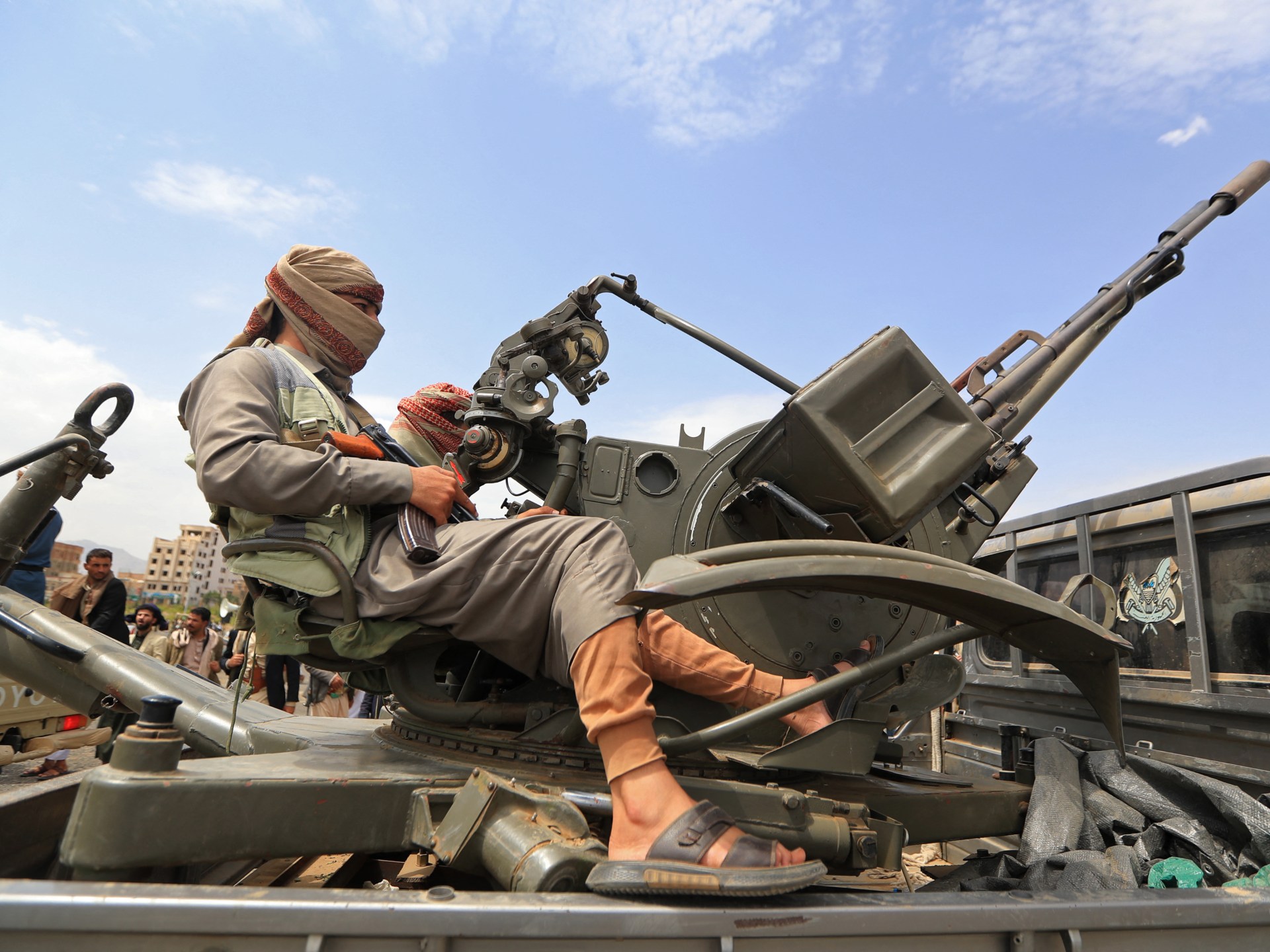
Shipping traffic through the Bab al-Mandeb strait at the entrance to the Red Sea on the other side of Saudi Arabia has also slowed following Houthi attacks on ships along Yemen’s Red Sea coast and the group’s announcement of a naval blockade against the largest GCC member, according to shipping data from analytics platform Kpler.
Meanwhile, a Ukrainian strike on an Iranian vessel in the Caspian Sea pushed tensions further, killing at least one Iranian sailor. Tehran summoned Ukraine’s diplomats and accused Kyiv of carrying out a “hostile and criminal” act.
Ukraine’s President Volodymyr Zelenskyy said long-range missiles had targeted vessels carrying military cargo linked to Iran, as he accused Russia of aiding Iran’s military campaign against the US.
Advertisement
Another major flashpoint is Lebanon, where Israel has occupied about one-fifth of the country since early March. Iranian Supreme Leader Mojtaba Khamenei has insisted that peace between Tehran and Washington will only be possible if Israel ceases its attacks on Lebanon, where it claims to be targeting strongholds of the Iran-backed Lebanese group, Hezbollah.
Iran “has designated the preservation of Lebanon’s territorial integrity, and the absolute, unconditional termination of the Zionist regime’s aggression as the primary condition for any agreement to end the imposed war against the aggressive US”, he wrote in a post on X.

Why has the US ceased strikes now?
US Ambassador to the United Nations Mike Waltz told broadcaster NBC News that a pause in strikes would aid talks between the two countries. “What the president is doing right now, as we’ve seen all along, is giving some talks some space,” he said. “Talks are ongoing.”
Iranian-American economist Nader Habibi told Al Jazeera that the global economy had come under severe pressure when the US and Iran returned to fighting two weeks ago, and crude prices jumped by more than 20 percent to above $100 per barrel.
This is a main reason why the US has halted strikes, he postulated.
“There was pressure on the Trump administration from all sides, both domestic and international partners, to find a solution,” Habibi told Al Jazeera. “All the recent US strikes did not produce enough pressure to change Iran’s policy and force Iran to accept its demand.”
He said another issue is that the cost of Iran’s strikes on Gulf countries “was very high, and the US risked alienating its allies due to the damage to their economies because those strikes continued”.
Likewise, the US naval blockade and sanctions have put Tehran’s economy under severe pressure, Habibi said, adding that the country “witnessed long lines for gasoline and diesel fuel, sometimes reaching up to a kilometre”. It is coupled with the infrastructure damage in Iran from the US strikes, including bridges and railways.
Therefore, he said, “both sides have an incentive because of the severe cost and the inability of one side to force the other side to give up”.
Ali Vaez, the International Crisis Group’s Iran project director, told Al Jazeera: “Two weeks of fighting have reminded both Washington and Tehran that escalation raises the costs without resolving the conflict. The hope is that Iran and Oman can reach a formula for reopening the strait that all other stakeholders would find acceptable.”
“The gap can be bridged only by returning to the MoU and resolving its ambiguities,” he added.
Qatar, Egypt and Pakistan have been working with other regional mediators to reach a new ceasefire between the US and Iran, and have most recently submitted a proposal for a 10-day pause in the fighting.
Advertisement
Iran’s Ministry of Foreign Affairs spokesperson Esmaeil Baghaei told the Austrian broadcaster ORF on Sunday that mediators are exchanging messages between Iran and the US, adding that despite Iran’s past efforts at diplomacy, it had been “betrayed”.
Is the US running low on weapons stockpiles?
US media have reported that Washington is running low on stockpiles of Patriot antimissile interceptors and other air defence munitions stationed in the Middle East.
News outlet Axios reported that the chairman of the Joint Chiefs of Staff, General Dan Caine, cautioned Defense Secretary Pete Hegseth and Trump that a shortage of air defence interceptors could hamper the ability to protect US forces and allies in the region.
The US government last week confirmed that the war on Iran had killed at least 18 of its personnel and wounded 482. However, later the Pentagon reduced the number of dead to 14.
Trump has dismissed concerns about munition stockpiles, telling The Wall Street Journal: “We have far more munitions than anyone in the world, and far more than we need.”
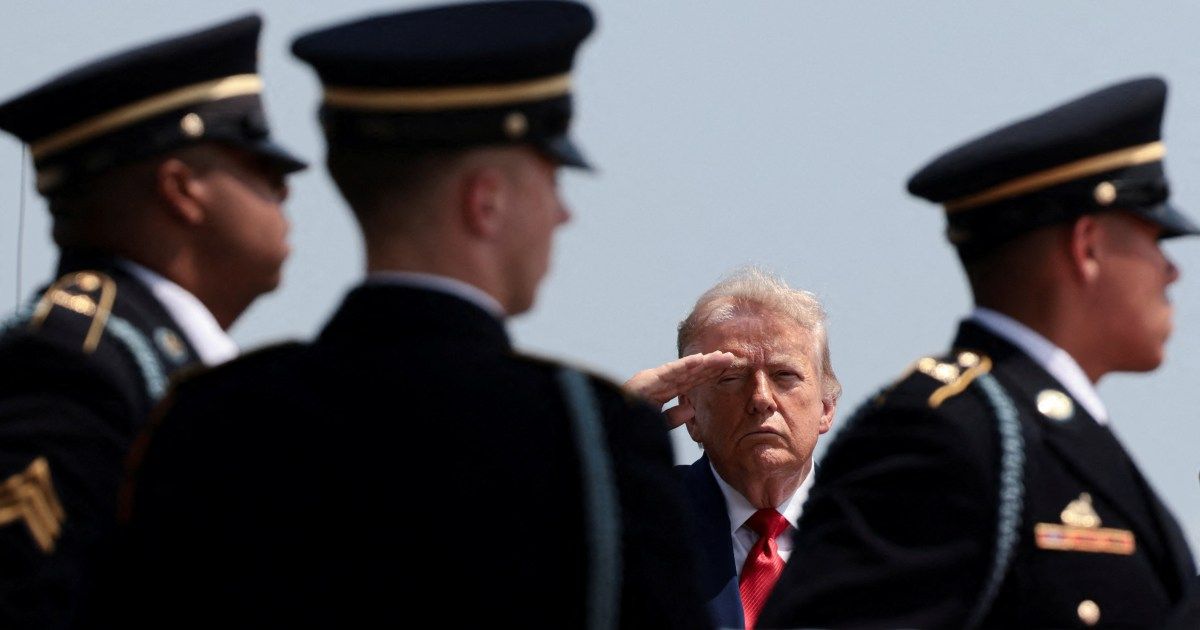
After the US halted strikes on Iran on Friday, Trump told reporters: “There’s a military exit where we just keep going just the way we are, and we can even make it a heavier dose, and it’s knocking out everything they have. Or there’s a smarter strategy: you make a deal. And they want to make a deal.”
Despite his protestations, experts believe the dwindling state of weapons is another major reason for halting strikes on Iran now.
Related News
Nearly 1,000 people have died from Ebola in DR Congo
US-Iran war: Will peace talks resume, and when?
Venezuela and the Dominican Republic say they will work to restore ties