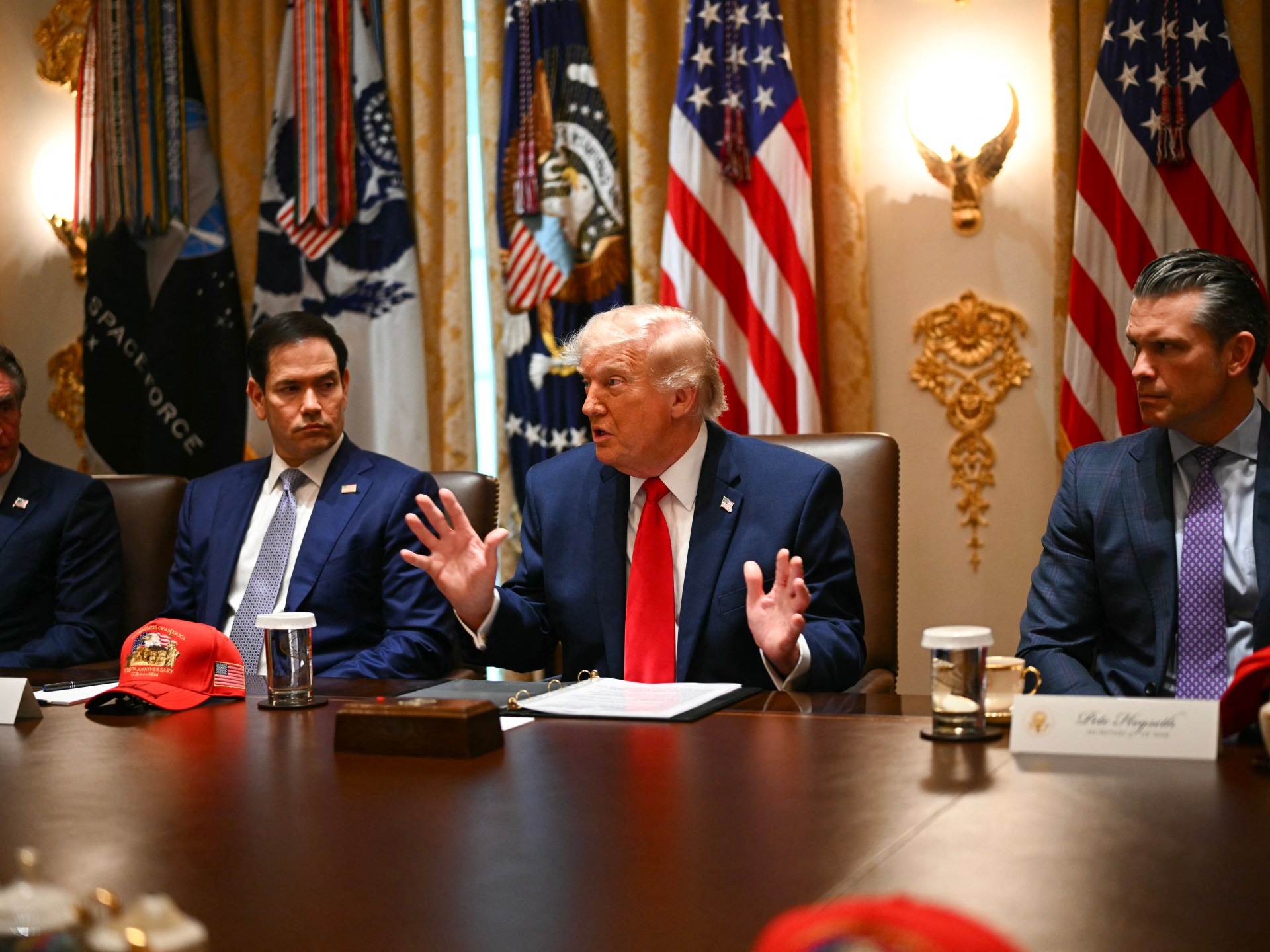

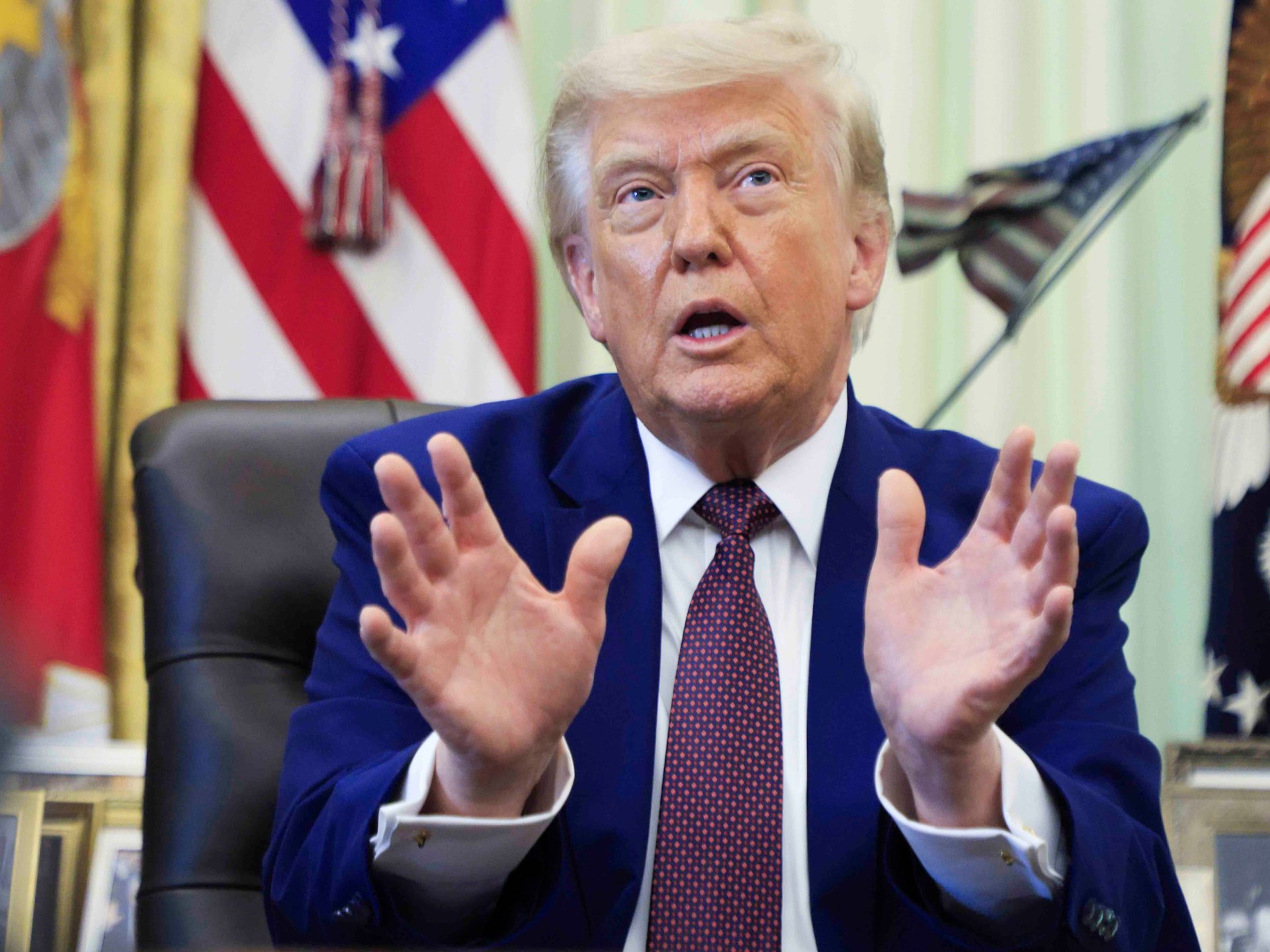

United States President Donald Trump has condemned lawmakers, including members of his Republican Party, for voting in favour of a resolution to rein in his ability to wage war with Iran.
The statement on Thursday came a day after the US House of Representatives passed a so-called war powers resolution, which aims to limit Trump’s war-making authority without further congressional approval.
- list 1 of 3How does Iran’s leadership view the emerging deal with the US?
- list 2 of 3US House passes Iran war powers resolution in rare pushback against Trump
- list 3 of 3US House votes to end Trump’s Iran war: Does it matter?
end of list
The resolution, which had previously failed three times in the chamber, passed by a vote of 215 to 208, with four Republicans joining Democrats to push the measure over the majority threshold.
On his online platform Truth Social, Trump decried the lawmakers for passing the resolution “right in the middle of my final negotiations to end the War with the Islamic Republic of Iran”.
“Who would do such an unpatriotic thing,” Trump wrote.
Efforts to reach a lasting ceasefire agreement with Iran have progressed in fits and starts, with the Trump administration repeatedly alternating between military threats and promises that a diplomatic breakthrough is within reach.
The most recent flurry of negotiations has stalled, with both sides exchanging limited strikes. Trump on Wednesday again said a deal could come by this weekend.
Key sticking points include the future of Iran’s nuclear programme and control of the Strait of Hormuz, a key waterway.
The Trump administration has reportedly found itself hard-pressed to end Iran’s chokehold on the strait, and it is angling to reach a nuclear deal that appears stronger than the 2015 Joint Comprehensive Plan of Action, a previous agreement to limit Iran’s uranium enrichment activities.
Advertisement
Trump unilaterally withdrew the JCPOA in 2018, calling it “foolish” and “defective”.
In Thursday’s post, Trump took particular aim at the four Republicans who voted in favour of the resolution, including its longtime supporter, Kentucky’s Thomas Massie, as well as Tom Barrett of Michigan, Warren Davidson of Ohio and Brian Fitzpatrick of Pennsylvania.
The vote has widely been seen as a reflection of Trump’s weakening grip on some Republican lawmakers before the midterm election in November.
“The four Republicans, that’s a whole other story – They’re GRANDSTANDERS! They should be ashamed of themselves,” Trump wrote.
He further dismissed Wednesday’s resolution as “meaningless”.
To be sure, the vote remains largely symbolic. The resolution would need to pass in the Republican-controlled Senate, where Republicans control 53 of 100 seats, before it could be signed into law.
Even then, Trump is all but assured to veto the resolution. Both chambers would need to override such a veto with a two-thirds vote, likely an insurmountable bar.
Nevertheless, advocates have hailed Wednesday’s vote and urged members of the Senate to follow suit.
Many pointed out that the US Constitution restricts the president’s ability to wage war, and the War Powers Act of 1973 constrains the president from continuing unapproved military action beyond 60 days. The US and Israel began launching attacks on Iran on February 28.
“The Constitution is clear: The sole authority to declare war rests with Congress,” David Janovsky, acting director of The Constitution Project, a legal think tank, said in a statement following the vote.
“Three months ago, the president illegally began this war. Now, it’s time for the Senate to finish what the House started and vote to end it.”
Others pointed to the knock-on effects of the war on the global economy, which has seen a spike in the cost of fuels and other commodities. Polls have repeatedly suggested a majority of US voters, and a growing number of Republicans, oppose the war.
Jamal Abdi, the president of the National Iranian American Council, said the “political window for this war is narrowing quickly”.
In a statement, he said that lawmakers “continue to hear from Americans that have opposed this war of choice from the start and are angry that their elected representatives once again prioritised military entanglements abroad that spike the price of gas and groceries, making their lives harder and less affordable”.
Related News
Trump shifts between diplomacy and threats in Iran standoff

How badly is Europe affected by fertiliser shortages due to the Iran war?

Why is a US Ebola facility in Kenya sparking protests?