
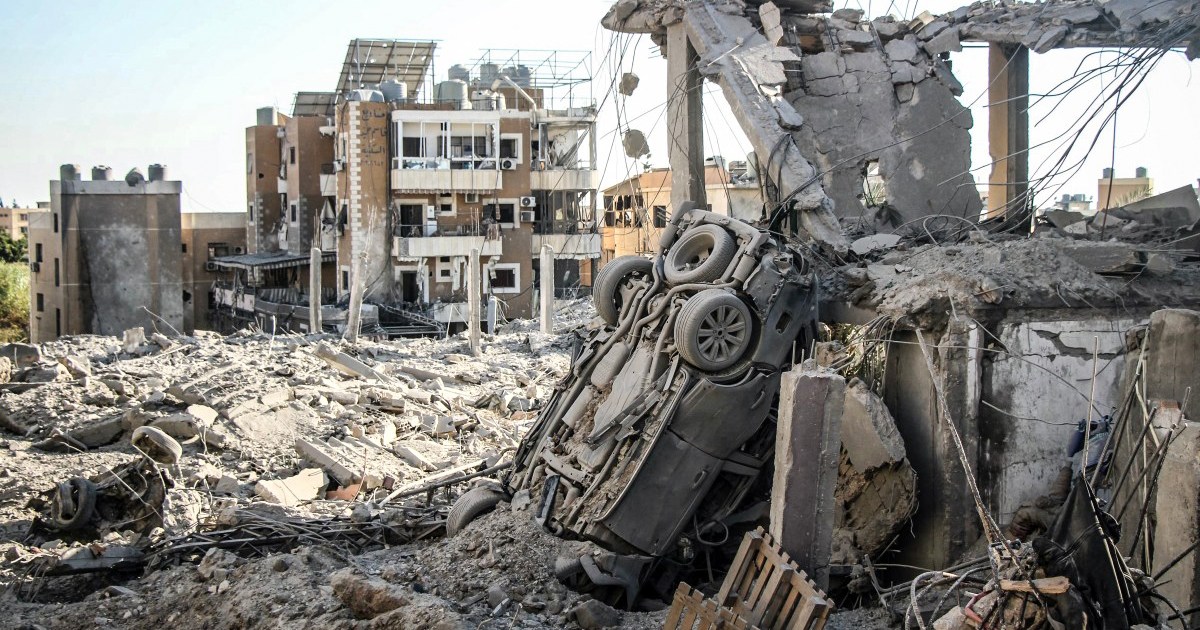

The United Nations has doubled its call for aid to Lebanon as it bids to stem a “severe and deteriorating” humanitarian crisis brought on by four months of war with Israel.
The UN’s humanitarian agency OCHA said on Friday that it needs nearly $640m over the next six months. In March, as the hostilities broke out in response to the United States and Israeli attacks on Iran, the UN had said $308m would be needed.
OCHA said on Friday that only $185m had been received from that appeal, but that it was now calling for an additional $331m on top of the original target sum.
Israel has been expanding its military operations in southern Lebanon as it insists it must continue to fight the Iran-linked Hezbollah group.
Lebanon’s Ministry of Public Health reports that the death toll from Israeli attacks has risen to 3,526 people, with a further 10,733 wounded since March 2. More than one million people have been forced to flee their homes and remain displaced.
“Repeated displacements, insufficient shelter capacity and limited prospects for safe return are deepening vulnerability,” OCHA said in a statement.
It added that “affected people are rapidly exhausting their coping capacities, and essential services are under increasing strain”.

“In the past three months, communities across Lebanon have faced an appalling situation due to the escalation of hostilities,” UN Resident and Humanitarian Coordinator Imran Riza said, adding that the “toll on civilians is alarming and worsening by the day.”
Advertisement
The UN said the economy was worsening the situation in Lebanon, as fuel and electricity prices have risen due to the effects of the US-Israeli war on Iran on global energy supplies.
The strain on the healthcare economy has forced the closure of 62 hospitals that have been damaged or closed, according to OCHA. Lebanese health authorities also reported that more than 100 paramedics have been killed in the conflict.
The education system is also being badly affected. Nearly 450 schools are being used to shelter people who have lost their homes, resulting in an increase in dropouts and learning loss.
Hezbollah has rejected the conditional ceasefire agreed by Lebanese and Israeli representatives in Washington on Thursday, instead demanding a full ceasefire and the full withdrawal of the Israeli army from the country.
Related News
Australia charges alleged ISIL-linked woman after return from Syria
Hajj pilgrims gather at Mount Arafat under scorching desert sun
Zelenskyy asks Putin for meeting: What’s he offering, could Russia accept?