
Trump eases Russia oil sanctions, but is Europe still buying Moscow’s gas?
 17 October 2026

United States President Donald Trump has signed an executive order waiving newly-passed Russia sanctions, claiming the move is in the US’s “national interest”.
Earlier this month, Trump also announced a deal to bring stocks of Russian diesel into global markets, in a bid to drive down energy prices that have spiked during the US-Israel war on Iran. The US Treasury waived sanctions on Russian diesel sales until April 2027.
Trump’s embrace of Russian energy has angered Ukraine, European partners and many US officials, who say the move rewards Moscow while it continues its four-and-a-half-year war against its neighbour.
Ukraine’s President Volodmyr Zelenskyy slammed Trump’s diesel deal as “a gift” to Russia’s President Vladimir Putin that will help fund his war effort.
While European countries have also criticised Trump’s embrace of Russian energy, the US president has accused them of “hypocrisy”, as figures show that European Union countries continue to import Russian gas.
Here’s what we know:
Which sanctions has Trump waived?
In his executive order on Friday, Trump called off numerous planned Russia-related sanctions days before they were due to take effect, including duties on Russian goods and penalties for buying the country’s oil and gas.
The now-blocked measures were part of legislation passed in Congress with bipartisan support last month, named after the late US Senator Lindsay Graham, an outspoken critic of Russia.
They would have included up to 100 percent tariffs on all goods brought into the US from the five top importers of Russian crude oil or gas, including China and India. They could also have imposed equal penalties on countries deemed to have knowingly bought oil or gas from Russia 30 days after the law’s implementation, or to be among the top five countries helping Moscow circumvent sanctions on sales of its oil.
Advertisement
The waiver will hold until the Trump administration believes “further action is appropriate”, according to the executive order.
US Congressman Don Beyer, a Democrat from Virginia, said the sanctions waiver amounts to a “surrender to Putin” that “betrays our Ukrainian partners and defies clear congressional intent”.
Who will benefit from this?
Vasily Astrov, an economist at the Vienna Institute for International Economic Studies, told Al Jazeera that the Russian government will likely be the greatest beneficiary because the easing of sanctions means Russian oil will not have to be further discounted.
He estimated that about 60 cents of every extra dollar in the price of a barrel of Russian oil would “end up in state coffers”.
Russian official Kirill Dmitriev, an envoy for Putin, hailed the US decision to waive the sanctions as “an important and truly historic moment”.
Other beneficiaries include major importers of Russian oil and gas, such as China and India, who are now less exposed to the risk of secondary US penalties.
While Trump hopes the measures will also help bring down oil prices for US consumers before November mid-term elections, experts say that is less certain.
Addressing the US’s recent diesel deal with Russia, EU economy chief Valdis Dombrovskis said it is unlikely to have a significant impact on global prices.
According to Trump, that deal would bring 300,000 tonnes of diesel fuel into US and global markets “immediately”, followed by 500,000 tonnes in November, and 1 million tonnes afterwards.
“If we look at the volumes, they are not of any macroeconomic significance, and frankly, there are strong doubts whether Russia is even able to supply those volumes, and according also to US quality standards, those are big question marks,” Dombrovskis told the AFP news agency.
Which countries still buy oil from Russia?
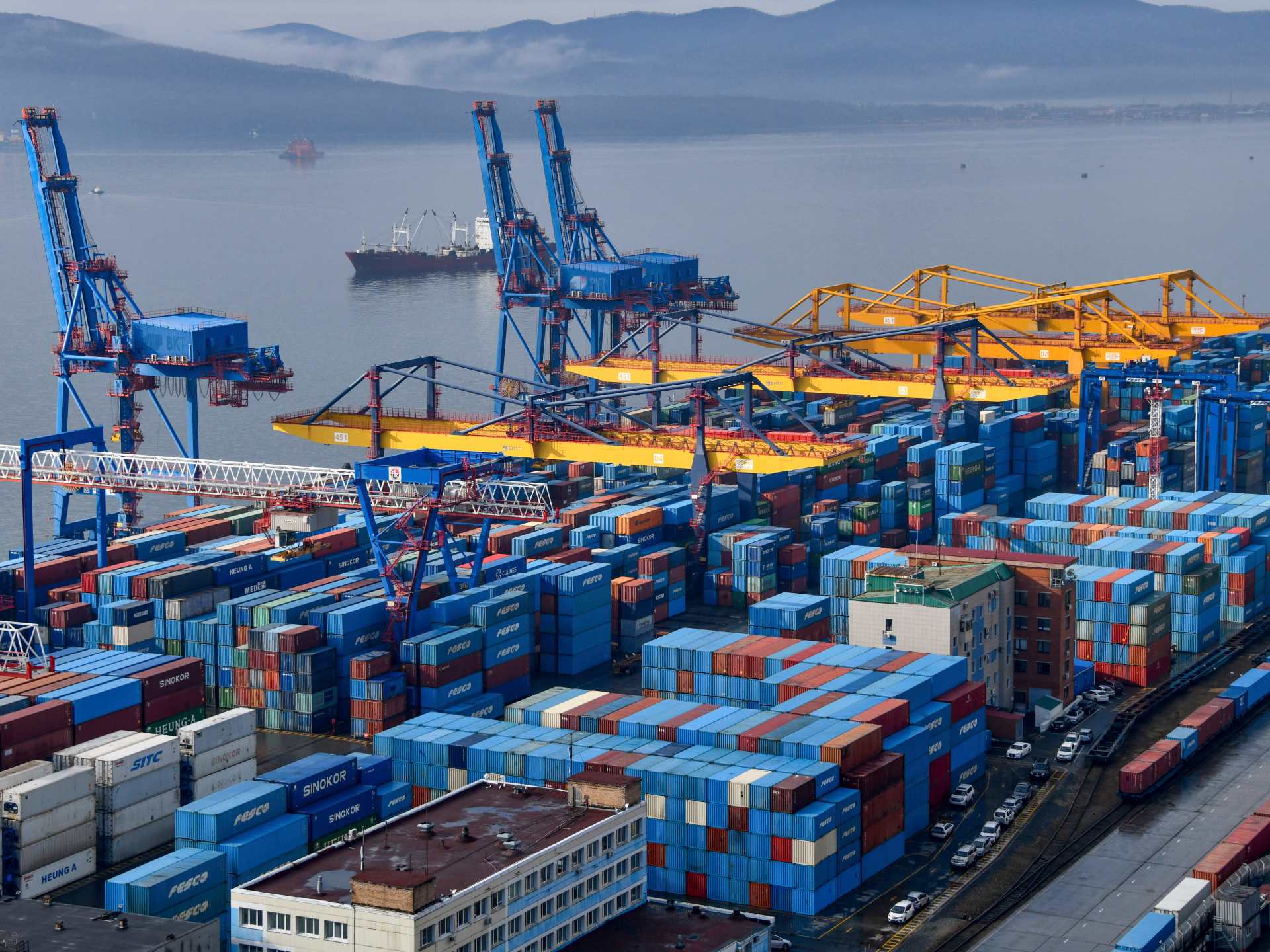
China and India are the largest buyers of Russian crude oil, purchasing 6 billion euros ($6.74bn) and 3.6 billion euros ($4.04bn) worth respectively in September, according to the Centre for Research on Energy and Clean Air (CREA), a nonprofit think tank.
Hungary and Slovakia, the landlocked EU members that have exemptions to the bloc’s ban on Russian crude, also remain big customers, buying a combined 290 million euros ($326m) worth of the commodity in September, said CREA. Turkiye imported 172 million euros ($193m) worth of Russian crude oil the same month, the think tank added.
Since the end of 2022, the largest importers of Russian oil products, which include diesel, have been Turkiye, China, Saudi Arabia, Brazil and Singapore.
Advertisement
Saudi Arabia imported the most Russian oil products in September at 534 million euros ($600m), followed by Turkiye with 321 million euros ($361m), China with 304 million euros ($342m) and India with 161 million euros ($181m).
Is Europe buying increasing amounts of gas from Russia?
“The European Council regrets the United States’ decision to temporarily lift sanctions on Russian diesel,” European leaders said in a joint statement adopted following a two-day European Council meeting in Brussels this week.
But despite its own near-blanket ban on Russian oil, the EU has continued to import large quantities of Russian gas, though it plans to phase out those imports next year.
Urgewald, a Germany-based group that researches coal companies, reported this week that more than 12 million tonnes of Russian Arctic LNG was transported into EU ports from January to September this year, a 9.5 percent jump from the same period last year.
In September, EU countries imported 817 million euros ($918m) of pipeline gas, and 615 million euros ($691m) of liquefied natural gas (LNG), according to CREA.
EU members France and the Netherlands were the largest LNG importers, bringing in 446 million euros ($501m) and 116 million euros ($130m) respectively, according to the think tank. France’s LNG imports represented a 103 percent increase from the previous month, it added.
France’s President Emmanuel Macron has been among the most outspoken about Trump’s diesel deal with Russia, saying on Friday that it “sends a negative message” and would have no impact on global prices.
Hungary imported the most Russian pipeline gas of any EU member by far during the month, with 414 million euros ($465m) worth. Slovakia and Bulgaria brought in 161 million euros ($181m) and 132 million euros ($148m), respectively, according to CREA data.
Related News
Trump’s approval hits new low among Hispanic voters ahead of midterms

UK court clears woman of voicing support for Hamas in university speech

Ethiopia’s army promises restraint amid fears of new civil war