Tanzania court jails opposition leader for incitement, lifts treason charge
 06 November 2026
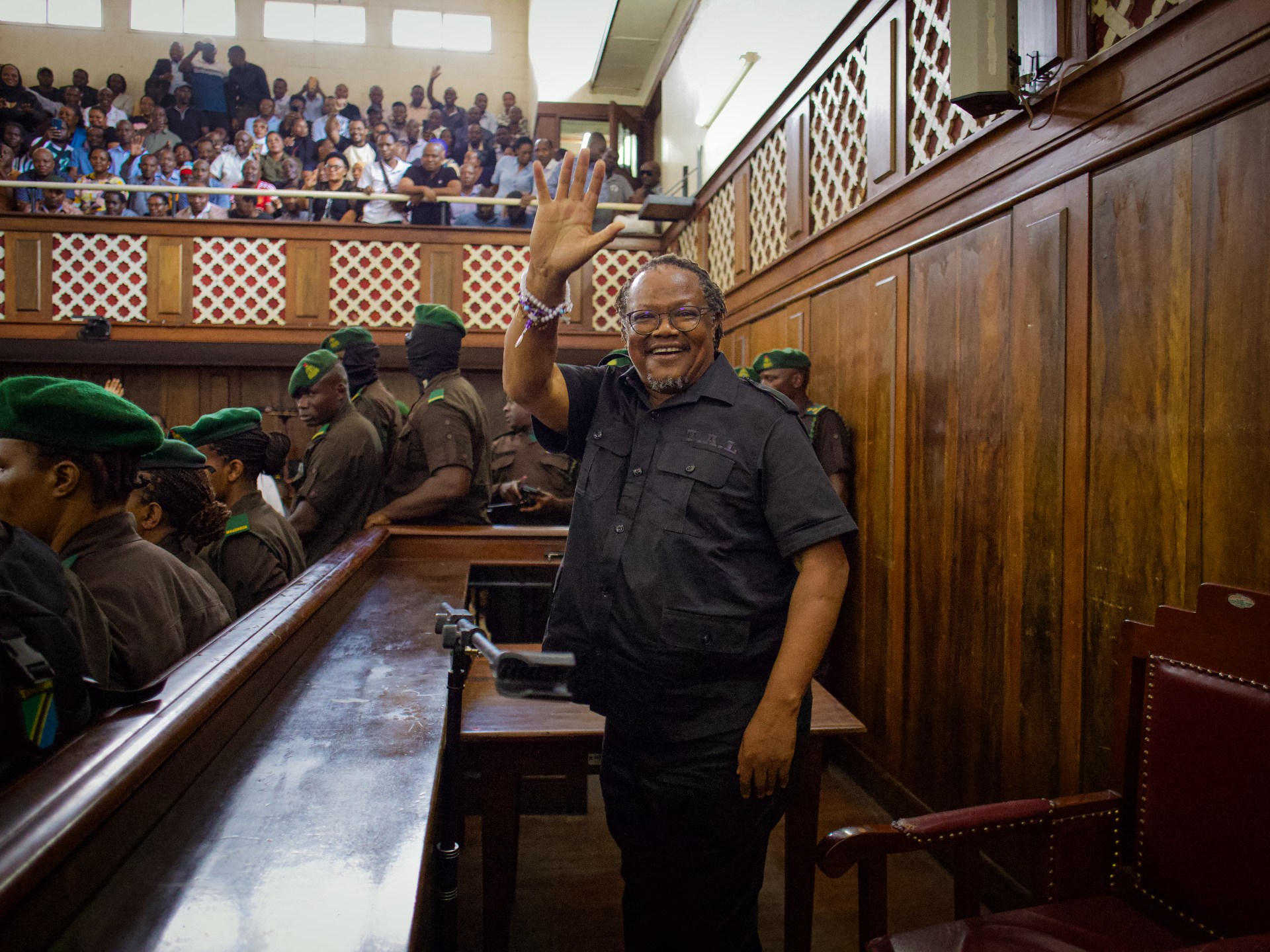

A Tanzanian court has jailed opposition leader Tundu Lissu for four years on a charge of incitement.
The ruling was handed down on Friday, in a trial closely watched internationally. The three-judge panel in the Dar-es-Salaam court dismissed a charge of treason that carried the threat of a death sentence.
- list 1 of 3UK jailing of Indian sailor over Russia sanctions sets off ‘perfect storm’
- list 2 of 3‘Nobody can stop them’: Who are Europe’s Black Bloc protesters?
- list 3 of 3Hoax or bomb threats? What we know about flight disruptions across Europe
end of list
“We are satisfied that through his statements, the accused intended to disrupt elections and instigate violence,” one judge told a courtroom packed with Lissu’s supporters.
“We sentence you to four years in prison but the doors are open for appeal,” the judge added.
Lissu, who heads the main opposition party, Chadema, responded that the trial was “political persecution”, accusing the judges of following orders from the government of President Samia Suluhu Hassan.
“Excuses were created to imprison me,” he told the court.
“I was not charged with incitement but you judges are convicting me with it just to impress the person who gives you the titles. I believe these were directives,” he said.
Lissu was arrested before the October 2025 presidential vote, as the government carried out a wave of detentions and abductions targeting opponents and critics.
The clampdown sparked huge protests during the election, which Hassan was declared to have won with 98 percent of the vote.
Security forces responded by killing thousands, according to the opposition and rights groups. The government puts the death toll at 518.
Security was heightened across the commercial capital, Dar-es-Salaam, and around the court before the verdict, as Lissu’s supporters gathered for the hearing.

This was the first time that Lissu, 58, faced such serious charges, despite repeated arrests.
Advertisement
In 2017, he survived an assassination attempt in which he was shot 16 times, an attack he believes was politically motivated and which required him to undergo nearly 20 surgeries.
The treason case drew criticism from British and European Union lawmakers, who described it as politically motivated and called for Lissu’s immediate release.
It marked the third high-profile treason trial in mainland Tanzania’s history.
The first two, in the 1970s and 1980s, involved defendants accused of plotting to overthrow and assassinate the country’s founding president, Julius Nyerere.
Related News
Israel’s opposition leaders back Eisenkot to oust Netanyahu
Saudi air defences intercept Houthi barrage near Mecca

Why has search of Ilhan Omar’s home before US midterms caused controversy?