

DEVELOPING STORYDEVELOPING STORY,
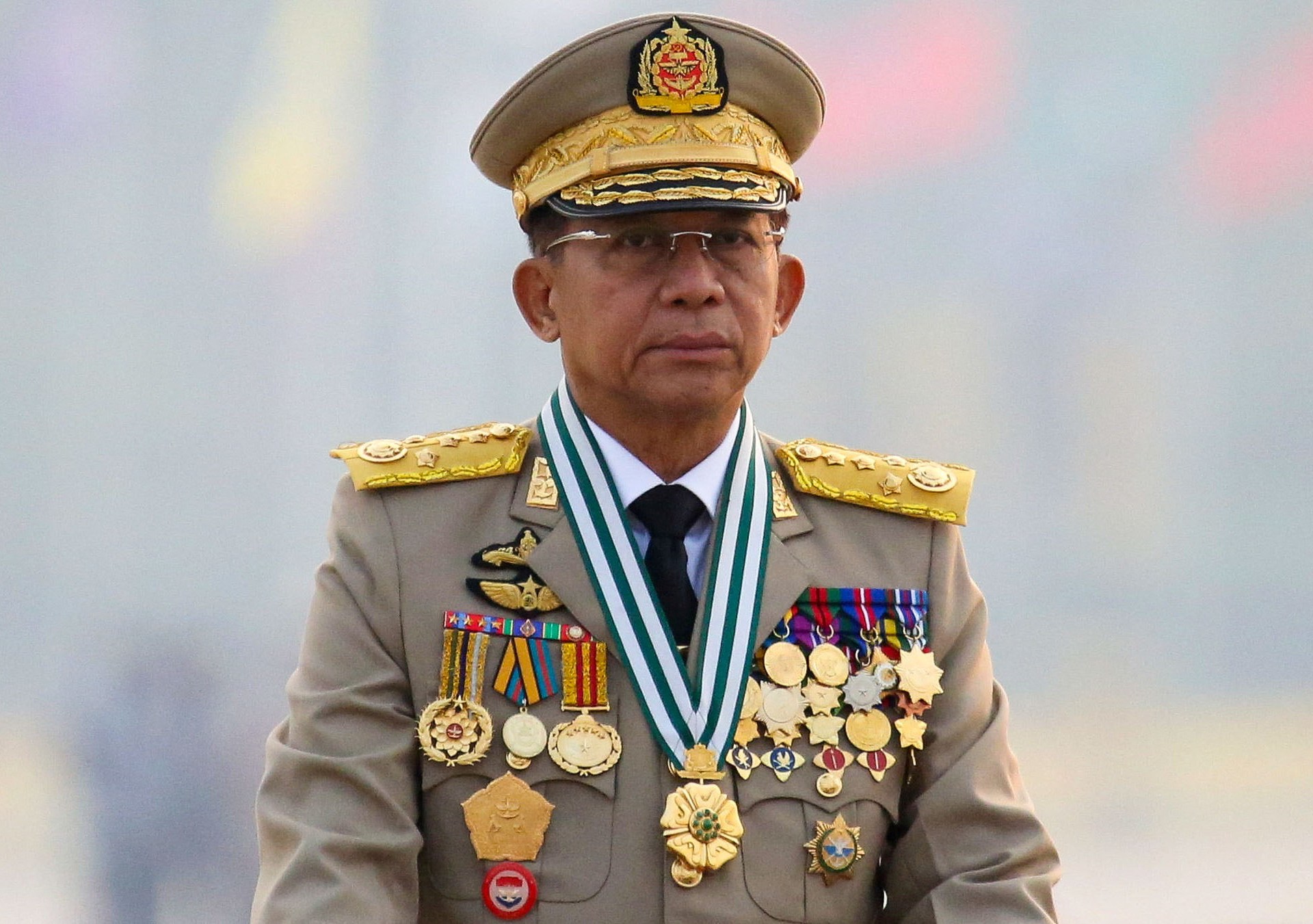
Myanmar’s coup leader has won a parliamentary vote to become the country’s president, formalising his grip on political power in the war-torn nation five years after he ousted an elected government.
Min Aung Hlaing received at least 293 votes of 584 cast by MPs in the country’s pro-military parliament on Friday, passing the majority threshold, according to a tally of the ongoing vote count by news agencies.
- list 1 of 3Myanmar parliament dominated by pro-military party convenes after 5 years
- list 2 of 3Myanmar’s military holds second phase of elections amid civil war
- list 3 of 3Who is fighting in Myanmar’s multi-front civil war?
end of list
The 69-year-old general orchestrated a 2021 coup against the administration of Nobel Peace Prize winner Aung San Suu Kyi and placed her under arrest, sparking widespread protests that morphed into nationwide armed resistance against the military leadership.
The transition from top general to civilian president follows a lopsided election in December and January that was won in a landslide by an army-backed party and derided by critics and Western governments as a sham to perpetuate military rule behind a veneer of democracy.
The pro-military Union Solidarity and Development Party won more than 80 percent of parliamentary seats contested in the election, while serving members of the armed forces occupy unelected seats making up a quarter of the total.
In a live broadcast of Friday’s vote count in parliament, Min Aung Hlaing comfortably passed the threshold required to win, as many had predicted. He was among three candidates nominated for the post earlier this week.
Min Aung Hlaing’s ascent to the presidency – a position that analysts say he has long sought – followed a major reshuffle in the leadership of Myanmar’s armed forces, which he had led since 2011.
Advertisement
On Monday, as he was nominated in parliament as a presidential candidate, Min Aung Hlaing anointed Ye Win Oo, a former intelligence chief seen as fiercely loyal to the general, as his successor to lead the military.
The military handover and Min Aung Hlaing’s rise to the presidency are seen by analysts as a strategic pivot to consolidate his power as head of a nominally civilian government and earn international legitimacy, while protecting the interests of an armed forces that has run the country directly for five of the past six decades.
Still, the civil war that has wrecked Myanmar for much of the last five years is raging, with some anti-military groups – including those comprising remnants of Suu Kyi’s party and longstanding ethnic minority armies – forming a new combined front this week to take on the military.
“Our vision and strategic objectives are to completely dismantle all forms of dictatorship, including the military dictatorship, and to collectively initiate a new political landscape,” the Steering Council for the Emergence of a Federal Democratic Union said in a statement on Monday.
Resistance groups could face intensified military pressure as well as increased scrutiny from neighbouring countries that may seek to bolster their relationship with Min Aung Hlaing’s new administration, analysts say.
Related News

Slovenia’s Freedom Movement Party takes narrow election lead: Exit poll
Over 100 US legal experts condemn strikes on Iran as possible ‘war crimes’
UK finds pro-Palestine protest organisers guilty of breaching police rules