

Most European countries have either turned down their invitations to join United States President Donald Trump’s “Board of Peace” for overseeing the reconstruction of Gaza – or politely suggested they are “considering” it, citing concerns.
From within the European Union, only Hungary and Bulgaria have accepted. That is a better track record of unity than the one displayed in 2003, when then-US President George W Bush called on member states to join his invasion of Iraq.
- list 1 of 4Trump’s imperial tantrum
- list 2 of 4Netanyahu says next phase of ceasefire is ‘demilitarising’ Gaza
- list 3 of 4Lula, Trump discuss ‘Board of Peace’, agree to meet in Washington: Brazil
- list 4 of 4Map shows what would happen to Gaza under the US ‘master plan’
end of list
Spain, Britain, Poland, Hungary, Czechia and Slovakia said “yes”.
France turned the invitation down on the grounds that Trump’s board “goes beyond the framework of Gaza and raises serious questions, in particular with respect to the principles and structure of the United Nations, which cannot be called into question”.
Trump pointedly did not invite Denmark, a close US ally, following a diplomatic fracas in which he had threatened to seize Greenland, a Danish territory, by force.
The US leader signed the charter for his Board of Peace on January 22 at the World Economic Forum in Davos, Switzerland, calling it “one of the most consequential bodies ever created”.
It has come across to many of the countries invited to join it as perhaps too consequential – an attempt to supplant the United Nations, whose mandate the board is meant to be fulfilling.
Although Trump said he believed the UN should continue to exist, his recent threats suggest that he would not respect the UN Charter, which forbids the violation of borders.
That impression was strengthened by the fact that he invited Russia to the board, amid its full-scale invasion of Ukraine.
Advertisement
“Trump is thinking about the interior of the US. Things aren’t going well. He needs a big win ahead of the November midterms,” said Angelos Syrigos, a professor of international law at Panteion University in Athens.
The US president has spent his first year in office looking for foreign policy triumphs he can sell at home, said Syrigos, citing the abduction of Venezuelan President Nicolas Maduro, the bombing of Iran and his efforts to end the Ukraine war.
Trump has invited board members to contribute $1bn each for a lifetime membership, but has not spelled out how the money will be spent.
His son-in-law, Jared Kushner, is a member of the executive board.
“How will this thing function? Will Trump and his son-in-law administer it?” asked Syrigos.
Catherine Fieschi, a political scientist and fellow at the European University Institute, believed there was a more ambitious geopolitical goal as well.
“It’s as though Trump were gathering very deliberately middle powers … to defang the potential that these powers have of working independently and making deals,” she said.
Much like Bush’s 2003 “coalition of the willing” against Iraq, Trump’s initiative has cobbled together an ensemble of countries whose common traits are difficult to discern, ranging from Vietnam and Mongolia to Turkiye and Belarus.
Fieschi believed Trump was trying to corral middle powers in order to forestall other forms of multilateralism, a pathway to power that Canadian Prime Minister Mark Carney outlined in his speech at Davos, which so offended Trump.
“In a world of great power rivalry, the countries in between have a choice: [to] compete with each other for favour, or to combine to create a third path with impact,” Carney had said, encouraging countries to build “different coalitions for different issues” and to draw on “the power of legitimacy, integrity and rules”.
He decried the “rupture in the world order … and the beginning of a brutal reality where geopolitics among the great powers is not subject to any constraints”.
After the speech, Trump soon rescinded Canada’s invitation.
Countering agglomerations of power and legitimacy was Trump’s goal, Fieschi believed.
“Here you bind them into an organisation that in some ways offers a framework with Trump in it and the US in it, and implies constraints,” said Fieschi. “It’s not so much benign multilateralism as stopping the middle powers getting on with their hedging and with their capacity to have any kind of autonomy, strategic and otherwise.”
Advertisement
At the same time, she said, Trump was suggesting that the Board of Peace “might give them more power than they have right now in the UN”.
“Trump thinks this is like a golf club and therefore he’s going to charge a membership fee,” Fieschi said.
“If it was a reconstruction fee [for Gaza], I don’t think people would necessarily baulk at that,” she noted, adding that the fee smacked of “crass oligarchic motivation”.
The Board of Peace is called into existence by last November’s UN Security Council Resolution 2803 to oversee the reconstruction of Gaza.
It is defined as “a transitional administration” meant to exist only “until such time as the Palestinian Authority (PA) has satisfactorily completed its reform program … and [can] effectively take back control of Gaza.”
Trump’s charter for the board makes no mention of Gaza, nor of the board’s limited lifespan. Instead, it broadens the board’s mandate to “areas affected or threatened by conflict”, and says it “shall dissolve at such time as the Chairman considers necessary or appropriate”.
China, which has presented itself as a harbinger of multipolarity and a challenger of the US-led world order, rejected the invitation.
“No matter how the international landscape may evolve, China will stay firmly committed to safeguarding the international system with the UN at its core,” said Chinese Foreign Ministry spokesman Guo Jiakun last week.
The UN itself appears to be offended by Trump’s scheme.
“The UN Security Council stands alone in its Charter-mandated authority to act on behalf of all Member States on matters of peace and security,” wrote UN Secretary-General Antonio Guterres on social media on Monday, January 26.
“No other body or ad-hoc coalition can legally require all Member States to comply with decisions on peace and security,” he wrote.
Guterres was calling for a reform that would strengthen the legitimacy of the UN Security Council by better reflecting the balance of power in the world as it is, 81 years after the body was formed. But his statement can also be read as a veiled criticism of Trump’s version of the Board of Peace.
Transparency and governance are problematic, too.
Trump is appointing himself chairman of the board, with power to overrule all members. He gets to appoint the board’s executive, and makes financial transparency optional, saying the board “may authorise the establishment of accounts as necessary.”
Related News
US declares phase two of Gaza ceasefire, but what did phase one deliver?
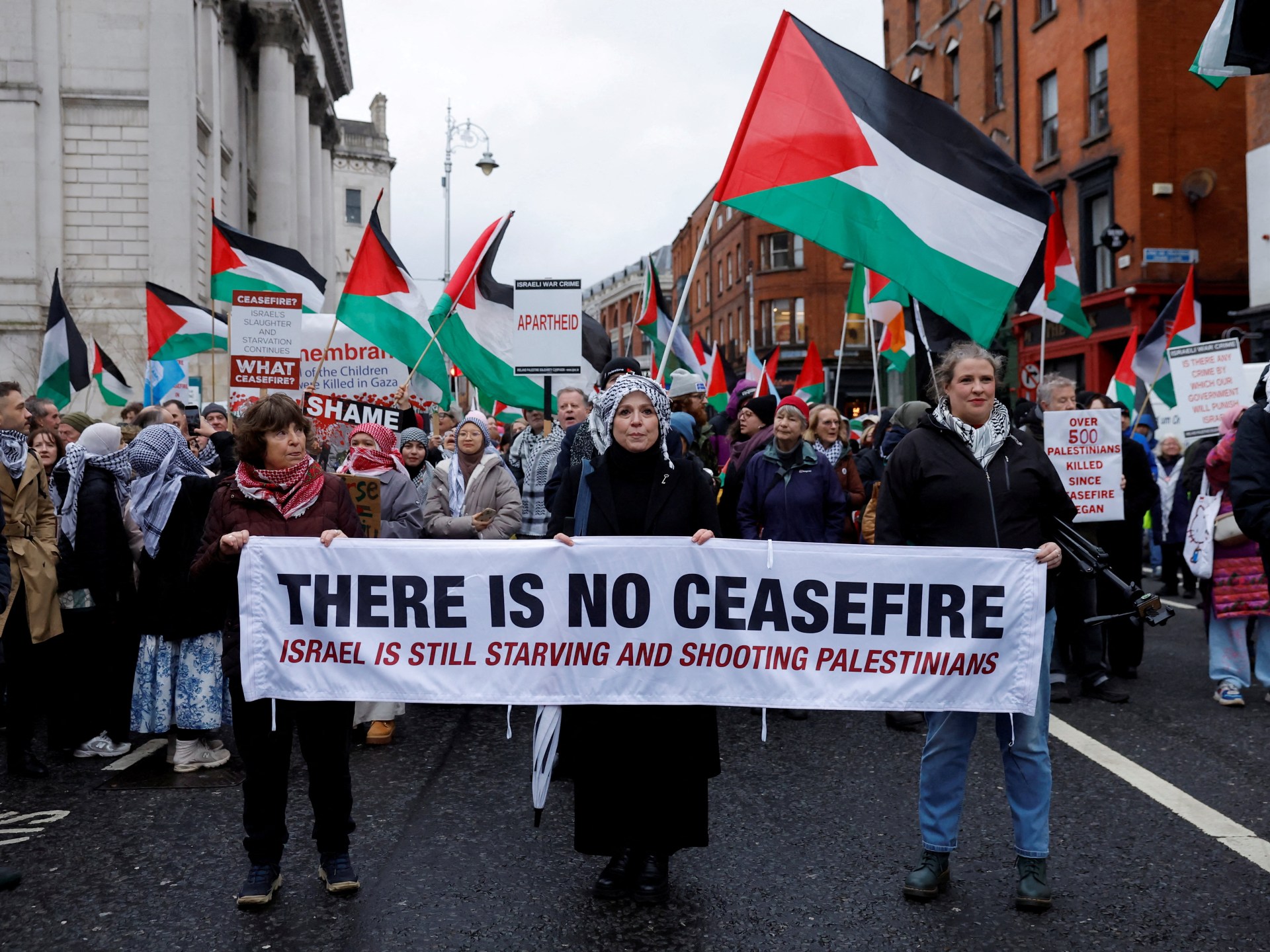
Week in Pictures: From Minneapolis turmoil to Israeli attacks on Gaza
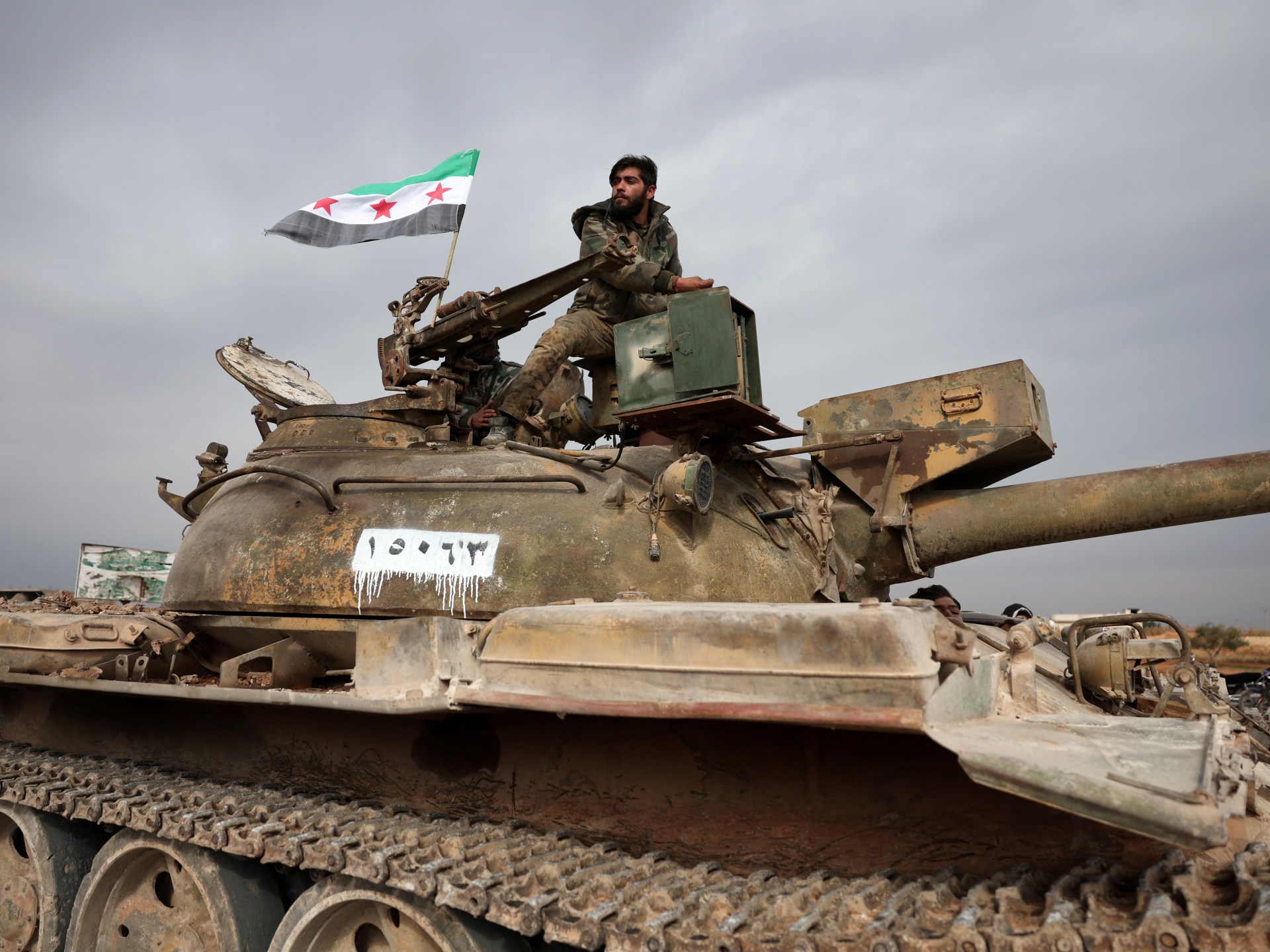
US urges de-escalation as Syrian army advances on Kurdish-held territory