Iran says US reply to Hormuz plan ‘unconvincing’; Trump confirms strikes
 04 November 2026

Iran has called the US response to its seven conditions for reopening the Strait of Hormuz “unconvincing” as US President Donald Trump confirmed launching strikes on an Iranian island near the strategic waterway.
The developments on Tuesday came as Qatar stepped up diplomatic efforts to avert a renewed war between the US and Iran and as another oil tanker was attacked in the Strait of Hormuz.
- list 1 of 4US hits Qeshm Island, Pezeshkian signals more diplomacy: Iran war latest
- list 2 of 4Iran’s anti-negotiation hardliners turn against President Pezeshkian
- list 3 of 4How to stop the US-Israel war on Iran
- list 4 of 4Mediators continue US-Iran negotiations amid war rhetoric: What we know
end of list
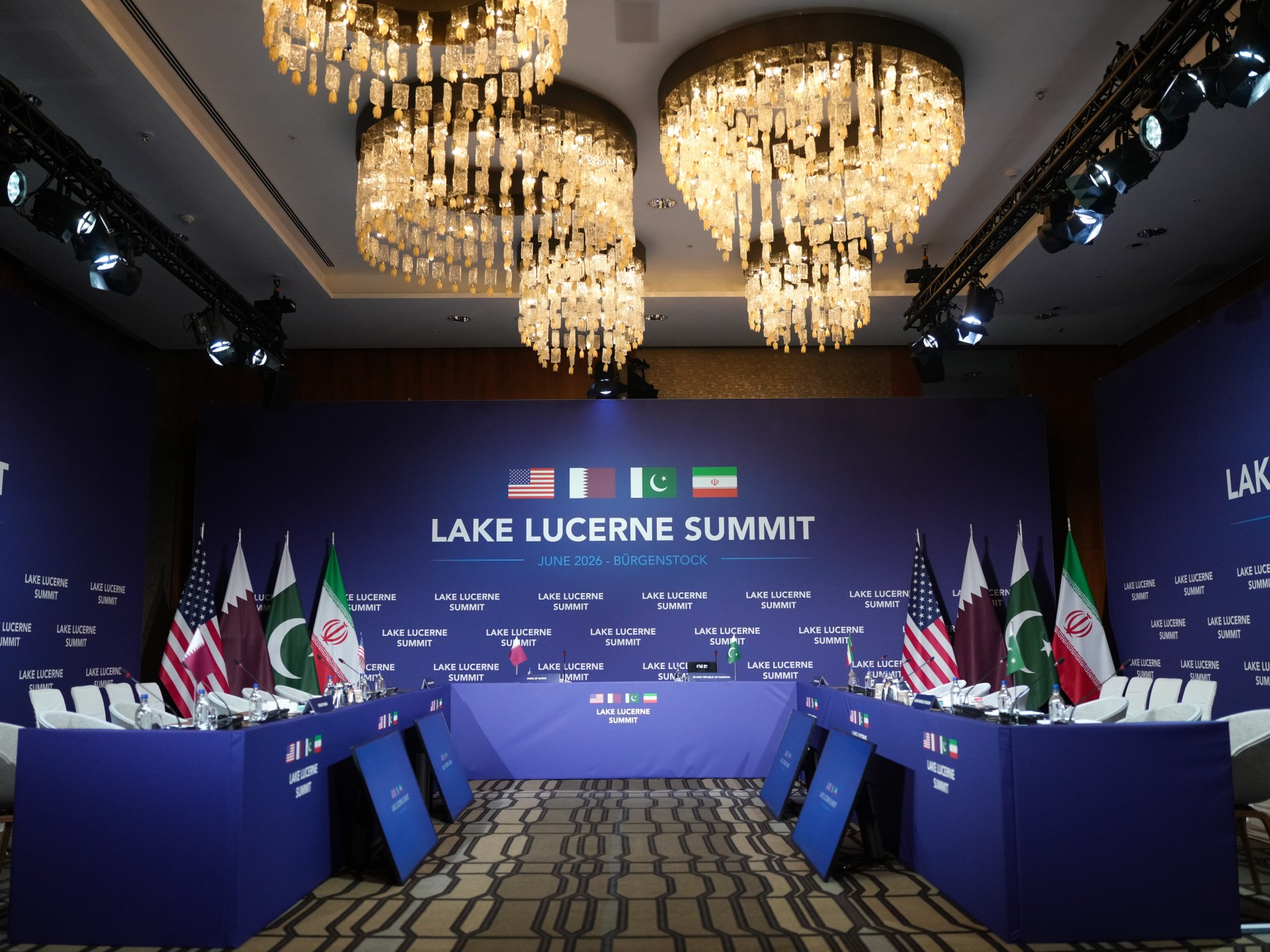
The indirect talks centre on an Iranian proposal to reopen the waterway over two days, if the US meets Tehran’s seven demands, including the lifting of sanctions and ending a US naval blockade.
Despite reports of progress in recent days, Mohsen Rezaei, the secretary of Iran’s Supreme National Security Council, said on Tuesday that Washington’s response had fallen short.
“America’s response to Iran’s rights and demands was not convincing, and they must fully and explicitly address Iran’s seven conditions and act upon them,” he wrote on X.
“Only in this case will the Strait of Hormuz be reopened.”
His post came after Majed al-Ansari, a spokesperson for Qatar’s Ministry of Foreign Affairs, said that talks were continuing and that both sides “remain committed to the negotiation process”.
He said Qatar was facilitating the “real-time exchange of proposals between” the US and Iran.
Attack on Qeshm Island
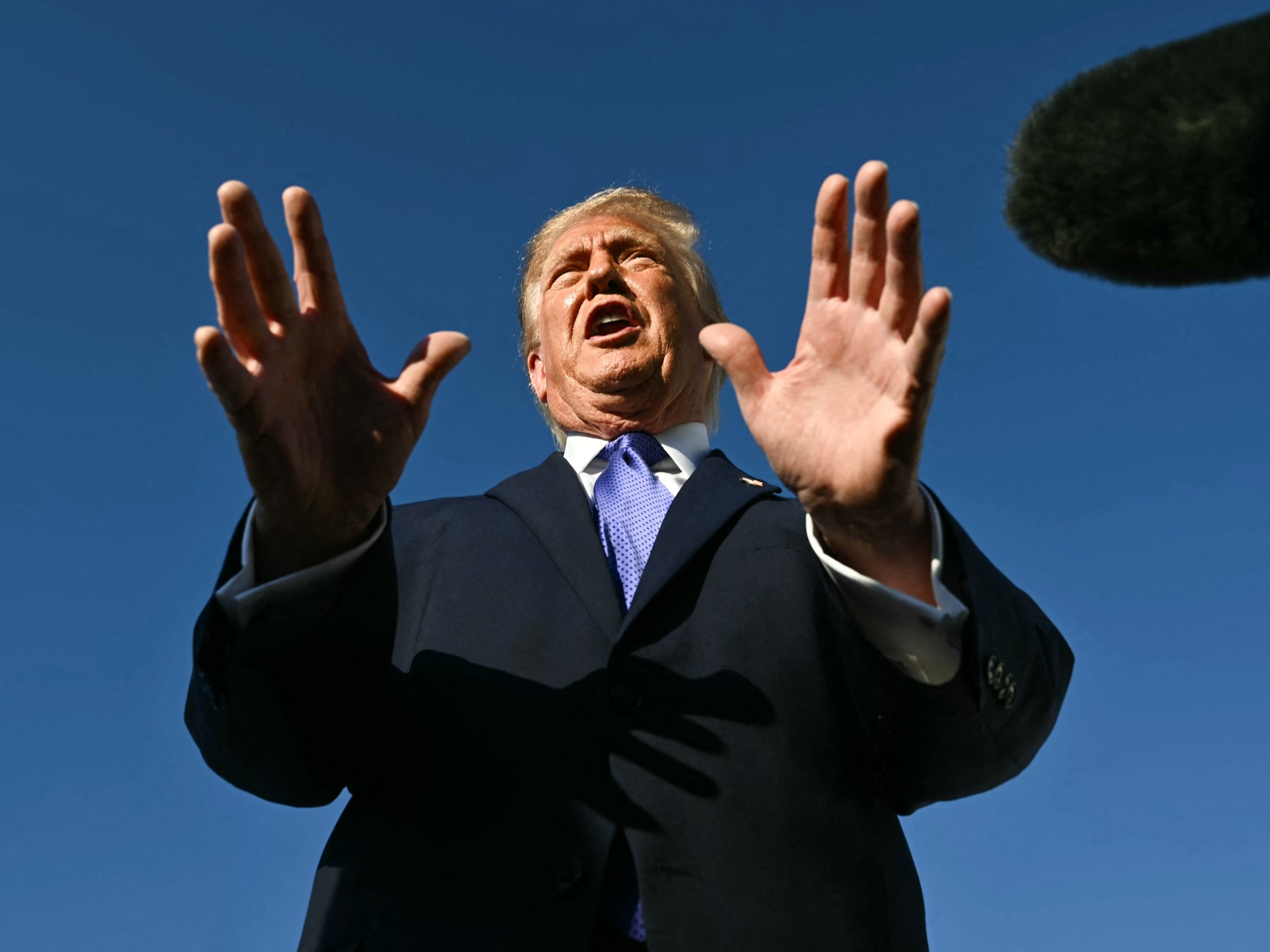
In Washington, DC, Trump confirmed the US had struck Iran early on Tuesday, telling Fox News that the strikes had targeted an anti-aircraft facility.
He described the operation as a “minor attack” and said it “wasn’t war”.
Advertisement
“They built an anti-aircraft facility. It took them about two months. We watched it get built. As soon as it was completed, we hit it last night,” he said.
Iranian media said the strikes hit Qeshm Island in the Gulf near the Strait of Hormuz. Earlier in the day, US officials told US media that the strikes had been “defensive” and followed Iranian fire at an American aircraft.
The strikes came as US media, citing US officials, reported that Central Command had prepared plans for strikes that could begin as early as Wednesday, after the midterm elections, when three American aircraft carriers would be in the region.
The crucial elections could cost Trump’s Republicans control of both the House and the Senate, and fears have grown that Trump could carry out a threatened attack on Iran once the vote is over.
US media have previously reported that the planned campaign would be short and intense.
Trump meanwhile repeated warnings of further military action on Tuesday, saying, “I’m not looking to … kill lots of people” and “If we have to, we’ll have to.”
In an earlier interview with the Financial Times, he suggested he was content with the state of the stand-off with Iran. “We seem to be getting everything we want,” the paper quoted him as saying in a six-minute telephone interview.
Iran’s supreme leader, Mojtaba Khamenei, meanwhile ordered the military at the weekend to respond to any threat immediately and without geographical limits, and to update its list of targets.
Iranian officials have suggested that European countries and undersea cables in the Gulf could be targeted.
Tanker struck in Hormuz
As officials weighed the possibility of escalation, commercial shipping came under further attack.
The United Kingdom Maritime Trade Operations (UKMTO) reported that two unidentified projectiles struck a tanker’s engine room about 14 nautical miles (26km) northeast of Oman’s coastal village of Limah on Tuesday. No casualties were reported.
Separately, the Islamic Revolutionary Guard Corps (IRGC) claimed four tankers had struck mines and caught fire after switching off navigation and identification systems and using what it described as unauthorised routes through Hormuz, and said its forces had seized two other vessels.
That account could not be independently verified or linked to the incident reported by UKMTO.
The IRGC also claimed it had destroyed two US LUCAS attack drones over Bandar Khamir, according to Iranian state broadcaster Pars Today.
John Mearsheimer, a US political scientist, questioned whether another short bombing campaign could achieve Washington’s objectives, warning that Iranian retaliation could draw the US into a longer confrontation.
Advertisement
“If the 40-day bombing campaign didn’t work, how is the three-day bombing campaign going to work?” he asked in a video commentary, referring to the initial US-Israeli air campaign and proposals for a shorter renewed offensive.
He argued that an Iranian response could prompt further US escalation, increasing the damage to the global economy.
Related News

Swedish academic says denied entry to UK over Palestine event

Ultra-Orthodox rabbi’s anti-Zionist remarks stir Israel election row
Georgia midterm elections: Why this is a key US battleground