

The current Ebola outbreak in the Democratic Republic of Congo (DRC) could become deadlier than the worst outbreak on record, which killed more than 11,000 people, says the head of Africa’s Centres for Disease Control and Prevention (Africa CDC).
The number of confirmed cases in the country has increased to 837, including 196 deaths, government data showed on Tuesday.
- list 1 of 3Ebola risk for World Cup is ‘extremely low’, but US is ready, experts say
- list 2 of 3Record increase in DRC Ebola cases raises death toll to 181
- list 3 of 3Red Cross warns Ebola outbreak in DRC not yet peaked, could last a year
end of list
“If we don’t stop the outbreak very soon, it will be worse than what we had in West Africa and eastern DRC,” Africa CDC Director-General Jean Kaseya said during a virtual meeting of African leaders and international donors in Burundi on Tuesday.
Speaking to Al Jazeera, Kaseya said tens of thousands of people who may have been exposed to Ebola had not yet been traced or contacted.
“The contact tracing is a major indicator and a major issue. We are missing more than 26,000 people, and we don’t know where they are, and we don’t know if they are contaminating other people.”
A Red Cross official said that the epidemic had not yet peaked in the country.
“We are afraid that this could last one year to end this disease,” Bruno Michon, operations manager for the International Federation of Red Cross and Red Crescent Societies, said.
The response has been hampered by a lack of treatment centres and by community resistance to stringent hygiene measures. Health officials said that, more than a month since the outbreak was declared, the true scale was still unknown.
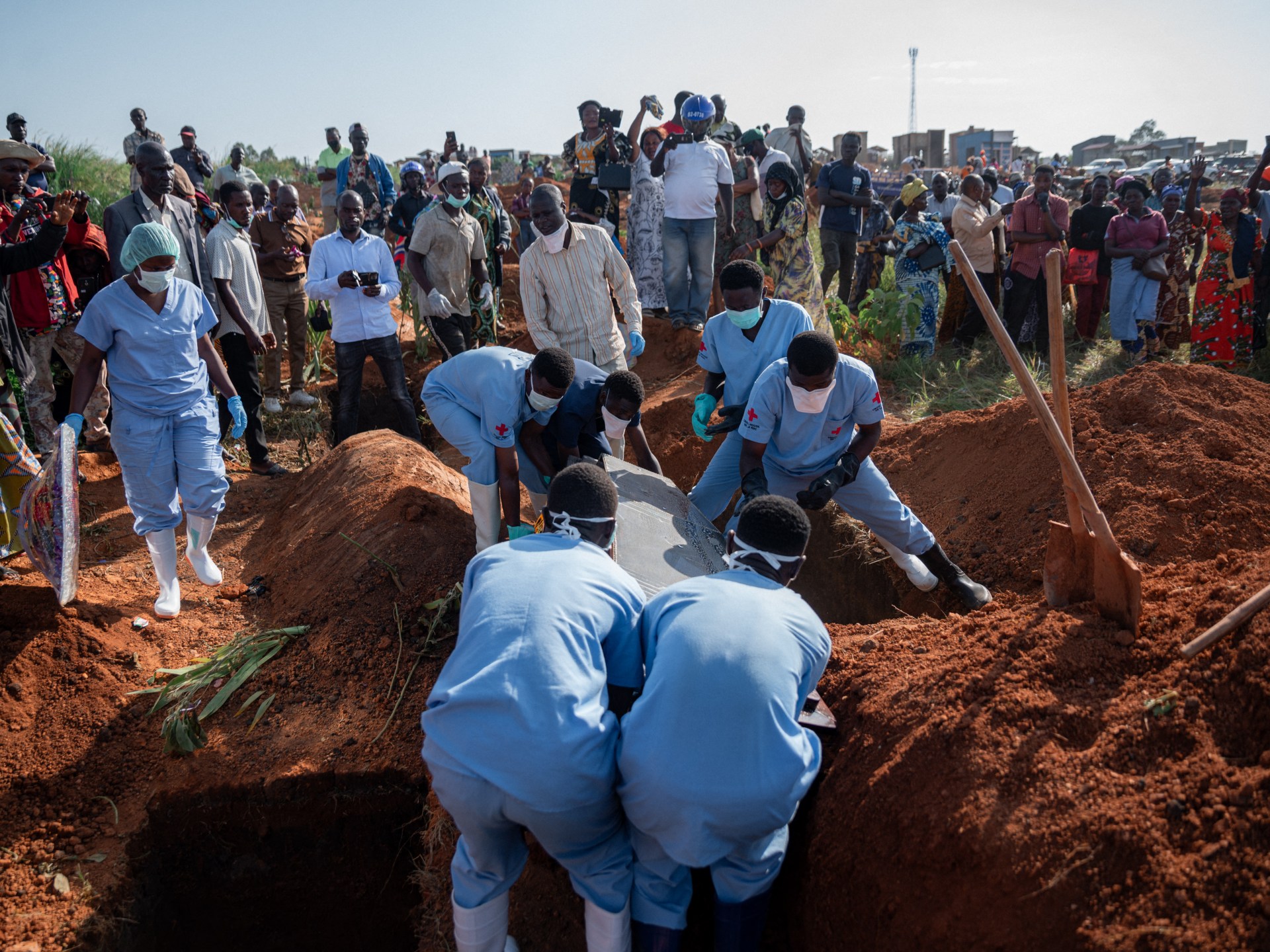
The bodies of Ebola victims are highly infectious after death, and unsafe traditional burials – in which family members handle the body without proper protective equipment – are a leading driver of transmission.
So far, the continent has raised less than a fifth of the $518 million it is seeking to bolster measures to contain the outbreak, according to Burundi’s President Evariste Ndayishimiye, who also chairs the African Union.
Advertisement
The shortfall has raised concern among authorities, who fear the consequences could be devastating if the virus is not brought under control quickly.
There is no approved treatment or vaccine for this strain of Ebola. The World Health Organization (WHO) says it could take up to nine months for a vaccine to be ready.
Neighbouring Uganda has recorded 19 cases, 14 of them among people who had travelled from the DRC. The country has also reported two deaths.
Related News
Celebration, shock and scepticism follow Colombia’s presidential election
US university sells dead bodies to navy for Israeli military training
Gunfire erupts in Mogadishu before protests against Somali president’s rule