Arab parties back Eisenkot: What’s the latest in Israel’s coalition talks?
 02 November 2026
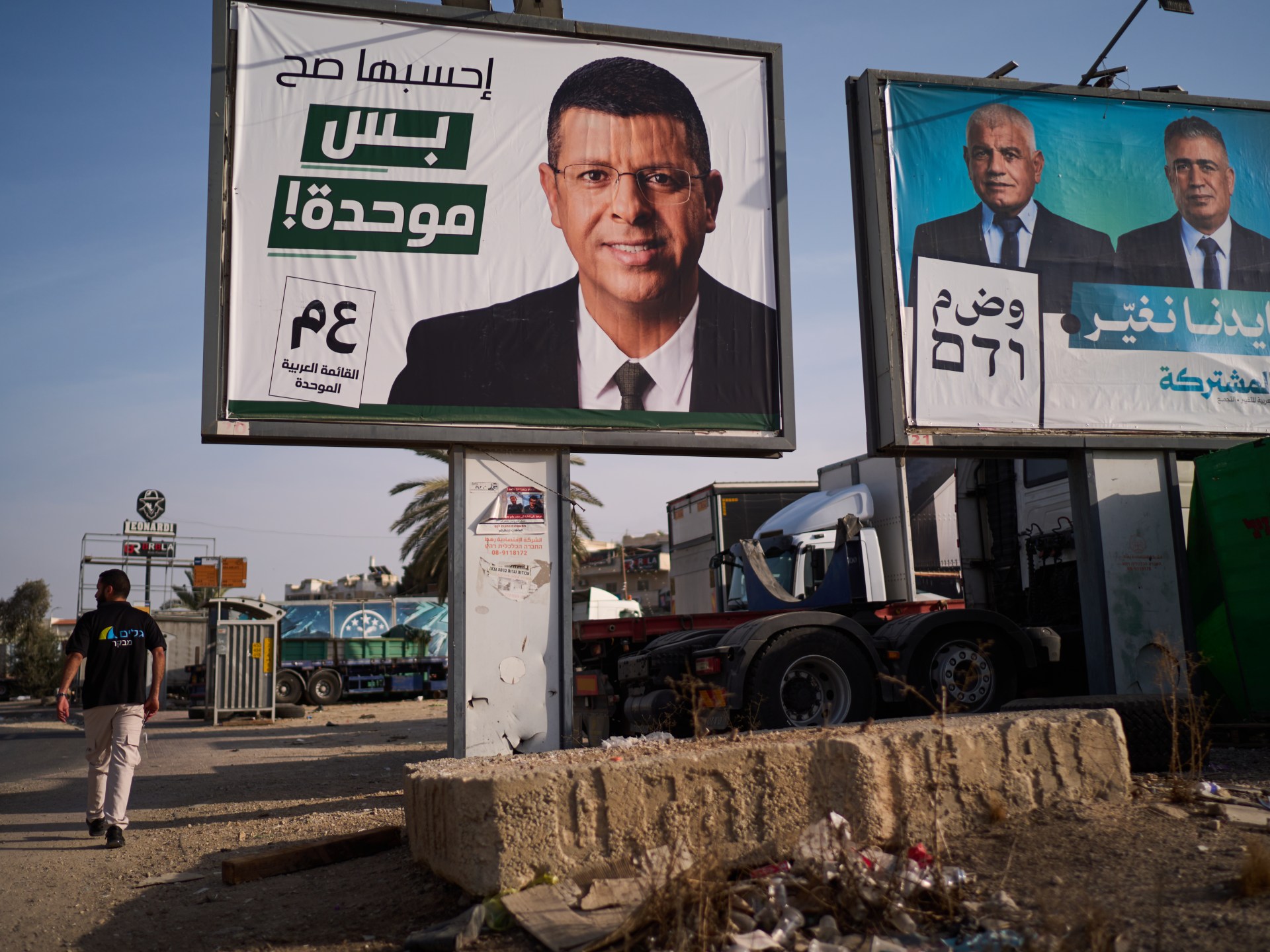

Israel’s Arab parties, which won a record-breaking 19 seats in last week’s general elections, are set to back opposition leader Gadi Eisenkot’s bloc, further trampling Israeli Prime Minister Benjamin Netanyahu’s chances of leading another government.
The main Jewish opposition bloc, which includes four parties, fell short of the 61 seats needed to form a majority in the Knesset, Israel’s parliament, but joining forces with the two main groups that represent Palestinian citizens of Israel could help avoid a political deadlock and another election.
- list 1 of 4The future of the Palestinian vote in Israel
- list 2 of 4Israeli officials say results stand as Netanyahu claims election ‘stolen’
- list 3 of 4Thousands displaced from Hebron as Israel carries on siege
- list 4 of 4Hebron governor says Israeli forces withdraw from city after 10-day siege
end of list
Already, the “Change” opposition bloc has pledged not to join forces with Netanyahu, citing security failures that led to the October 7 Hamas attacks and an ongoing corruption trial that the prime minister faces.
But taking support from the Arab parties — whether as part of the ruling coalition or as outside support — also poses a challenge for Eisenkot from the right, at a time when leaders and parties, including Netanyahu, have been openly deploying anti-Arab racism to woo Jewish voters.
Israel’s minority Arab population has long been marginalised in politics. Since October 7, however, they have been sidelined even more. At least two former Palestinian legislators, and one current member of the Knesset, have been arrested briefly for comments or acts deemed critical of Israel’s genocide in Gaza and its occupation of the West Bank.
As the parties weigh possible paths to power, it’s likely they’ll have to make compromises and break promises made to their supporters, analysts say.
Advertisement
Here’s the latest:

What happened in the elections?
A coalition of Jewish conservative and far-right parties led by Prime Minister Netanyahu’s Likud won 53 seats in a Knesset of 120 seats, falling short of a majority.
The opposition bloc, led by former military chief Gadi Eisenkot of the Yashar party, won 48 seats — even further away from a majority.
Meanwhile, the Arab-led Joint List and Ra’am won more seats than ever after Arab voters doubled their turnout to about 80 percent. Ra’am, led by Mansour Abbas, won eight seats, while the Joint List, led by Yousef Jabareen, won 11.
While the Arab bloc has been open to working with the opposition, there were speculations that Eisenkot would refuse their support to avoid backlash from the wider Jewish Israeli public. Arabs make up a fifth of the population of Israel. Only one Arab party, Ra’am, has successfully joined a governing coalition – in 2021. That government lasted less than two years.
Eisenkot and other opposition leaders had earlier said they would not form a coalition with Arab parties to appeal to their supporters.
What is Netanyahu saying?
Netanyahu has claimed repeatedly and without proof that Arab parties committed fraud during the elections with foreign backing.
The prime minister and his Likud party have cited a handful of cases, like the arrests of three political activists who allegedly bribed voters before polls opened. They are suspected of connections with the Ra’am party, although the party denies involvement.
Netanyahu’s case, however, appears to be weakening. On Sunday, an Israeli court released one of the suspects, and another was ordered to remain in house arrest.
Israeli election officials have also said the vote would not be undermined. Videos on Sunday of Israel’s elections chief sitting with Israel’s attorney general and the head of the Shin Bet intelligence service appeared to send the message that the agencies are cooperating to make the vote stand.
“Our position is that even if the suspicions are substantiated, this would not undermine the integrity of the electoral process or the election results as a whole,” Central Elections Committee head Noam Sohlberg said in the clip.
Netanyahu and Likud also suggested that the opposition bloc joining with Arab parties would be treasonous. In a statement after the vote, Likud warned that Zionist parties cooperating with the Arab bloc would be “dangerous to Israel”.
Advertisement
Some Israelis agree. Late on Sunday, dozens gathered outside Eisenkot’s home to protest a potential alliance.
Will Arab parties back Eisenkot?
Yes. According to several media reports, Joint List and Ra’am said they’ll collaborate with the opposition bloc to push Netanyahu out but not necessarily to form a government.
Abbas of Ra’am has long said he’d join a potential Eisenkot government if his party is given the internal security portfolio. That his deputy is a Jewish lawmaker is also seen as a signal to the opposition bloc.
Jabareen of the Joint List, meanwhile, said in a Monday interview with The Guardian that his party was ready to cooperate with the “Change” bloc to get rid of Netanyahu and other extremist members of the government, including National Security Minister Itamar Ben-Gvir and Finance Minister Bezalel Smotrich.
He clarified that the party has no intention of joining an Eisenkot government but that it would vote with it in the Knesset. That would allow Eisenkot to form a “minority government” with fewer than 61 seats.
But it’s unclear what Eisenkot and his partners will do next. The opposition bloc earlier placed conditions on any coalition with the Arab parties, saying they must accept Israel as a Jewish state, back army conscription and denounce Hamas as a terror group.
“The conditions that [Eisenkot] speaks of are more relevant for parties who would be in the coalition. We are not planning to be in the coalition … for very clear reasons,” Jabareen told The Guardian, adding that “as long as the occupation of our people in the West Bank continues, we cannot be part of a government”.
What will happen next?
The election results will be certified on Wednesday.
Afterwards, President Isaac Herzog will begin meeting with leaders of the 11 parties elected to parliament to know who they want as the next prime minister. The meeting at his residence will be livestreamed.
He will then choose the candidate he thinks is most likely to form a coalition government. As the leaders of the two main blocs, that will likely be Netanyahu or Eisenkot.
With Arab parties now expected to name Eisenkot as their preferred partner, the opposition leader could be the frontrunner to get the nod from Herzog.
Eisenkot or Netanyahu will be given 28 days to form a coalition. If that fails, the negotiation period can be extended by 14 days, after which Herzog might ask another candidate to try again.
Although chances are slim, it is still possible that Netanyahu and the opposition bloc could enter talks and agree to form a unity government. Or Netanyahu could attempt to pull at least eight members of the opposition bloc.
Already, Yashar claimed in an X post on Saturday that several of its members had gotten calls from Likud, which it said was in a state of “hysteria”.
Meanwhile, parliamentarians will be sworn in on November 10 regardless of the coalition talks.
Related News
Iran’s authorities take ‘self-sacrifice’ mobilisation campaign nationwide

How was Flydubai co-pilot cleared despite being deemed a security risk?
‘We’re short of resources’: France’s student protesters, in their own words