

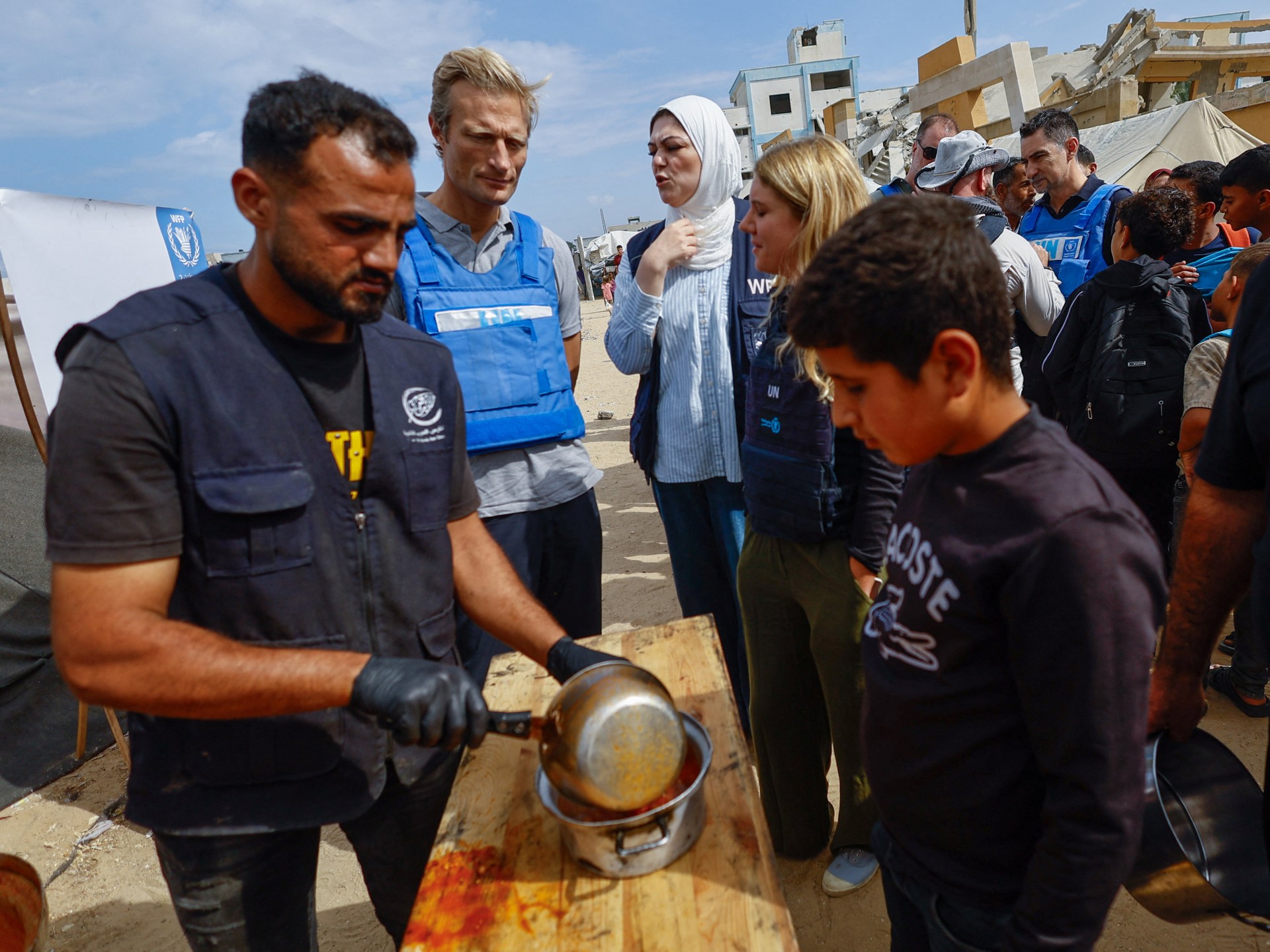

The World Food Programme (WFP) has announced major cuts to its Gaza response due to a funding shortage, leaving about 500,000 people without critical support as much of the population of the war-ravaged Palestinian territory struggles to get enough to eat.
In a statement on Monday, the United Nations agency said it received less than half as much funding for its Palestine operation in 2026 as in previous years. It said it urgently needs a further $450 million to maintain critical operations in the occupied Palestinian territory over the next six months.
- list 1 of 3Funeral held for 75 Palestinians after remains recovered from Gaza ruins
- list 2 of 3Critics say hold Israel to account amid surge in olive harvest attacks
- list 3 of 3Gaza families fear food shortages as Israel halts commercial shipments
end of list
As a result, the WFP said it would reduce the number of people receiving monthly assistance in Gaza from 1.6 million to 1.1 million. Rations will be cut from two food parcels per family to one, and bags of flour will be smaller.
The UN agency said it would also reduce the number of hot meals provided, from 250,000 to 150,000 a day. Families living in hard-to-reach areas, including near the so-called “yellow line” demarcating Israeli military control, will receive a hot meal every other day instead of daily.
More than three years of Israel’s genocidal war on Gaza following the Hamas-led October 7, 2023 attack on Israel, have brought the collapse of education, healthcare and the economy, while access to food, water, shelter and other basic necessities has become a daily struggle.
More than 74,245 Palestinians have been killed, according to Gaza’s health ministry.
UN estimates show more than 80 percent of people are unemployed and unable to afford fresh or protein-rich foods when they are available. Only one in five children consumes a sufficiently diverse diet while access to health services remains limited.
Advertisement
An estimated 1.4 million people, or 67 percent of Gaza’s population, are experiencing acute food insecurity at crisis levels or worse. This figure is down from 1.6 million people, or 77 percent of the population, at the end of 2025, however the WFP said the improvement “remains modest and fragile.”
Funding shortfalls had already affected operations in the occupied West Bank, where the number of people receiving assistance was halved in September, from 400,000 to 200,000.
Related News
ECHR hears how 10 children went missing after Russia annexed Crimea
Jamaica accepts first flight of third-country deportations from US
Zimbabweans struggle to rebuild after fleeing xenophobia in South Africa