


Russia and Ukraine paused strikes on each other’s capitals over the weekend to allow United States President Donald Trump’s envoys to visit Moscow and make their first trip to Kyiv since the war began, as Washington attempts to revive talks that have been stalled since February.
The trip by Steve Witkoff and Jared Kushner comes after a Russian air campaign battered Kyiv for 10 consecutive days, killing at least 53 people. Ukraine’s President Volodymyr Zelenskyy said the war will likely continue into winter, with no breakthrough announced after the talks.
As the war grinds on through its fifth year, Al Jazeera visualises how each side has come to rely on drones over artillery, with attacks reaching further and further beyond the front line and civilian infrastructure and cities increasingly caught in the crossfire.
Attacks on civilian infrastructure more than doubled
The war, which began with the Russian invasion of Ukraine in February 2022, has seen both sides increasingly targeting civilian infrastructure.
According to an analysis by Armed Conflict Location and Event Data (ACLED), Russian forces carried out 29,792 attacks on Ukraine in 2022. Of these, 1,635, more than 5 percent, hit civilian infrastructure, including residential, energy, healthcare and education facilities.
By August 2026, the number of Russian attacks on civilian infrastructure in Ukraine had risen to 7,170, representing more than 13 percent of all Russian attacks on the country.
The same ACLED analysis recorded 245 Ukrainian attacks in Russia in 2022, with 24 of those – about 10 percent – targeting civilian infrastructure. By August 2026, that figure had risen to 3,560 attacks, or 27 percent of all Ukrainian attacks in Russia.
Advertisement
Although a larger share of Ukrainian attacks targeted civilian infrastructure, Russia carried out far more attacks overall.

Where is civilian infrastructure being targeted?
Russia has consistently directed strikes at Ukraine’s energy grid and has again warned of “massive strikes” on infrastructure in the run-up to winter, in retaliation for attacks on its oil and gas facilities, according to transmission system operator Ukrenergo.
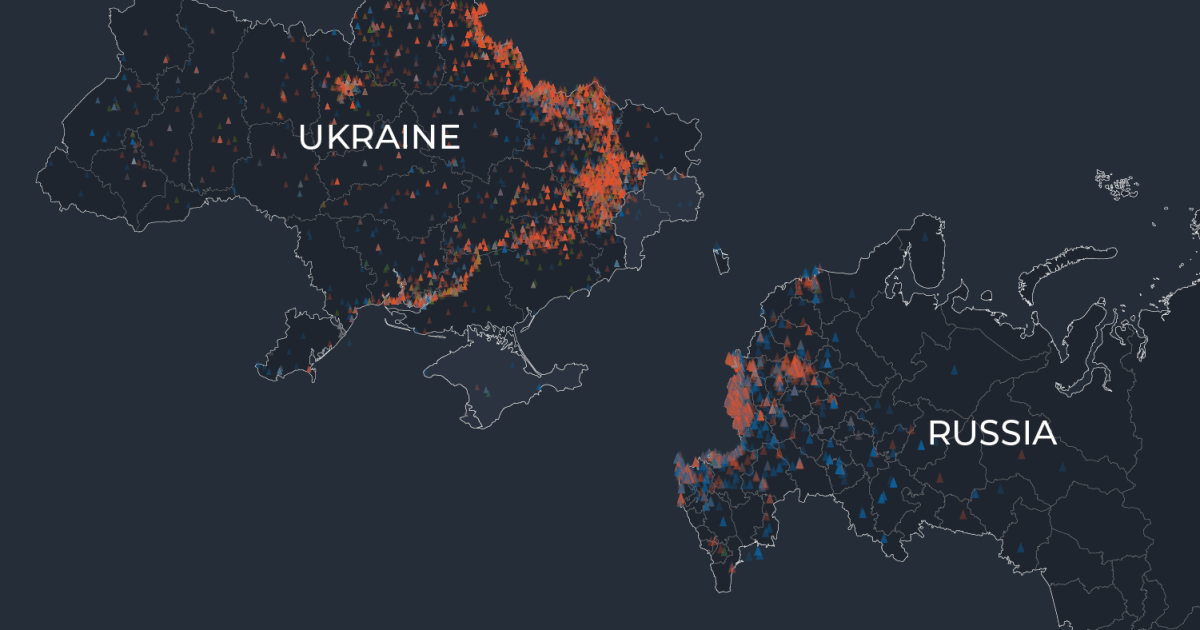
According to ACLED, the majority of Russian attacks on Ukraine have occurred along the front line in Donetsk, which has faced more than 3,652 attacks, followed by Kharkiv (3,590), Sumy (2,969), Dnipropetrovsk (1,797), and Kherson (1,147). Outside the eastern and border provinces of Ukraine, the Kyiv region, including the national capital, has recorded 742 attacks.
About 68 percent of Russian attacks on civilian infrastructure hit residential structures in Ukraine, while more than 19 percent struck energy facilities, followed by education buildings (7.7 percent) and healthcare facilities (5.1 percent).
Ukraine, in turn, has used long-range drones to strike Russian oil and gas facilities, logistics hubs and warehouses, including those belonging to e-commerce companies Wildberries and Ozon.
On Friday, Zelenskyy said Ukraine would launch at least “1,000 drones” against Russia each day, compared with the daily average of 300 or so until now.
The majority of Ukrainian attacks on Russia have occurred in the western region of Belgorod, which has experienced more than 9,549 attacks, followed by Kursk (1,035), Bryansk (297), Krasnodar (286) and Rostov (185).
About 69 percent of Ukrainian attacks have hit residential infrastructure in Russia, while almost 30 percent have struck energy infrastructure. Less than 2 percent of strikes have targeted education or healthcare infrastructure.
The graphic below compares Russian and Ukrainian attacks on civilian infrastructure since the start of the war.
Drones dominate the war, but Russia still relies on missiles
In the war’s early years, air and drone strikes made up only a small share of attacks on both sides, which relied mainly on shelling and artillery.
That has since reversed, with drone and air strikes now accounting for the lion’s share of attacks on both sides.
According to the Center for Strategic and International Studies (CSIS), Russia is on track to launch 840 ballistic missiles at Ukraine this year, 47 percent more than in 2025.
Russia has stepped up its use of ballistic missiles in recent months, including the first confirmed combat use of its upgraded, longer-range Iskander-1000 against Kyiv, according to Ukraine’s Main Directorate of Intelligence.

More interceptors needed
Ukraine’s state news agency Ukrinform reported on September 1, quoting air force spokesperson Yurii Ihnat, that they had shot down all cruise missiles fired in the overnight attack. Ukraine, however,”requires more capabilities, particularly more Patriot interceptor missiles”.
Advertisement
Ukraine’s supplies of expensive, US-made Patriot missiles and German-made IRIS-T interceptors have dwindled, impeding its ability to shoot down ballistic missiles. Interception rates have consequently fallen from 24 percent in 2025 to 10.2 percent in 2026, according to CSIS.

The growing threat of advanced ballistic missiles is increasing the need for sophisticated antimissile defence systems such as Patriot, THAAD, AMRAAM, and IRIS-T, according to CSIS.
Western support has helped to expand Ukraine’s drone and air defence capabilities. In June, the European Union provided 3.9 billion euros ($4.53bn) towards a 6 billion euros ($6.97bn) drone procurement package, while the United Kingdom announced a 752 million pounds ($1.02bn) package to deliver 150,000 drones and more than 350 air defence missiles and radars by the end of the year.

Related News
Afghan refugees face an uncertain future as Europe shifts to the right
Why aid entering Gaza may not reach those who need it

Iran war live: Tehran prepares conditions to open Strait of Hormuz