Could Morocco’s football chief Fouzi Lekjaa become its next prime minister?
 09 August 2026
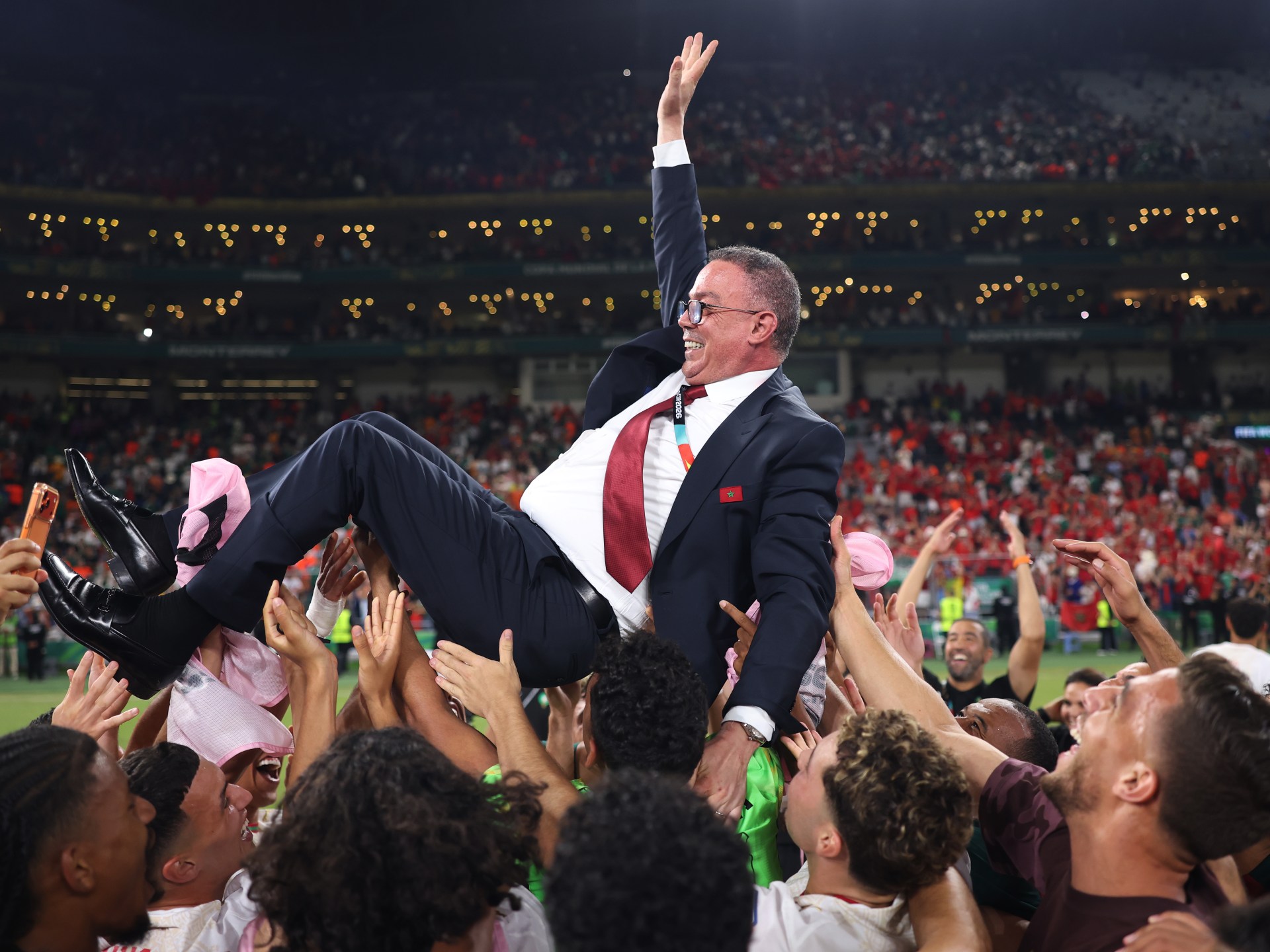

Rabat, Morocco – As Morocco prepares for parliamentary elections on September 23, political debate is centred less on ideology and party programmes than on the decision of one of the country’s most influential public officials to enter partisan politics.
The decision by Fouzi Lekjaa, Morocco’s minister delegate for the budget and president of the Royal Moroccan Football Federation (FRMF), to join the Authenticity and Modernity Party (PAM) has prompted intense debate across the political class and social media.
Best known for his role in public finance and the transformation of Moroccan football, Lekjaa built his reputation in public administration rather than electoral politics.
His move represents more than a simple party affiliation. It reflects a broader shift in Moroccan politics, where managerial competence, state-led development and national prestige are becoming increasingly important sources of political legitimacy.
Mustafa Ahdar, a researcher in constitutional law and political science at Ibn Zohr University in Agadir, told Al Jazeera that Lekjaa joined PAM less than three months before the elections, making the timing politically significant.
“From a constitutional perspective, every Moroccan citizen is free to join any political party under the 2011 Constitution,” Ahdar said, noting that former PAM secretary-general Abdellatif Ouahbi has publicly reaffirmed this principle.
“However, someone who simultaneously heads the national football federation and occupies a senior ministerial position cannot realistically be viewed in the same way as an ordinary citizen entering politics.”
Advertisement
The timing matters for another reason: the government formed after the election will oversee Morocco’s preparations for the 2030 FIFA World Cup, which it will cohost with Spain and Portugal.
With billions expected to be invested in infrastructure, transport and tourism, commentators have increasingly described the next administration as Morocco’s “World Cup government”, one likely to be judged as much by its ability to deliver the tournament as by traditional economic indicators.
From party politics to performance politics
Lekjaa’s rise reflects a broader trend in Morocco and beyond, where successful public officials are increasingly becoming political assets in their own right.
As budget minister, he became closely associated with major infrastructure and investment projects while emerging as a central figure in Morocco’s football renaissance.
The Atlas Lions’ historic run to the semifinals of the 2022 FIFA World Cup transformed Morocco’s international image, strengthened its soft power across Africa and the Arab world, and made football a symbol of national ambition and institutional effectiveness.
For Ahdar, however, the trend raises deeper questions about the role of political parties.
“Political parties are supposed to create spaces where citizens become politically engaged and future leaders emerge,” he said. “When parties increasingly recruit influential personalities who have built their popularity outside politics, they risk abandoning that mission.”
A changing electorate
Morocco’s political evolution also reflects changing voter behaviour.
Turnout exceeded 50 percent in the 2021 parliamentary elections, yet nearly half of eligible voters still abstained.
Many analysts argue that this reflects scepticism towards political parties rather than a lack of political interest, particularly among younger Moroccans, who increasingly express their concerns through social media activism and protests over unemployment, rising living costs and public services.
According to Ahdar, the debate surrounding Lekjaa illustrates this shift.
“PAM is part of the current governing coalition and faces criticism over its governmental record,” he said. “Yet the debate today is centred far more on Lekjaa’s arrival than on the party’s political programme or achievements.”
He noted that some social media users had even joked that “Lekjaa attracted PAM rather than PAM attracting Lekjaa”, reflecting what he described as the growing personification of politics.
Morocco’s constitutional framework
Morocco’s 2011 Constitution expanded the powers of parliament while maintaining the monarchy’s central role in government formation. Under Article 47, the king appoints the head of government from the party winning the largest number of parliamentary seats.
Advertisement
Morocco’s proportional electoral system almost always produces coalition governments, making post-election negotiations nearly as important as the vote itself.
Speculation over Lekjaa’s future political role has intensified, despite no official indication that he is being considered for head of government.
Ahdar also sees parallels with Prime Minister Aziz Akhannouch, who entered partisan politics after establishing himself outside traditional party structures.
“This inevitably raises questions about internal party democracy,” he said. “Many party activists spend years progressing through party ranks, while outsiders sometimes reach senior positions very quickly.”
He added that observers will naturally ask whether such moves reflect genuine political conviction or primarily pragmatic political calculation.
The PAM factor
Founded in 2008, PAM presents itself as a modernising political force focused on institutional reform, regional development and economic modernisation. The party has also faced corruption and abuse-of-office controversies involving some of its elected officials.
For PAM, recruiting a figure associated with effective governance and football success may reinforce its image as a party of competence while helping shift attention from criticism of the governing coalition’s economic record.
Between legitimacy and expectations
Administrative competence can strengthen political credibility, but governing requires more than managerial efficiency. Morocco continues to face major challenges, including unemployment, education, healthcare, regional inequalities and rising living costs.
Nouh El Harmouzi, head of the Arab Center for Research, believes Lekjaa’s administrative profile nevertheless explains the attention surrounding his political move.
“Few senior officials combine his experience in public finance, institutional management and strategic planning,” he told Al Jazeera.
“The next government will face enormous budgetary pressures alongside growing geopolitical and economic risks while simultaneously delivering one of the largest projects in Morocco’s modern history: the 2030 World Cup.”
Beyond Lekjaa
The debate has also attracted attention among Moroccans abroad.
Touria Guerraoui, a Moroccan-French technology expert, said the diaspora has followed Lekjaa’s political move with particular interest because of his popularity through football.
“Many Moroccans living abroad closely followed the national team’s achievements and feel connected to that success,” she told Al Jazeera. “His decision to join PAM has made many in the diaspora more attentive to this election.”
She argued that Morocco is not unique in seeing influential senior state officials enter politics, pointing to French President Emmanuel Macron, who entered national politics after a career in the private sector and public administration.
“A large part of Morocco’s football team comes from the diaspora, and their achievements have generated enormous pride,” she said. “But many people are now asking whether the effectiveness demonstrated in football administration can also be translated into the economic and social progress that Moroccans expect.”
Advertisement
Related News
Why is Article 5 of MoU causing confrontations in the Strait of Hormuz?

Photos: Guatemala’s Fuego volcano erupts, forcing evacuations
Fuel prices soar on back of Iran war, leaving Yemeni labourers with no work