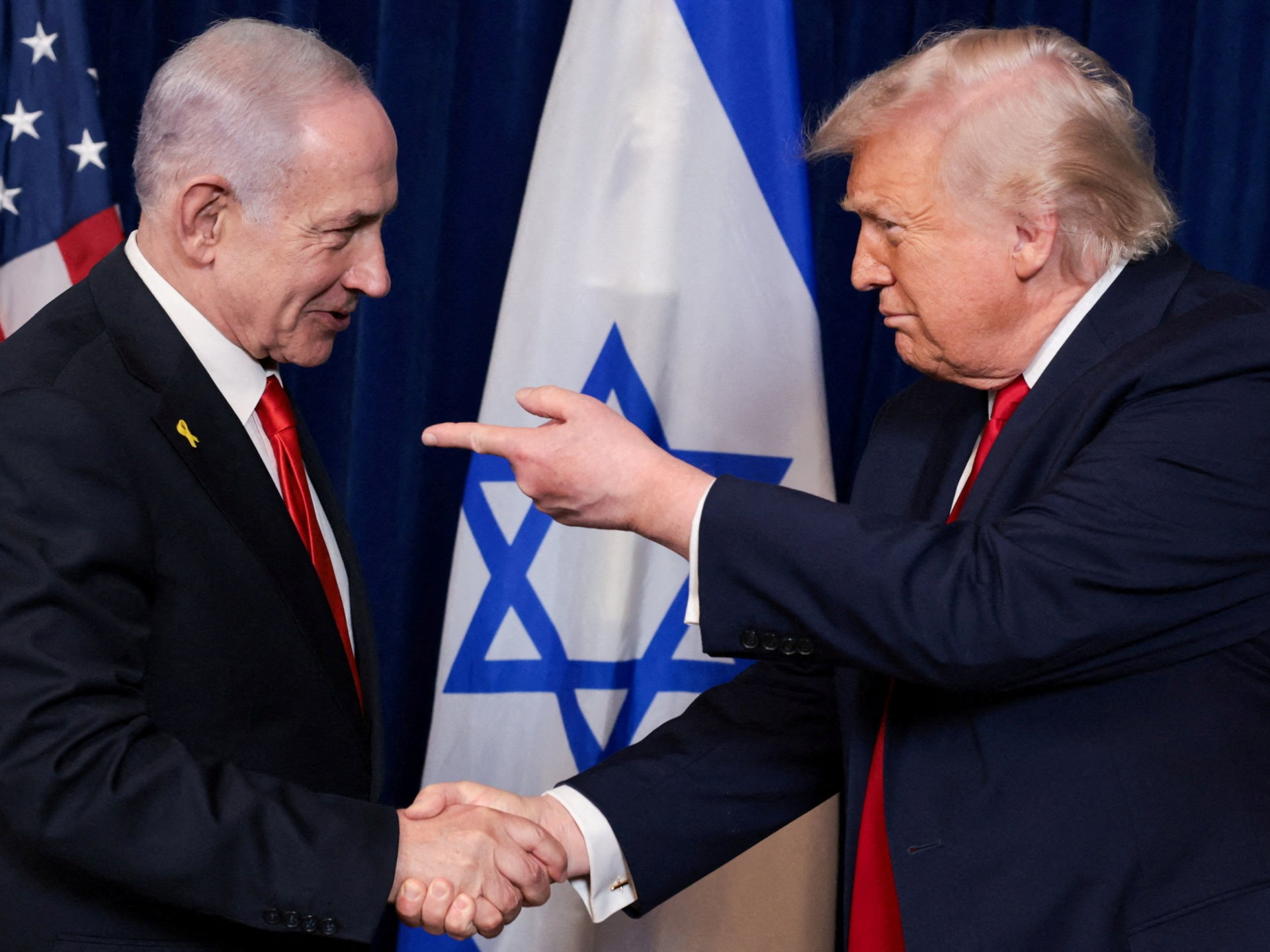



Beirut, Lebanon – On Monday morning, people in Lebanon woke up to yet another ceasefire agreement. An agreement announced between the United States and Iran includes Lebanon – according to Iranian and Pakistani officials – but statements from Israeli officials cast doubt over whether the war that has been ravaging southern Lebanon since 2023 is finally over.
Videos on Monday showed Lebanese people returning home to areas in the south of the country, though officials warned anyone from border villages not to return until the security situation becomes clearer.
- list 1 of 3How Pakistan mediated a US-Iran agreement after more than 100 days of war
- list 2 of 3Iran, US agree tentative deal to ‘end war’: Your questions answered
- list 3 of 3Iran war day 108: Iran, US reach a tentative deal to end conflict
end of list
Others, however, have little to return to.
Ali Saleh, a 55-year-old from the southern village of Jwaya, has been displaced at a stadium in Beirut since early March.
“I won’t be heading back home,” he told Al Jazeera. “My house was hit and you know the situation financially is difficult at the moment.”
Lebanon included
On March 2 , Israel intensified its war on Lebanon for the second time in under two years. The intensification came just a few hours after the pro-Iranian Shia group Hezbollah fired six rockets at Israel, its first response to more than 10,000 Israeli violations of the 2024 ceasefire. Hezbollah launched the attack following the February 28 killing of Iran’s Supreme Leader Ayatollah Ali Khamenei in the opening salvoes of the US-Israeli war on Iran.
Since then, Israel has killed at least 3,783 people in Lebanon and wounded 11,699. More than 1.2 million have been displaced from the south, Beirut’s southern suburbs and villages in the Bekaa Valley. Villages have been razed by Israel’s military, which occupies large swathes of southern Lebanon.
Advertisement
In recent weeks, evacuation orders and widespread Israeli bombing of Tyre and Nabatieh have led to mass destruction in two of the south’s most populated areas. The Lebanese army announced on Monday that people should exercise caution when returning to their homes, while Lebanese officials said that people from border villages should not yet return home.
Pakistan’s Prime Minister, Shehbaz Sharif, said the deal between the US and Iran announced “the immediate and permanent termination of military operations on all fronts, including in Lebanon”.
The announcement was welcomed by Lebanon’s President Joseph Aoun – who has been attempting to reimpose the authority of the Lebanese state in the country. Aoun said that the Lebanese people were now looking forward to “these understandings being translated into practical steps that bring a definitive end to the cycle of violence and open the way to stability, security, recovery and reconstruction”.
Lebanon’s Parliament Speaker and close Hezbollah ally, Nabih Berri, praised the deal and various regional actors for their role in achieving it, including Pakistan, Qatar, Saudi Arabia and Egypt.
He also thanked Iran and the US for including a clause “on halting Israeli aggression against all of Lebanon, to preserve its sovereignty over its entire territory”.
Another ceasefire?
Despite the trepidation, many Lebanese are already returning home.
“People started returning to their villages and areas and now they are waiting for the full implementation of the ceasefire and the withdrawal of the Israelis from the areas they occupied,” Qassem Kassir, a Lebanese political analyst told Al Jazeera. “People cannot get a clear read on the situation just yet.”
This also is not the first time a ceasefire has been declared between Lebanon and Israel. The November 2024 agreement called for a withdrawal of Israeli troops from Lebanese land and for a cessation of hostilities, while Hezbollah was required to withdraw its armed presence north of the Litani River.
But Israel never stopped firing on Lebanon, and Hezbollah – supported by Iran’s Islamic Revolutionary Guard Corps (IRGC) – reportedly started preparing for another round of fighting. Israel also didn’t fully withdraw its troops, continuing to occupy five points along the Israeli-Lebanese border.
Hezbollah has said repeatedly that it would not allow the situation to return to a pre-March 2 reality, with Israel having the freedom to attack and Hezbollah no right to respond.
On April 16 , US President Donald Trump announced a ceasefire between Lebanon and Israel. The declaration brought an end to attacks on central Beirut and decreased the regularity of attacks on Beirut’s suburbs, though Israel has attacked them since, including on Sunday. But the war in southern Lebanon continued unabated.
Advertisement
On June 3 , Israel and Lebanon agreed to a ceasefire after a round of direct negotiations between the two countries. But that declaration had little effect as Israel kept attacking Lebanon and Hezbollah continued to fire rockets at Israeli troops in Lebanese territory and across the border.
Israel defiant
Questions remain over whether the two sides will respect the ceasefire.
As of Monday afternoon, Hezbollah had not carried out any operations since the US-Iran deal was announced, according to Reuters.
But Lebanese state media reported that an Israeli drone strike on a car in southern Lebanon had killed its driver.
Israeli officials have met the US-Iranian agreement’s announcement with defiance. Leading politicians have repeatedly insisted that they will not accept any threat from Lebanon, and will continue to attack Hezbollah if they deem it necessary.
“Prime Minister Benjamin Netanyahu and I are pursuing a clear policy of maintaining the Israeli army in the security zones in Lebanon, Syria and Gaza, without setting a time limit, in order to protect Israel’s borders and towns from jihadist elements,” Israel’s Defence Minister, Israel Katz, said on Monday. “We oppose the withdrawal of the Israeli army from Lebanon, despite all current and future pressures.”
Analysts have expressed scepticism over the deal.
“Netanyahu may come up with a lot of surprises, and he may have a power trip with Trump, where he tries to enforce his own terms of the deal,” Karim Safieddine, a non-resident fellow with the Tahrir Institute, told Al Jazeera.
Political analyst Kassir said he felt that the new ceasefire was different and that the larger war was over. However, he maintained, there is still work to be done before normal life can resume in Lebanon.
“No one trusts the US or Israel,” adding that for Lebanon to have long-lasting and permanent security, it still needed “Israel’s withdrawal, a return of people to their villages” and a defence plan that has national consensus – unlike the current polarisation that exists over Hezbollah’s role in the country.
Related News
Russian drone strike damages site near Chornobyl nuclear plant

Oval Office octagon: How Trump turned combat sports into a political weapon
Former general for Syria’s Assad pleads not guilty in torture trial