
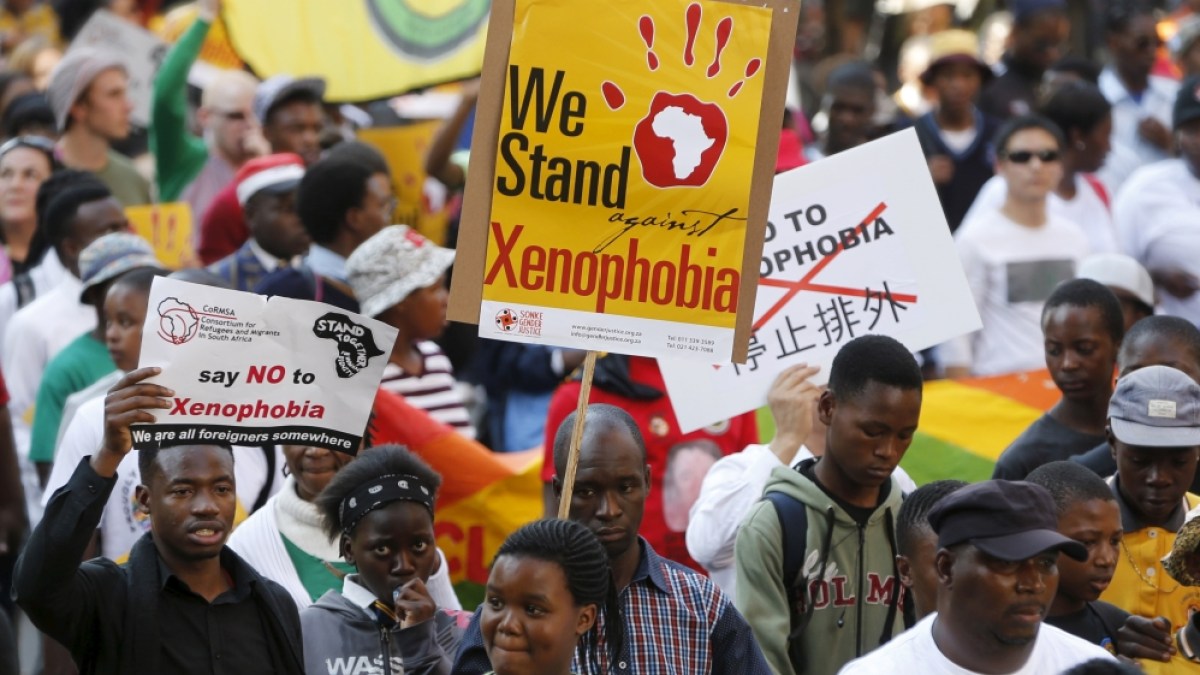

Johannesburg, South Africa – Human Rights Watch has warned of a new wave of xenophobic attacks in South Africa as anti-immigration groups intensify protests and vigilante-style actions targeting foreign nationals, including Zimbabweans.
The warning came in a report released on Tuesday amid rising protests in South African cities, including Johannesburg, Pretoria and Durban.
Groups such as March and March, and Operation Dudula, two South African anti-immigration movements advocating stricter enforcement against undocumented migration, have led protests in several cities.
“We continue to receive reports through our community networks of intimidation, threats, harassment, unlawful evictions, workplace discrimination, police extortion, and denial of access to healthcare and other basic services affecting migrants and refugees,” said Mike Ndlovu, media coordinator for Kopanang Africa Against Xenophobia (KAAX).
“The most common forms of harm include verbal abuse, evictions, discrimination at clinics and workplaces, confiscation of goods and in some cases physical assaults,” Ndlovu told Al Jazeera.
Messages and videos circulating on social media show anti-immigration activists calling for foreign nationals to leave South Africa by June 30.
However, many incidents are believed to go unreported due to fear of retaliation, arrest or deportation.
What is causing the backlash?
In some townships and urban areas affected by poverty, inequality and unemployment, anti-immigration movements appear to be gaining support.
Advertisement
Political parties such as the Patriotic Alliance, ActionSA, and uMkhonto we Sizwe increasingly frame migrants as competitors for jobs and public services.
Mpho Makhubela, a member of the Consortium for Refugees and Migrants in South Africa (CoRMSA) and an activist in KAAX, said vigilante groups are growing in response to wider social frustration.
South Africa’s constitution and international human rights law protect the right to protest, but that does not include permission to commit violence
“Vigilante groups feed off the country’s frustrations over unemployment, socioeconomic decline and the lack of effort to address inequality gaps,” he told Al Jazeera.
“The country continues to face the enormous task of addressing the legacies of apartheid.”
The human toll
The violence and harassment have had a direct impact on migrants’ daily lives.
Mpofu, a Zimbabwean former courier at Mr Delivery, a food and package delivery company, recalled being confronted by a vigilante group in Pretoria CBD in January while working with colleagues from Congo and Malawi.
“My workmates jumped out of the company van and ran, leaving me alone,” he said. “They started harassing me, asking why my colleagues were running away.”
Mpofu said the situation escalated fear in his workplace, which he believes contributed to the retrenchment of undocumented migrant workers.
Since losing his job, he now survives through informal cooking and delivery work but earns far less than before.
Another migrant, Zwelibanzi Velempini Khumalo, described increasing hostility in communities around Durban and Pietermaritzburg. He said tensions in Mpumuza earlier this year led to foreign nationals being driven out, with some losing furniture, belongings and business stock during unrest.
“Informal traders and shop owners were the most affected. Some were allegedly looted, while others were forced to abandon their homes,” he said.
Khumalo also said he lost his job as an accounting lecturer after members of vigilante groups reportedly demanded that undocumented staff be removed from his workplace. His wife, who still holds a valid permit, is now the family’s sole income earner.
“We have tried to regularise our documents, but it is difficult to penetrate the system because there is too much red tape,” he said.
Official response and pushback
South Africa says it remains committed to the rule of law and the protection of foreign nationals despite rising tensions.
Advertisement
“It is important to understand the character of migration to South Africa,” said Nomonde Mnukwa, government spokesperson. She explained that post-1994 policy allowed social integration rather than strict migrant containment.
She acknowledged public frustration linked to unemployment, pressure on resources, undocumented migration and crime, but said hostile actions against migrants are not tolerated.
President Cyril Ramaphosa has also stated that targeting migrants under the guise of activism is unlawful.
Mnukwa said migration laws are being reviewed, border systems modernised, and accountability strengthened. She stressed that the constitution guarantees dignity and human rights for all residents regardless of nationality.
Critics, however, take a harder stance.
Pat Mokgalusi, spokesperson for the Dudula Operations Movement, said: “Illegal foreigners must just pack and go,” arguing that undocumented migration weakens systems and increases pressure on jobs and services.
He also linked undocumented migration to crime and poor planning, while saying legal migrants are welcome if they comply with laws.
Jacinta Ngobese Zuma, founder of March and March, said undocumented migration strains resources and contributes to overcrowding in cities, schools, hospitals and job markets.
She argued that migration should be more strictly controlled through stronger identification and enforcement systems.
Global concern
Zimbabwe’s Foreign Minister Ziyambi Ziyambi said his country was monitoring the rising anti-migrant tensions in South Africa but stressed that Harare would not interfere in Pretoria’s internal affairs.
“You cannot go to their home and teach them what to do. Zimbabwe is engaging through diplomatic channels and embassies to assist nationals facing difficulties,” he said.
United Nations Secretary-General Antonio Guterres and the African Commission on Human and Peoples’ Rights (ACHPR) have both voiced concerns and called on South African authorities to investigate abuses, ensure accountability, and protect migrants’ access to justice and services.
Human Rights Watch said scapegoating migrants is driving violence, stressing that blaming migrants for crime, unemployment and poor services risks deepening xenophobia and undermining human rights protections.
“South Africa’s constitution and international human rights law protect the right to protest, but that does not include permission to commit violence,” said Nomathamsanqa Masiko-Mpaka, HRW South Africa researcher.
Related News
Mahmoud Khalil to appeal US deportation case to Supreme Court
How the shape of a map can determine the US midterm elections

Last passengers from hantavirus-hit ship evacuated; American tests positive