

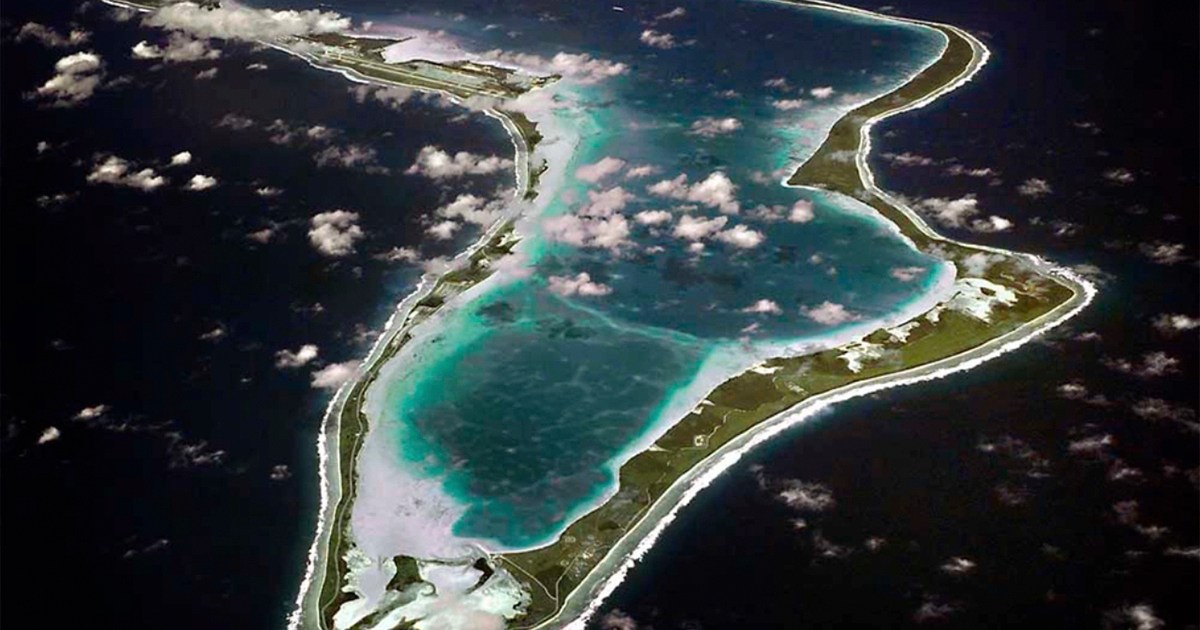

Iran has denied targeting a joint military base of the United States and the United Kingdom on the Indian Ocean island of Diego Garcia with missiles, dismissing the claim as an “Israeli false flag” attack.
Ministry of Foreign Affairs spokesman Esmaeil Baghaei said on Monday the accusations reflected a pattern of “disinformation” after NATO Secretary-General Mark Rutte said the alliance could not confirm Israel’s claim that the projectiles used were Iranian intercontinental ballistic missiles.
- list 1 of 3Immense damage seen in Iran’s streets after air strikes
- list 2 of 3World in energy crisis worse than 1970s’ oil shocks combined, IEA head says
- list 3 of 3Iran war: What’s happening on day 24 of US-Israel attacks?
end of list
“That even the NATO Secretary General (who is infamously pressing Alliance members to appease the U.S. and support their illegal war on Iran) declines to endorse Israel’s most recent disinformation, speaks volumes: the world has grown thoroughly exhausted with these tired and discredited ‘false flag’ storylines,” Baghaei wrote on X.
Speaking to CBS News on Sunday, Rutte backed US President Donald Trump’s war on Iran, framing it as necessary and urging public support. “I’ve seen the polling, but I really hope the American people will be with him because he’s doing this to make the whole world safe,” he said.
Earlier, US media outlets, including The Wall Street Journal, said missiles were launched between Thursday night and Friday morning, but they failed to hit the Diego Garcia base.
But if Iran was confirmed to be behind the attacks, it would mean that it possesses 4,000km-plus (about 2,500-mile) range ballistic missiles able to reach as far as the UK capital, London.
Earlier this month, in an interview with the US broadcaster NBC, Iranian Foreign Minister Abbas Araghchi said, “We intentionally limited ourselves to below 2,000km [1,242 miles] of range because we don’t want to be felt as a threat by anybody else in the world.”
Advertisement
UK Foreign Secretary Yvette Cooper slammed “reckless Iranian threats” but added that London would not be drawn into a wider conflict in the Middle East.
British Housing Secretary Steve Reed said on Sunday the UK had no indication that Iran intended to – or could, even if it wanted to – reach the country with its missiles.
The UK-US military airbase is home to nearly 2,500 mostly American personnel and has supported US military operations from Vietnam to Iraq, Afghanistan and strikes on Yemen’s Houthi rebels.
Israel’s military chief, Eyal Zamir, claimed that Iran used “a two-stage intercontinental ballistic missile with a range of 4,000km” to target the US-UK base.
Israel, a close US ally, has long said Iran’s missile and nuclear programmes pose a threat and has for decades lobbied the US to intervene militarily. But successive US administrations had resisted the pressure to launch military strikes on Iran. Instead, Washington imposed wide-ranging sanctions on Tehran to deter it from developing nuclear weapons.
As Washington and Tehran were engaged in talks, Israel and the US attacked Iran about three weeks ago, killing Supreme Leader Ayatollah Ali Khamenei. The attack came despite Oman, the mediator of those talks, saying a deal had been “within reach”.
Related News

Former FBI chief, Robert Mueller, dead at 81

Trump administration threatens news outlets over critical coverage of Iran
Iran war live: Trump says conflict will be over soon; Gulf attacks continue