Russia’s Alexey Navalny killed by dart frog poison, European nations allege
 14 February 2026
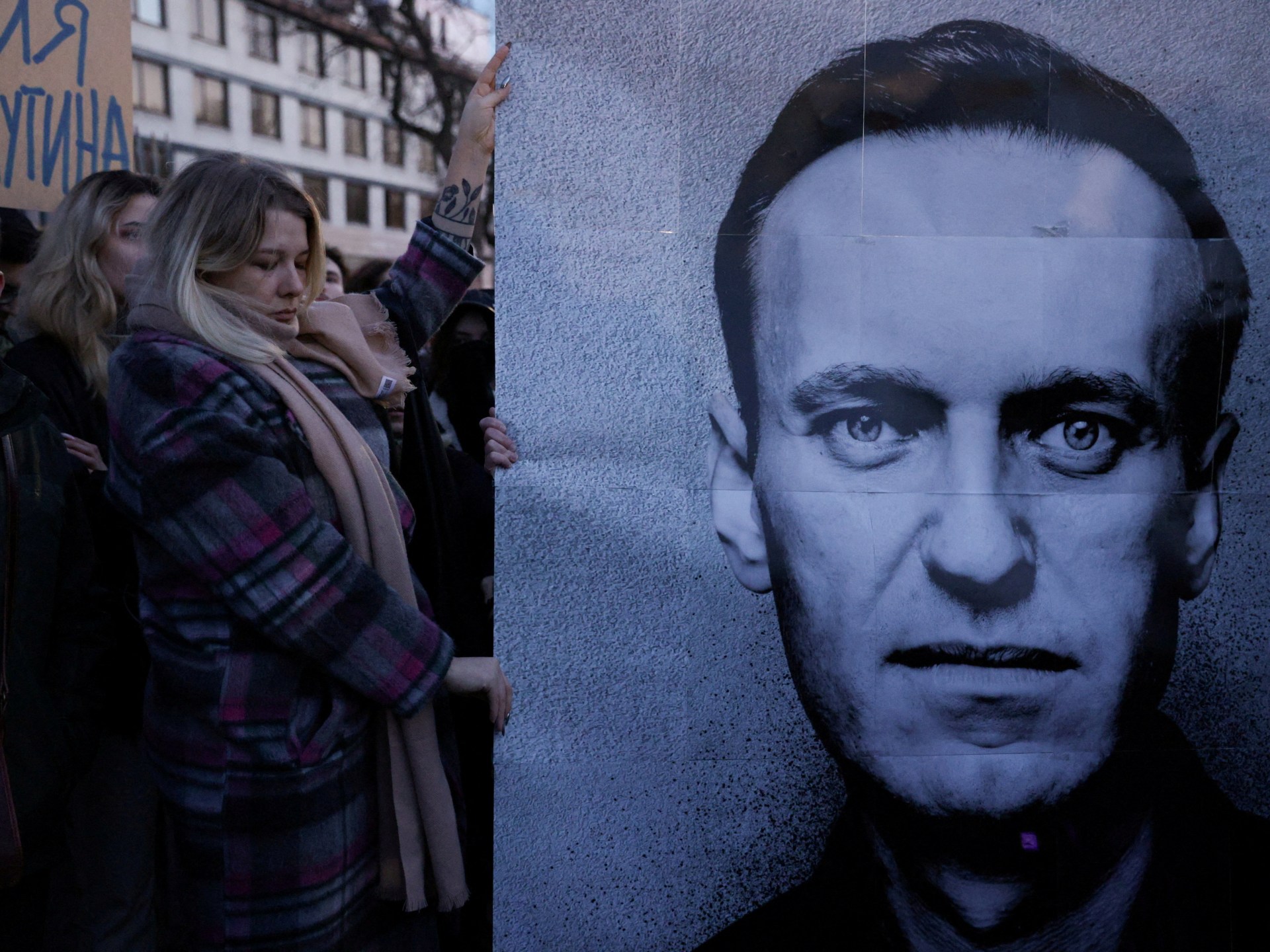

Five European countries – the United Kingdom, France, Germany, Sweden and the Netherlands – have accused Russia of poisoning and killing opposition leader Alexey Navalny in 2024 based on lab results from a sample taken from his body.
The five governments said in a statement on Saturday that tissue samples “conclusively” confirmed the lethal toxin epibatidine. The poison is found in wild dart frogs from South America.
- list 1 of 4Alexey Navalny’s widow says lab results show her husband was poisoned
- list 2 of 4Global system of human rights in ‘peril’, warns HRW in its annual report
- list 3 of 4‘Nothing but lies’: New Navalny memoir foretells collapse of Putin’s regime
- list 4 of 4Russia hands jail sentences to three Navalny lawyers
end of list
“The UK, Sweden, France, Germany and the Netherlands are confident that Alexey Navalny was poisoned with a lethal toxin,” the statement issued during the Munich Security Conference said.
Russia had “the means, motive, and opportunity to administer this poison”, the UK Foreign, Commonwealth and Development Office added in a statement.
Russian Foreign Ministry spokesperson Maria Zakharova told state-run RIA Novosti news agency she’ll comment once the test results are publicly presented – something she noted has not yet been done.
The five countries said they’re reporting Russia to the Organisation for the Prohibition of Chemical Weapons for a breach of the Chemical Weapons Convention. There was no immediate comment from the organisation.
Navalny, who crusaded against official corruption and staged anti-Kremlin protests as President Vladimir Putin’s fiercest foe, died in an Arctic penal colony on February 16, 2024, while serving a 19-year sentence he called politically motivated.
Epibatidine is found naturally in dart frogs and can also be manufactured in a lab, something European scientists suspect was the case in the alleged poisoning of Navalny.
The poison works by causing shortness of breath, convulsions, seizures and a slowed heart rate and can kill on contact.
The five countries said Russia needs to be held accountable for its “repeated violations” of the convention.
Advertisement
British Foreign Secretary Yvette Cooper met Navalny’s widow, Yulia Navalnaya, at the Munich Security Conference. She said the new findings are “shining a light on the Kremlin’s barbaric plot to silence his voice”.
French Foreign Minister Jean-Noel Barrot wrote on X the alleged poisoning shows “Vladimir Putin is prepared to use biological weapons against his own people in order to remain in power.”
The Russian government has repeatedly denied any involvement in Navalny’s death. Authorities said he became ill after a walk and died from natural causes.
“Once there are test results – once there are formulas for the substances – there will be a comment. Without this, all talk and statements are just information leaks aimed at distracting attention from the West’s pressing problems,” said Zakharova.

It’s unclear how the samples from Navalny’s body were obtained or where they were assessed. Cooper told reporters “UK scientists worked with our European partners to pursue the truth” on Navalny’s death.
Navalnaya said the “murder” of her husband is now a “science-proven fact”.
“Two years ago, I came on stage here and said that it was Vladimir Putin who killed my husband,” Navalnaya said on the sidelines of the Munich Security Conference.
“I was, of course, certain that it was a murder, … but back then, it was just words. But today these words have become science-proven fact,” Navalnaya added.
Navalny was the previous target of a nerve agent poisoning in 2020 that he blamed on the Kremlin.
He was flown to Germany for treatment, and when he returned to Russia five months later, he was immediately arrested and imprisoned for the remaining three years of his life.
The UK held a public inquiry into the poisoning in Britain of Russian double agent Sergey Skripal in 2018. It concluded last year that Putin must have ordered the Novichok nerve agent attack. The Kremlin has denied involvement.
Russia also denied poisoning Alexander Litvinenko, a former Russian agent-turned-Kremlin critic who died in London in 2006 after ingesting the radioactive isotope polonium-210. A British inquiry concluded that two Russian agents killed Litvinenko.
Related News
Three children killed in drone strike on mosque in central Sudan: Doctors
WHO says fatal case of Nipah virus confirmed in Bangladesh

AI video showing a top Indian official shooting Muslims causes outrage