

The United States is intensifying a military build-up off Iran that experts say could be an indicator that Washington is planning to strike the country.
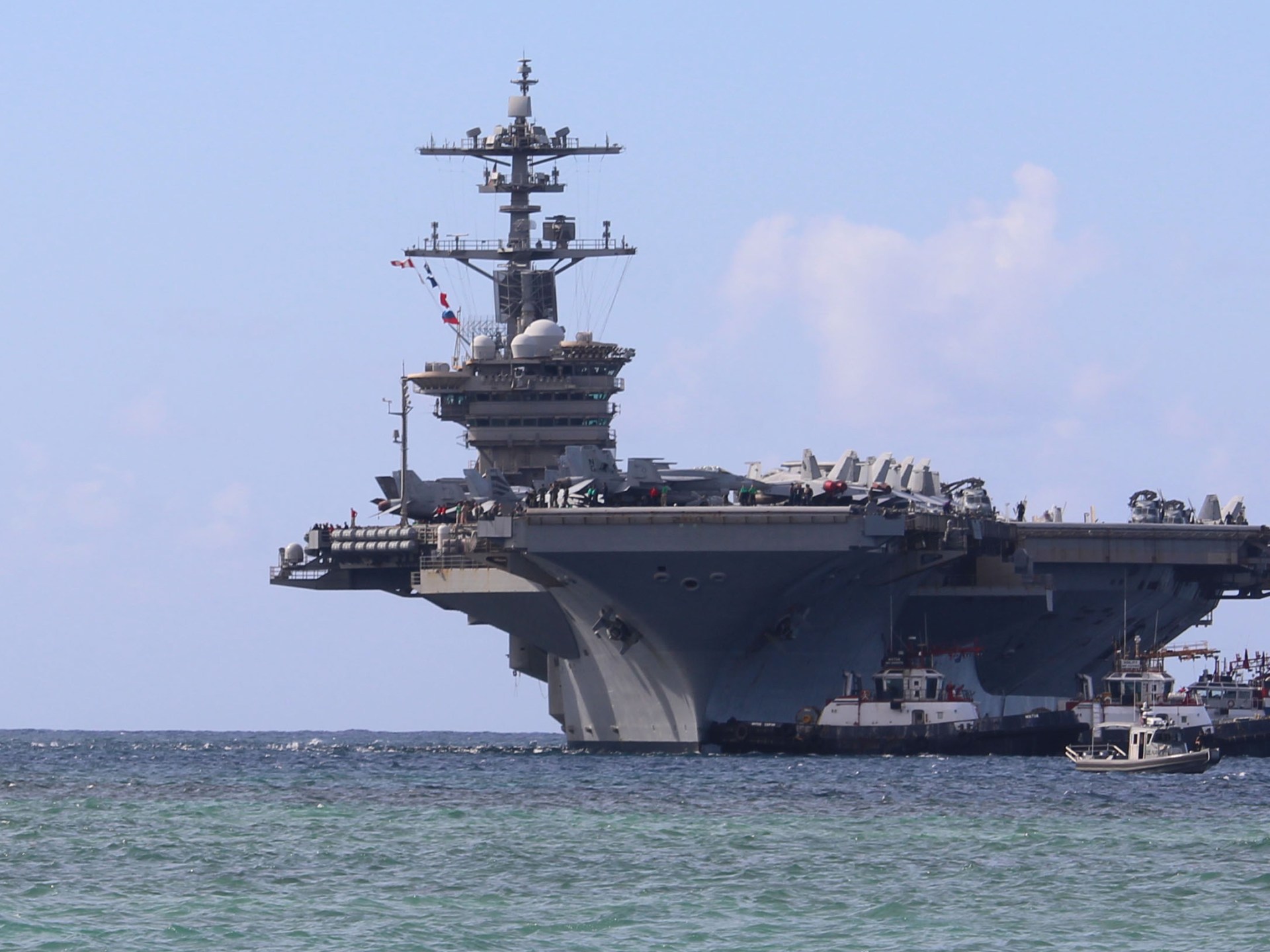
The USS Abraham Lincoln, a nuclear-powered aircraft carrier, is one of several military assets the US has deployed to the Arabian Sea in recent days.
The US also deployed assets from around the world to the region during the 12-day Iran-Israel War in June last year, when Washington sided with its ally Israel and heavily bombed three Iranian nuclear sites.
And later last year, the US stockpiled military assets in the Caribbean just weeks before launching a series of strikes on Venezuelan boats it claimed – without proof – were trafficking drugs to the US. Eventually, the US abducted Venezuelan President Nicolas Maduro from Caracas in a military assault on January 3.
Following mass protests in Iran from late December, when thousands took to the streets first to complain about the country’s failing currency, but later on, demanding government change, Iranian security forces were accused of massacring demonstrators. The United Nations special rapporteur to Iran said at least 5,000 protesters were killed, while thousands have been detained.
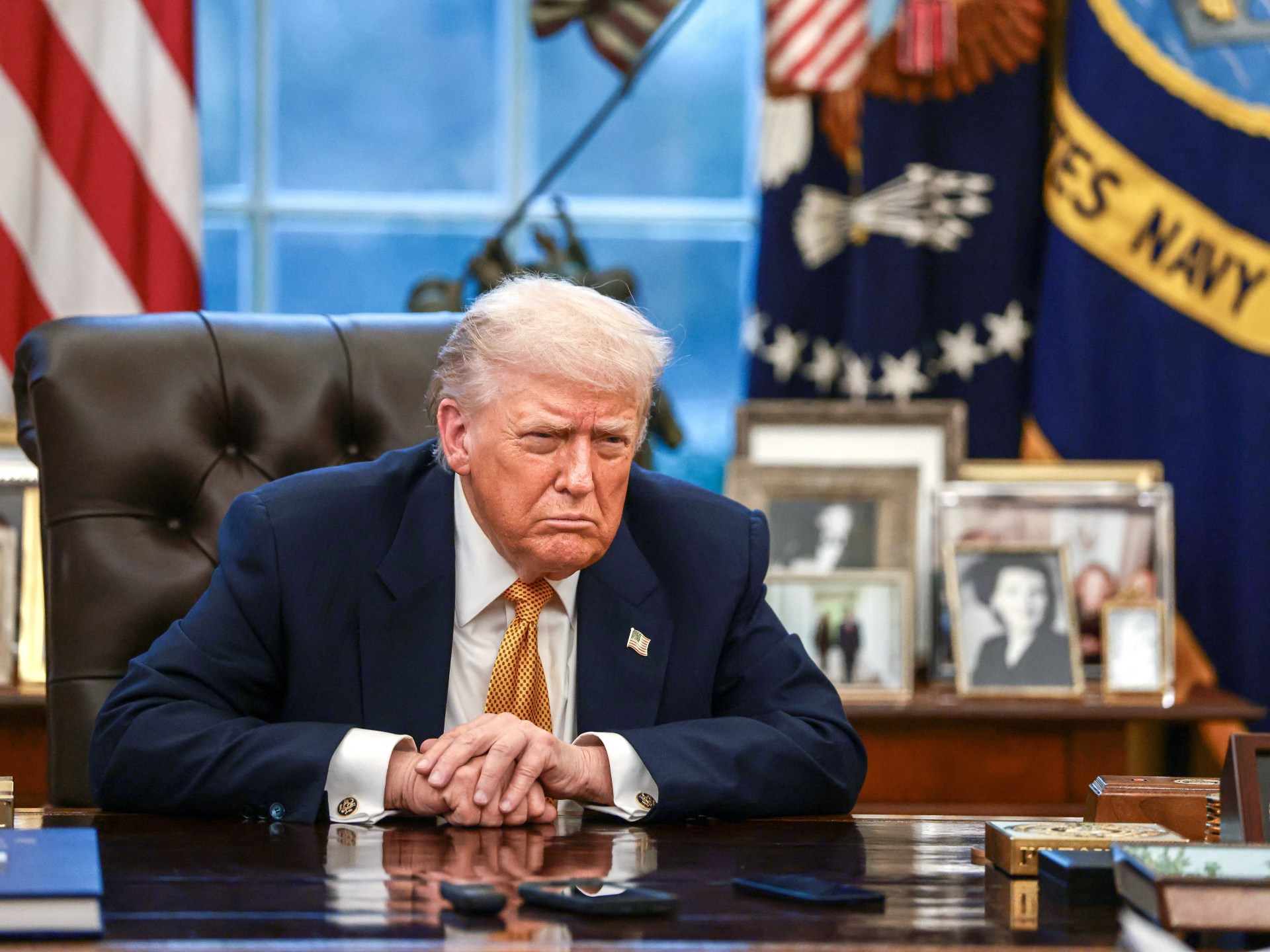
US President Donald Trump seized on the opportunity to lambast Iran’s clerical leaders, telling demonstrators that “help is on its way”, and threatening military action if Iran carried out executions of prisoners.
Earlier this month, Trump dialled back his threats when, he said, the Iranian government assured him there would be no executions. And, when protests were finally quashed last week, he claimed planned executions had been halted because of him, although Iran disputes that account.
Nonetheless, Trump’s rhetoric and the unusual deployment of US military assets to the coast of Iran in recent days may indicate that strikes could be imminent, some analysts say.
Speaking to reporters aboard Air Force One on Thursday last week, Trump said military forces and assets had been deployed to the region “just in case”.
Advertisement
“We have a massive fleet heading in that direction, and maybe we won’t have to use it,” he said.
However, he warned, if Iran does execute protesters, US military action on the country would make June’s attack on three Iranian nuclear sites “look like peanuts”.
Here’s what we know about what US assets have been deployed:
What US military assets have arrived in the region?
US Central Command (CENTCOM) confirmed in a post on X on Monday that a nuclear-powered aircraft carrier, USS Abraham Lincoln, has been sent to the Middle East to “promote regional security and stability”.
The vessel, which departed her homeport of San Diego, California in November and had been operating in the South China Sea until last week, is one of the US Navy’s largest warships.
While CENTCOM did not offer more details on why the ship had been deployed, its statement signals a large US naval deployment towards Iran at a time when tensions between Washington and Tehran have soared.
On Tuesday, the US Air Forces Central Command (AFCENT) also announced “multi-day readiness” military drills throughout its “areas of responsibility”, referring to 20-some nations in the Middle East, Asia and Africa that host US military bases.
In a statement, AFCENT said the drills would help to improve its capacity to deploy assets and personnel, strengthen its partnerships with host countries, and prepare for “flexible responses”.
“This is about upholding our commitment to maintaining combat-ready Airmen and the disciplined execution required to keep airpower available when and where it’s needed,” Lieutenant General Derek France, AFCENT commander, said in the statement.
Details regarding the locations and timing of the drills are unknown.
The US maintains a vast military footprint in the Middle East and has been expanding its assets and capabilities there since 2024, as part of its attempt to deter the Iran-backed Houthis in Yemen, who have been targeting Israel-linked commercial vehicles in the Red Sea in solidarity with Palestinians in Gaza.

There were about 40,000 US service members in the region by June 2025, according to the Council on Foreign Relations.
Overall, there are eight permanent US military bases in Bahrain, Egypt, Iraq, Israel, Jordan, Kuwait, Qatar, Saudi Arabia, Syria and the United Arab Emirates.
Other US military installations are situated in Oman and Turkiye.
Iran bombed the Al Udeid US military airbase in Doha, Qatar, on June 23, 2025, in response to Washington’s strikes on Iranian nuclear sites the day before, at the end of the 12-day Iran-Israel war. No deaths or injuries were recorded, and satellite imagery noted that military aircraft had been evacuated in anticipation of the strikes. Iran’s attack was largely seen as a face-saving exercise.
Advertisement
What are the capabilities of the USS Abraham Lincoln and other assets?
The USS Abraham Lincoln (CVN-72) serves as a mobile airfield and the flagship vessel of the US Navy’s Carrier Strike Group 3, an operational formation that includes several thousand personnel – likely between 6,000 and 7,000 sailors and marines.
With an overall length of 333 metres (1,092 feet), the vessel is one of the US Navy’s largest warships. It is part of a 10-member elite class of US aircraft carriers that use nuclear reactors, rather than diesel engines, to power their propeller shafts. They can operate for decades without requiring fuel.

USS Abraham Lincoln, despite its huge size, is designed for exceptional speed over extended periods. It runs at more than 56km/h (35mph), a speed at which it can quickly manoeuvre and evade attacks.
At least three destroyers – smaller, faster warships that flank the bigger vessels as escorts – are also known to be in the formation. They are Arleigh Burke-class guided missile destroyers – all-steel ships capable of launching Tomahawk missiles for land strikes and providing ballistic missile defence. All three belong to the destroyer unit assigned to USS Abraham Lincoln-Destroyer Squadron 21.
The destroyers are:
- USS Frank E Petersen Jr, which features highly advanced missile launch systems
- USS Spruance, known for its powerful radar and sensor systems. It is similarly armed with multiple missiles, including anti-submarine missiles
- USS Michael Murphy, a newer model of the Spruance
Carrier strike formations also usually include a cruiser, an attack submarine and one replenishment ship.
The USS Mobile Bay guided-missile cruiser, used to launch missiles or detect incoming threats, is typically deployed alongside the USS Abraham Lincoln. But it’s unclear if the vessel has arrived with the fleet this time.
The air unit assigned to the USS Abraham Lincoln, Carrier Air Wing 9 or Shoguns as they are nicknamed, were involved in multiple US strikes against Yemen’s Houthis in 2024. The group has between eight and nine squadrons and around 65 fighter aircraft, mainly strike fighters like the F/A-18E Super Hornet – a speedy, single-seat strike fighter used for precision strikes, reconnaissance and refuelling missions.
What happened during the 2025 June attack?
On the night of June 22, 2025, US forces attacked three Iranian nuclear sites simultaneously during an elaborate mission codenamed Operation Midnight Hammer, which involved 4,000 military personnel.
The sites, located in Fordow, Natanz and Isfahan in Iran, were all heavily damaged, with the US assessing that Iran’s nuclear capabilities had been severely hampered.
Fordow, an underground enrichment facility built deep into the mountains, was hit with 12 Massive Ordnance Penetrator (MOPs) or “bunker-buster” bombs delivered from seven B-2 stealth bomber planes. The 13,000kg (28,700lb) GBU-57 MOP is the most powerful bunker-buster bomb, able to penetrate 60m (200 feet) below ground and deliver up to 2,400kg (5,300lb) of explosives, while the bombers are hard to detect due to their specialised shaping and radar-absorbent materials that reduce reflection.

Natanz, Iran’s second-biggest enrichment facility, was also hit with two MOPs.
Advertisement
Isfahan, a research facility, was targeted with more than 24 Tomahawk missiles fired from a US submarine, likely the USS Georgia.

President Trump revealed that F-35 and F-22 fighter jets also breached Iran’s airspace in anticipation of a retaliatory strike by Iran. A total of 125 aircraft were involved in the mission. All successfully withdrew before Iran could respond to the surprise bombing.
It was the first time the US launched strikes on Iranian soil. In January 2020, the US targeted and assassinated Iranian major general Qassem Soleimani in a drone strike, but that was while he was near Baghdad Airport in neighbouring Iraq.
Days before the June 2025 attacks on Iran, media reported that US military assets were moving unusually. On June 21, for example, the US deployed six B-2 stealth bombers towards Guam, but it was later revealed that this had been a decoy mission to maintain an element of surprise.
Two carrier strike groups accompanying the USS Carl Vinson and USS Nimitz had also been positioned in the Arabian Sea ahead of the attack. The USS Thomas Hudner, an Arleigh Burke-class guided-missile destroyer, was meanwhile moved to the eastern Mediterranean.

How ready is the US for another attack on Iran?
Analysts say the new military build-up off Iran could signal an imminent, albeit likely a limited, attack on Iran – one that would probably be aimed at Iran’s government following its brutal crackdown on protesters this month.
Ellie Geranmayeh, from the European Council on Foreign Relations, told Al Jazeera that Trump could justify such an attack – and possibly even a regime change – by arguing that the US wants to protect civilians. But the risks of a military intervention, she added, are significant, and there are no guarantees that Iranians would be better off as a result.
“If America launches significant attacks, possibly with a regime change endgame, Tehran is likely to directly increase the cost to Trump in an election year by targeting American soldiers stationed across the Middle East,” she said.
Iran, Geranmayeh warned, would suffer in a US attack, but it also has the capacity to inflict damage on the US and its allies, particularly by attacking oil facilities and blocking international shipping routes. Iran, she said, could also strike US allies such as Israel.

Although the Iranian government chose not to escalate the conflict following the June 2025 attacks, there is no assurance it will do the same again, the analyst added.
“If its regime stability comes under unprecedented existential threat from ground-up pressure domestically and bombing from the skies, the Islamic Republic is likely to use all its cards before they lose them,” she added.
However, Ali Vaez, from the International Crisis Group, told Al Jazeera that an attack may not happen at all, since a justification on human rights grounds would not be timely.
“It’s hard to imagine that a strike is imminent – the protests have already been crushed,” he said. Besides, he added, military strikes on Iran would be expensive, and the end goal of such a costly intervention for the US is not clear.
Vaez agreed that it would likely be Iran’s 92-million population that would bear the brunt of military action if diplomatic channels fail and the situation escalates.
“The regime, or its remnants, might survive and become more repressive towards their own people and more aggressive in the region,” he said.
Related News
US judge bars government from reviewing seized Washington Post materials
What is HRANA, the US-based group behind Iran’s death toll figures?
Trump suspends immigrant visas for 75 countries: Who’s affected?